





Thesis Statement Generator for Clear, Defensible Arguments

Turn a broad topic into three focused, arguable thesis options. Compare their scope, test each claim against your evidence, and revise the strongest direction.

AI writing
Claude
GitHub
Google
Linear
Microsoft
Monday
Netlify
Notion
OpenAI
Sentry
Slack
Stripe
Supabase
Claude
GitHub
Google
Linear
Microsoft
Monday
Netlify
Notion
OpenAI
Sentry
Slack
Stripe
Supabase
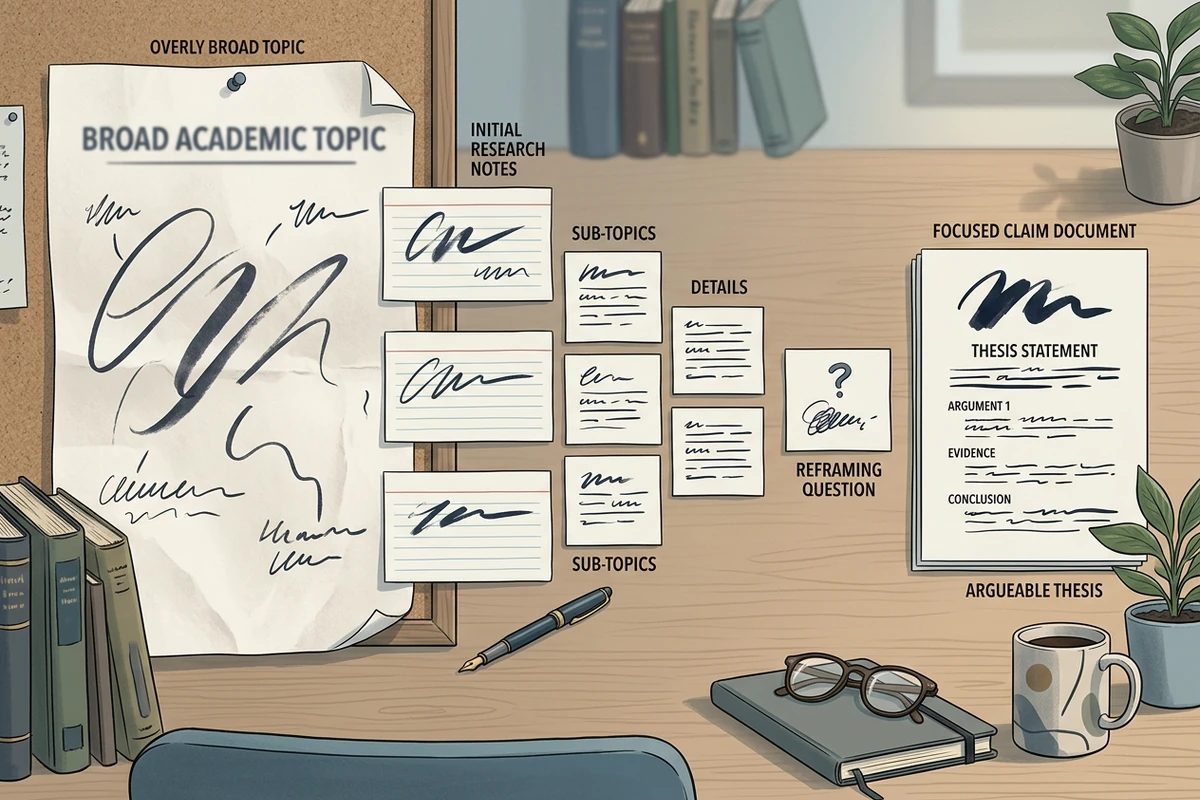
Academic notes narrow from a broad research topic into one focused, arguable thesis statement.

Move from a broad topic to an arguable claim

Start with the assignment question, your position, and the limits that matter: population, text, period, mechanism, or outcome. The thesis statement generator turns that material into a claim someone could reasonably challenge, rather than a topic label or a statement of fact. If you are still sorting research notes, condense them first with the Text Summarizer.
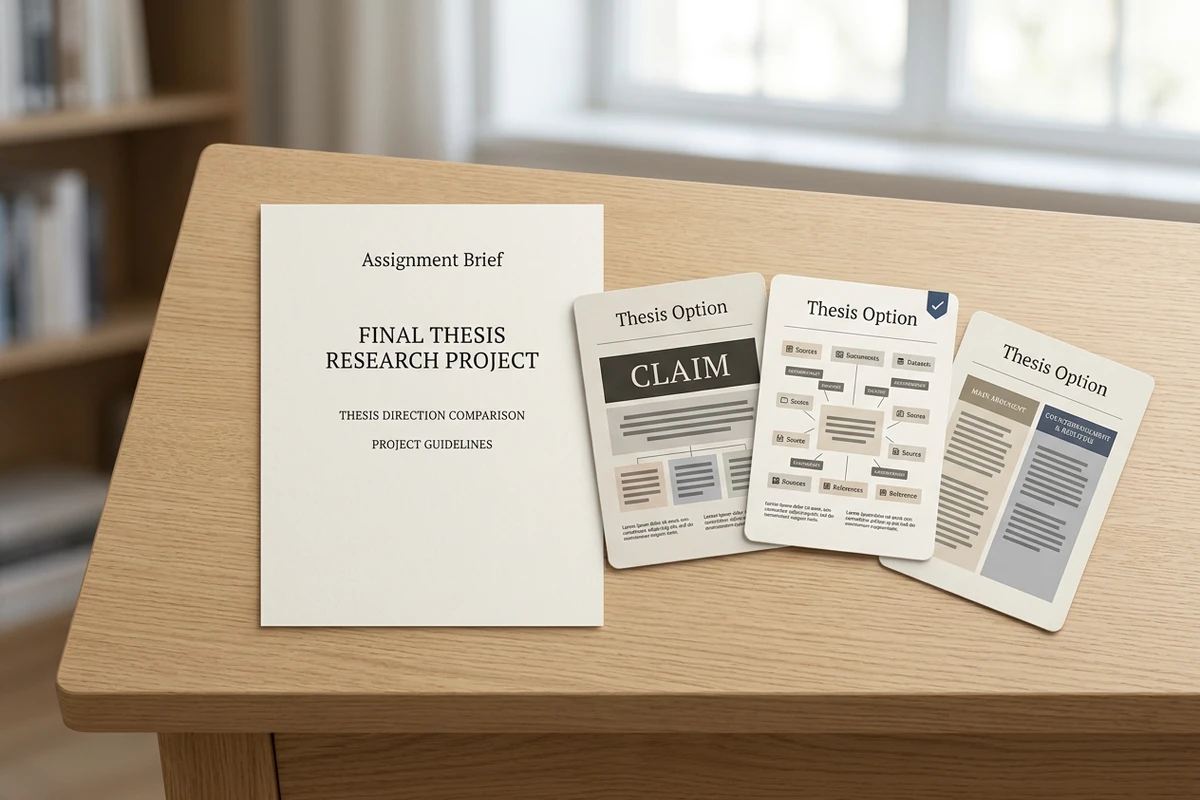
An assignment brief sits beside three differently structured thesis options, with one option selected.

Compare three thesis directions before choosing

Ask for several versions built around different reasoning: a direct claim, an evidence-led claim, and a counterargument-aware claim. Compare what each version promises the paper will prove, how much ground it covers, and whether the assignment supports that structure. Once the central claim is settled, the Essay Writer can help develop a structured draft from the same brief.

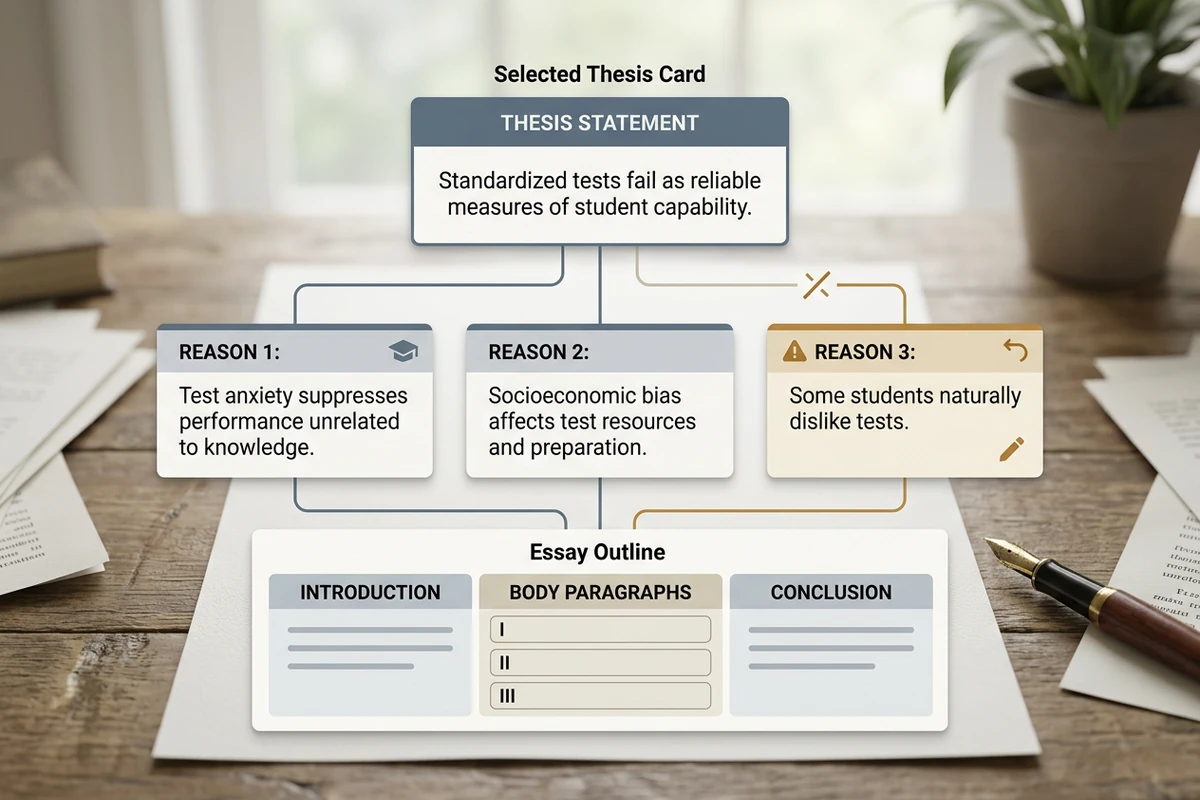
A selected thesis connects to three supporting reasons and an essay outline, with one reason marked for revision.

Test the thesis against your evidence and outline

A polished sentence can still be a weak thesis. Paste the reasons, examples, or verified source notes you expect to use, then ask the AI thesis statement generator which parts support the claim and which do not. Revise the scope until every major section has a job. Build individual supporting passages later with the AI Paragraph Generator, or polish a selected line with the Sentence Rewriter.

What you can do with Ottermind

Take a position in an argument

Turn the prompt, evidence, and a defensible stance into a thesis that previews the paper’s reasoning.

Interpret a literary work

Connect a pattern in language, character, structure, or theme to an arguable claim rather than a plot summary.

Frame a research paper

State the problem, scope, relationship being examined, and contribution with the right level of qualification.

Build a comparative thesis

Make a meaningful claim about why two works, policies, or cases differ instead of merely listing similarities.

How to use the thesis statement generator in 3 steps

Step 01

State the question and position

Include the paper type, assignment question, your tentative answer, and any required limits. Add two or three reasons you expect to defend.

Step 02

Generate and compare options

Review what each claim argues, what evidence it would require, and whether it can be supported within your word count.

Step 03

Test before you draft

Check that the thesis answers the prompt, takes a position, and gives every planned section something relevant to prove.

Why creators choose Ottermind

A brief before the claim

Keep the assignment, audience, position, and limits visible while the thesis statement generator works.

Multiple directions

Compare claims built around different reasoning before committing to one paper structure.

Evidence stays connected

Bring verified notes into the same workspace and check whether they genuinely support the claim.

Focused revision passes

Narrow scope, strengthen the position, or address a counterargument in separate passes.

From thesis to outline

Turn the selected claim into section-level questions while preserving the original assignment context.

Continue in Studio

Develop the approved thesis with your brief, notes, and prior comparisons still available.

Frequently asked questions

What makes a strong thesis statement?

A strong thesis answers the assignment question, makes a specific claim, and can be challenged by a reasonable reader. It also sets a scope the paper can support. A topic such as climate policy is not yet a thesis; a defensible claim about a named policy, population, mechanism, and outcome is closer.

What should I enter in the thesis statement generator?

Provide the exact assignment question, paper type, tentative position, audience, word count, and two or three supporting reasons. Add important limits such as a time period, text, location, or population. The more concrete the brief, the easier it is to compare useful options.

Can it create thesis statements for different essay types?

Yes. Name the form you need, such as argumentative, analytical, compare-and-contrast, or literary analysis. The claim should fit that form: an argumentative thesis takes a position, while an analytical thesis explains what the paper's interpretation will demonstrate.

Can the thesis generator verify my evidence or citations?

It can compare a claim with notes and sources you provide, but it does not make an unverified source trustworthy. Check quotations, authors, dates, and conclusions against the originals. For a broader research workflow, see the guide to best AI research assistants.

Is using an AI thesis statement generator academically acceptable?

Policies differ by course and institution. Use generated options as working drafts, make the argument your own, and disclose AI assistance when required. Never submit a claim you do not understand or cannot defend with evidence. Your instructor's rules take priority.

How is this different from the Essay Writer?

The thesis statement generator focuses on selecting and stress-testing the paper's central claim. The Essay Writer continues from an approved claim into an outline or full structured draft. For exam preparation rather than essay drafting, organize course material with the Study Guide Generator.

Discover more

More from the blog

Build a thesis you can defend

Bring the assignment question, your position, and the reasons you can support. Generate several thesis options, compare their scope, and refine the strongest claim in Ottermind.

Generate thesis