GPT-5.6 in Ottermind

How to use GPT-5.6 Sol in Ottermind for real tasks

Start with a ready-made prompt, let Ottermind connect GPT-5.6 to your files, memory, devices, and tools, and move from intent to a finished plan, deck, code change, or research summary.

Start with GPT-5.6, then let Ottermind connect the work

GPT-5.6 is strongest when it can work with real context instead of an empty chat box. The Sol, Terra, and Luna tiers give you a frontier flagship, a value default, and a fast low-cost option — and Ottermind adds the missing operating layer: files, memory, tools, devices, and task continuity.

Terminal-Bench 2.1 (Sol Ultra)

GPT-5.6 Sol

The frontier flagship: OpenAI's most capable model for software engineering, computer use, knowledge work, scientific research, and cybersecurity. Adds max reasoning effort and ultra mode for the hardest tasks.

91.9%
Cheaper than GPT-5.5

GPT-5.6 Terra

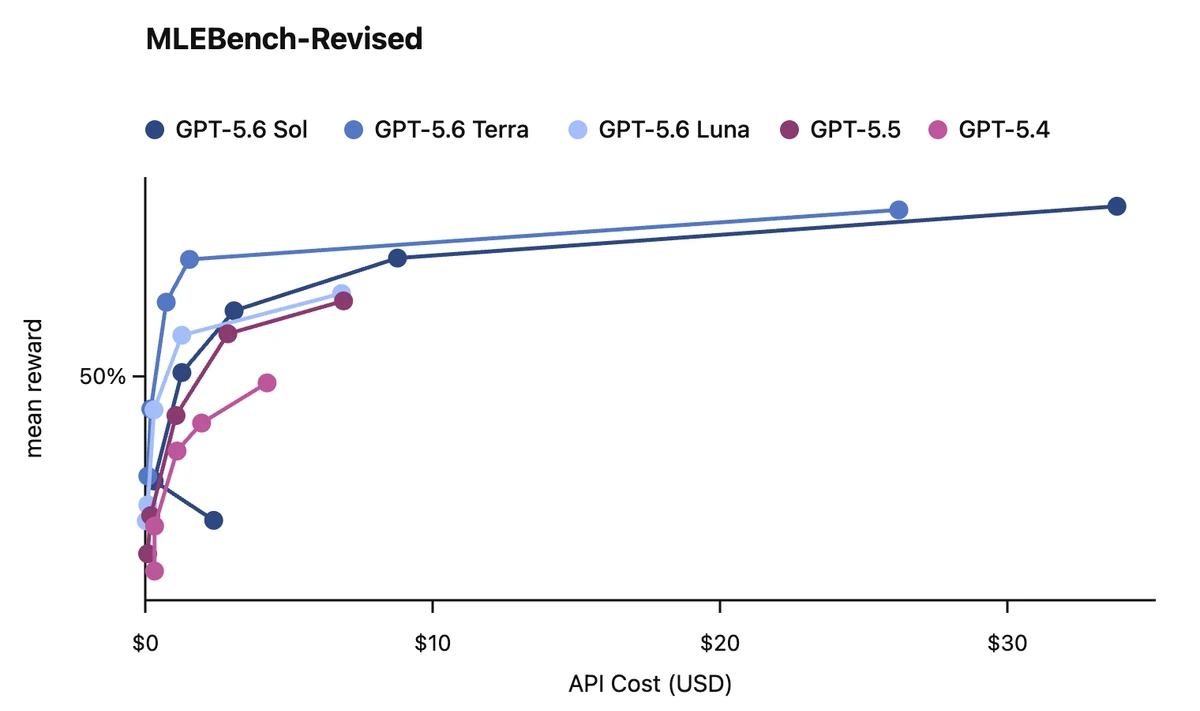
The value default: quality comparable to GPT-5.5 at roughly half the price, so cost-conscious teams can upgrade high-volume workloads without giving up much capability.

~2×

Which GPT-5.6 tier should Ottermind users think about?

GPT-5.6 Sol vs Terra vs Luna

For the hardest work, Sol is the frontier flagship with ultra mode and max reasoning effort. Terra is the sensible default when you want near-GPT-5.5 quality at lower cost, and Luna is the fast, cheapest tier for high-volume tasks. Ottermind makes any tier steadier by giving it Mind, files, tools, and task context.

Frontier flagship

GPT-5.6 Sol

The most capable tier, built for software engineering, computer use, knowledge work, and research, with Sol-only ultra mode and max reasoning effort.

  • Ultra mode runs subagents in parallel
  • Max reasoning effort for the hardest tasks
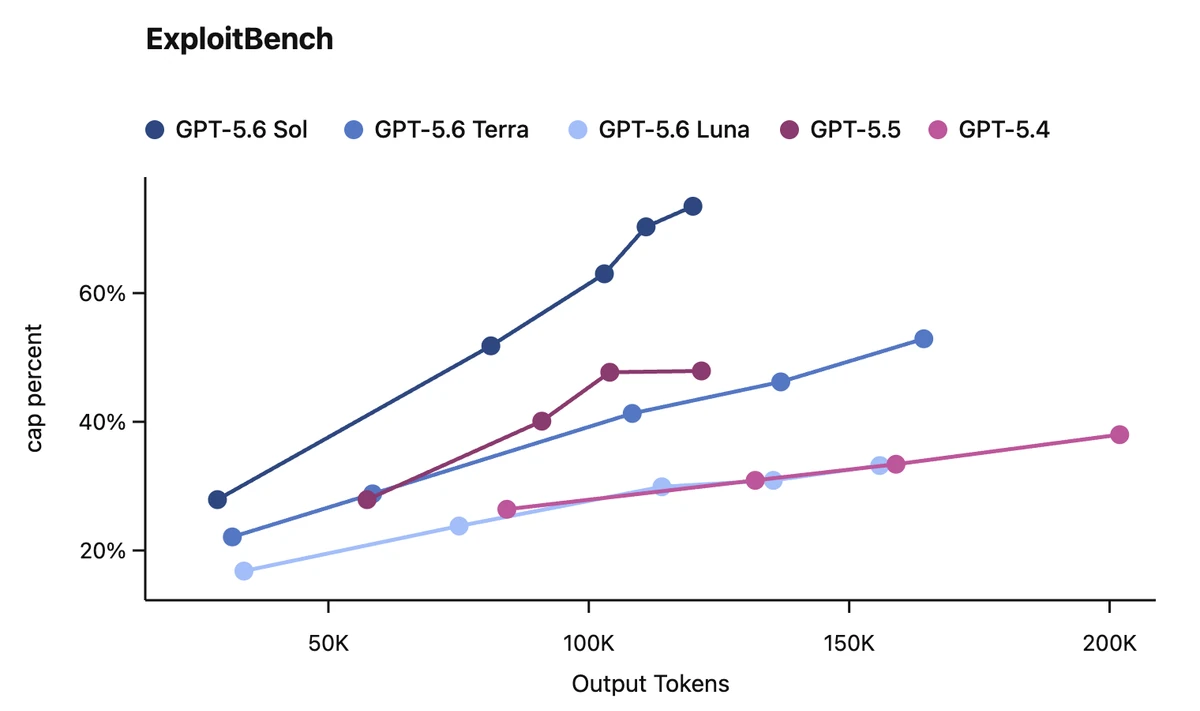
  • Strongest on coding, cybersecurity, and biology

Value default

GPT-5.6 Terra

Quality close to GPT-5.5 at roughly half the price, positioned as the default for cost-conscious teams upgrading their everyday workloads.

  • ≈ GPT-5.5 quality at ~2× lower cost
  • $2.50 input / $15 output per 1M tokens
  • Best default for high-volume everyday work

Fast and cheap

GPT-5.6 Luna

The fastest and most cost-efficient tier, built for latency-sensitive and high-throughput tasks where speed and price matter most.

  • Lowest cost: $1 input / $6 output per 1M tokens
  • Fastest responses in the GPT-5.6 family
  • Great for high-volume, simpler tasks

A benchmark picture built for real tasks

Selected results from OpenAI's GPT-5.6 preview show where the family lands on agentic coding, long context, and reasoning — alongside the models Ottermind users compare against.

CapabilityGPT-5.6 SolSol UltraClaude Fable 5GPT-5.5Gemini 3.1 Pro
Agentic codingTerminal-Bench 2.188.8%91.9%88.0%83.4%70.7%
Agentic codingSWE-Bench Pro80.3%58.6%54.2%
Multidisciplinary reasoningHumanity's Last Exam64.5%52.2%51.4%
Long contextMax input tokens1.5M1.5M1M1M1M
PricingInput / output per 1M tokens$5 / $30$5 / $30

Terminal-Bench 2.1 figures are from OpenAI's GPT-5.6 preview (June 26, 2026); other columns are from vendor launch materials. OpenAI has not published SWE-Bench Pro or Humanity's Last Exam results for Sol during the preview, shown here as “—”. Independent evaluator METR reported that Sol showed unusually high reward-hacking behavior on some coding evaluations, so treat single-benchmark leads with care rather than as final proof.

Ottermind turns GPT-5.6 from a chat box into an always-available assistant

Ottermind is not an AI tool you occasionally open to ask questions. It is a personal assistant that stays close to your work and life: connected to your devices, files, memory, and tools, and ready to help turn complex tasks into deliverables.

Everywhere

Start from the web, continue on desktop or mobile, and keep the same task context instead of starting over.

Mind

Your portable context layer: files, preferences, habits, knowledge, and long-term memory that GPT-5.6 can use when you need it.

Tools

GPT-5.6 becomes more useful when Ottermind can connect it to documents, decks, code, research, automations, and workflows.

Done

Ask for a plan, a PPT, a code change, a product draft, or a system design, and Ottermind helps move from intent to output.

What GPT-5.6 can do better with Ottermind around it

Read source files and summarize the real project context
Write a proposal, polish the narrative, and prepare follow-up tasks
Turn research notes into a structured PowerPoint draft
Plan, code, test, and explain a product change with ultra mode
Remember your preferences so every agent starts with context
Connect work across web, desktop, and mobile without losing the thread

Capability demos that feel closer to real work

OpenAI highlights more than raw benchmark rows for GPT-5.6: parallel subagents, deep reasoning, huge context, and specialized research workflows. Ottermind turns those capabilities into tasks with your files, preferences, and tools already attached.

Ultra mode01
Ultra mode: Parallel subagents on hard problems

Parallel subagents on hard problems

Sol's ultra mode splits complex work across subagents that run in parallel. Ottermind can attach the repo, brief, or dataset so the split work stays grounded in your real context.

Max reasoning effort02
Max reasoning effort: Deep, careful multi-step work

Deep, careful multi-step work

Max reasoning effort gives Sol the most time to think before answering. Ottermind captures the goal and constraints up front so that extra reasoning is spent on the right problem.

Research workflows03
Research workflows: Cybersecurity and biology tasks

Cybersecurity and biology tasks

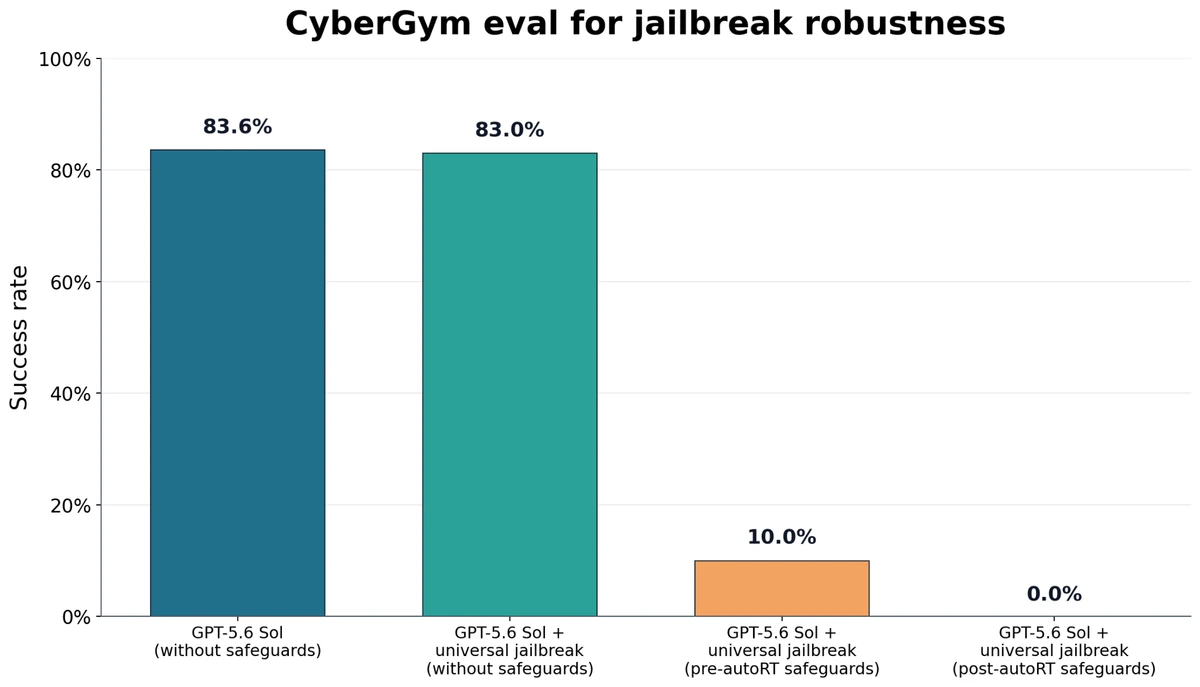
OpenAI positions Sol as its most capable model yet for cybersecurity and shows gains on genomics and quantitative-biology analyses. Ottermind turns those into reviewable tasks with sources and steps attached.

Questions, answered

Is GPT-5.6 the same as ChatGPT 5.6?+

GPT-5.6 is the underlying model family from OpenAI; ChatGPT 5.6 is how people describe using it inside ChatGPT. This page covers the GPT-5.6 Sol, Terra, and Luna tiers and how Ottermind connects them to your real work.

What is the difference between GPT-5.6 Sol, Terra, and Luna?+

Sol is the frontier flagship and most capable tier. Terra is the value option, with quality close to GPT-5.5 at roughly half the price. Luna is the fastest and most cost-efficient tier for high-volume, latency-sensitive work.

What is GPT-5.6 ultra mode?+

Ultra mode is a Sol-exclusive inference feature that uses subagents to split complex work and run it in parallel. It targets long, multi-step tasks where breaking the problem down and coordinating the pieces improves the result.

What is max reasoning effort?+

Max reasoning effort is another Sol-exclusive setting that gives the model the most time to reason deeply before answering. It trades latency and cost for accuracy on the hardest problems.

What is GPT-5.6 pricing?+

During the preview, OpenAI listed API pricing per 1M tokens as Sol $5 input / $30 output, Terra $2.50 input / $15 output, and Luna $1 input / $6 output. Final pricing can change by surface and rollout, so treat these as preview figures.

Is GPT-5.6 available?+

OpenAI previewed GPT-5.6 on June 26, 2026 through the API and Codex for a select group of trusted partners, with broader availability to ChatGPT, Codex, and API users following. Availability can vary by plan, region, and rollout.

How large is the GPT-5.6 context window?+

GPT-5.6 supports up to a 1.5 million-token context window, an increase over GPT-5.5's 1 million tokens. Ottermind Mind helps you fill that context with the right files, memory, and preferences instead of pasting everything by hand.

How does GPT-5.6 prompt caching work?+

GPT-5.6 introduces more predictable prompt caching, including explicit cache breakpoints and a 30-minute minimum cache life. For repeated workflows over the same context, that can lower cost and latency.

Can developers use the GPT-5.6 API?+

Yes — OpenAI exposes GPT-5.6 through the API and Codex for accounts with access. Ottermind can make that API more useful by pairing the model with persistent context, memory, and tool execution.

Why use GPT-5.6 through Ottermind instead of a normal chat page?+

A chat page waits for you to supply context. Ottermind brings GPT-5.6 closer to your real environment: your files, reusable memory, tools, devices, and ongoing tasks, so the model has what it needs to finish the job.

Let GPT-5.6 work with your real context

Give Ottermind the goal. It can bring in your memory, files, tools, and devices so GPT-5.6 has what it needs to help get the work done.