AI Fortune Teller

Describe the question you are sitting with, the style you want — tarot, palm, astrology — and the tone. Ottermind writes the reading as something you can read aloud, then revises the lines that land wrong.

AI writing
Claude
GitHub
Google
Linear
Microsoft
Monday
Netlify
Notion
OpenAI
Sentry
Slack
Stripe
Supabase
Claude
GitHub
Google
Linear
Microsoft
Monday
Netlify
Notion
OpenAI
Sentry
Slack
Stripe
Supabase
Tarot-style cards, a lit candle and a brass cup on plum velvet in warm light.

Ask a question that can be answered

A reading on whether you will be happy is unreadable, because nothing in it can be checked. Name the situation, the timeframe and the decision: whether to take the offer, how to end the lease, what to do about the message you have not sent. One concrete question gives the cards a job. If the question itself is the problem, an AI Prompt Generator helps you sharpen it before you spend a reading on it.
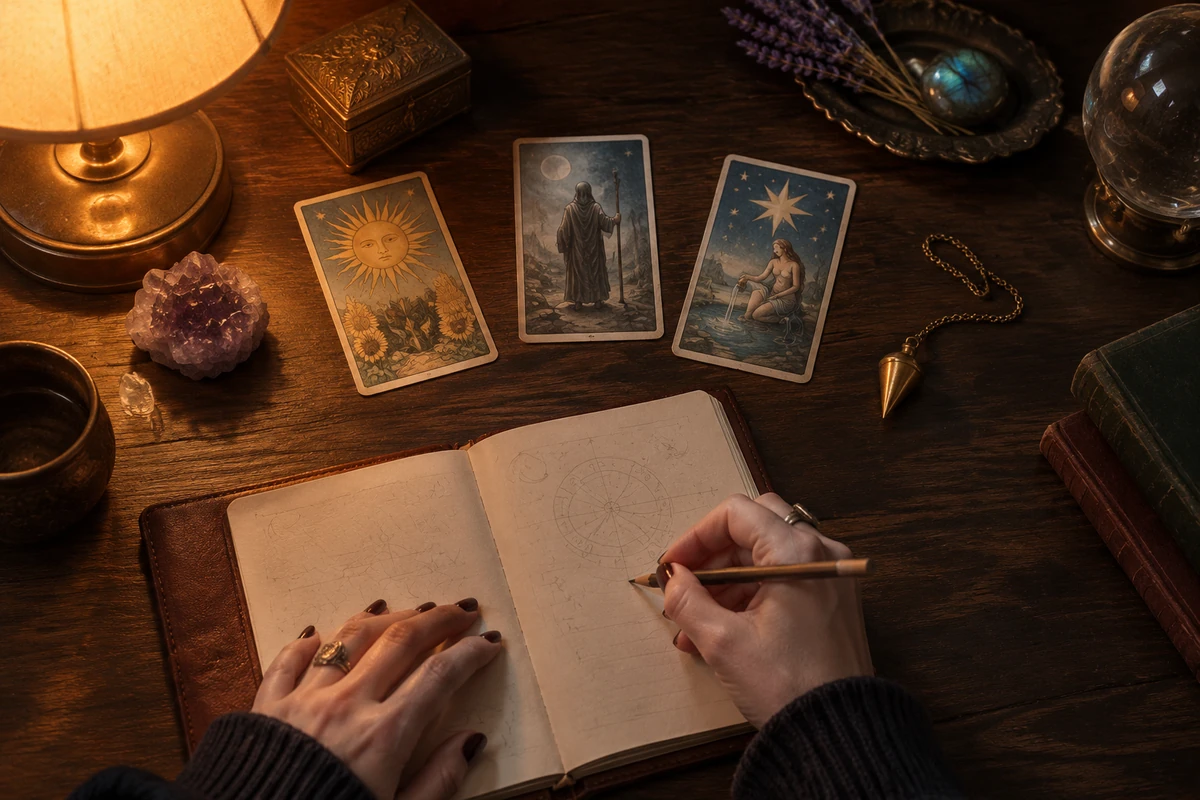

A notebook, three cards and a brass pendulum on dark walnut under a warm lamp.

Structure the reading, not the prophecy

A reading that holds together has five moves: an opening that names the situation, the omen, the friction, the choice, and a close that leaves the decision with the person. Give each card a job — this one is what you already know, this one is what you are avoiding — and the spread stops being decoration. Astrology readings follow the same spine with a sign, a house and a transit in place of the cards. A generic chat prompt returns a paragraph of atmosphere; the five moves are what turn it into a reading.

A glass crystal ball with a violet glow on a dark table beside folded velvet.

Say it is entertainment, and keep it kind

A good reading is a mirror with a plot, not a verdict. Two lines make it safe and still worth reading: say plainly that it is entertainment, and never let it issue a diagnosis, a legal opinion or a financial instruction. Write the difficult part as a choice the person can make rather than a fate they have to accept, and the reading stays something they can enjoy rather than something they have to recover from.

What you can do with Ottermind

Write a birthday reading for a friend

Use their sign and one real question they have been circling, and write a short reading they can read over coffee. Keep it warm, specific and clearly labelled as fun rather than fate.

Script a party booth

Write ten short readings for a themed night, each with a different card combination and a consistent voice, so whoever is running the booth can read them aloud without improvising.

Draft a weekly horoscope column

One sign at a time, one theme per week, same length and rhythm across all twelve. An AI Text Generator keeps the format steady when the deadlines stack up.

Give a character a prophecy

Write the fortune a character believes in, then write the version that comes true differently. An AI Book Writer carries the same voice across chapters when the prophecy becomes a plot device.

How to Write a Reading in Three Steps

Step 01

Write the question down

One sentence, one timeframe, one decision. Write it the way you would say it to a friend, and keep it in the prompt so every revision of the reading stays about the same thing.

Step 02

Choose the style and the cards

Pick tarot, palm, astrology or runes, then name the positions. Three cards with assigned roles beat ten cards without them, because the reading has to end somewhere the person can act.

Step 03

Read it aloud, then revise

Read the draft out loud. Every sentence you stumble on is a sentence to cut or rewrite, and anything that sounds like a verdict becomes a choice. Keep the version that sounds like a person talking.

Why creators choose Ottermind

A reading with a spine

Five moves, each card with a job, so the reading ends somewhere the person can actually act.

Tone you set

Warm, wry, theatrical or plain. The tone is a line in the prompt, not a preset you settle for.

Ask again, same question

The question stays with the task, so a second draft is a revision rather than a new reading.

No doom, no diagnosis

The reading is framed as entertainment and refuses medical, legal and financial instructions.

Try it before signing up

The public experience runs a limited number of free rounds, enough to test one reading.

Frequently asked questions

What is an AI fortune teller?

It is a writing tool that produces a reading — tarot, palm, astrology, runes — from a question you describe and a style you choose. You get a structured text you can read aloud or publish. It does not see the future, and it is not a substitute for a doctor, a lawyer or an accountant. It is also not the folded paper fortune-teller game; that is a craft, this is a written reading.

Can it actually predict the future?

No. The model writes a reading that fits the question and the cards you name; it has no information about events that have not happened. Treat the output as entertainment and as a way to think out loud. A reading can still be useful as a prompt for reflection, which is why the page asks for a real question and a clear timeframe.

Which reading styles can it write?

Tarot spreads, palm reading, astrology with signs, houses and transits, runes, tea leaves and numerology. Name the style, the positions and the length you want, and keep the same question across styles when you want to compare readings instead of collecting unrelated ones.

Can I ask a yes-or-no question?

You can, and you will get a yes or a no, but the useful part is the paragraph around it. Ask what would make the answer yes, or what the person is already leaning toward. If the question is still muddy, sharpen it with an AI Prompt Generator before the reading.

Is the AI fortune teller free to try?

You can use the public experience without signing up for a limited number of free rounds, which is enough to draft one reading and judge the tone. We do not promise unlimited free use, and account-based options stay behind an account.

Can I publish the reading I generate?

Yes, the text is yours to use for a post, a column or an event script. Run it through an AI Social Media Post Generator when it is going to a feed, keep it labelled as entertainment wherever it goes, and do not put a real person's private details into the prompt unless they have agreed to it.

Discover more

More from the blog

Write the reading you would actually say

Bring one real question, pick a style and a tone, and draft a reading you can read aloud. Revise it until it sounds like a person, then keep the version that respects the person hearing it.

Draft a reading