Wedding Website Builder

Describe the couple, date, venues, and guest path. This wedding website builder drafts pages you can revise with project context, then continue toward a deployable guest hub.

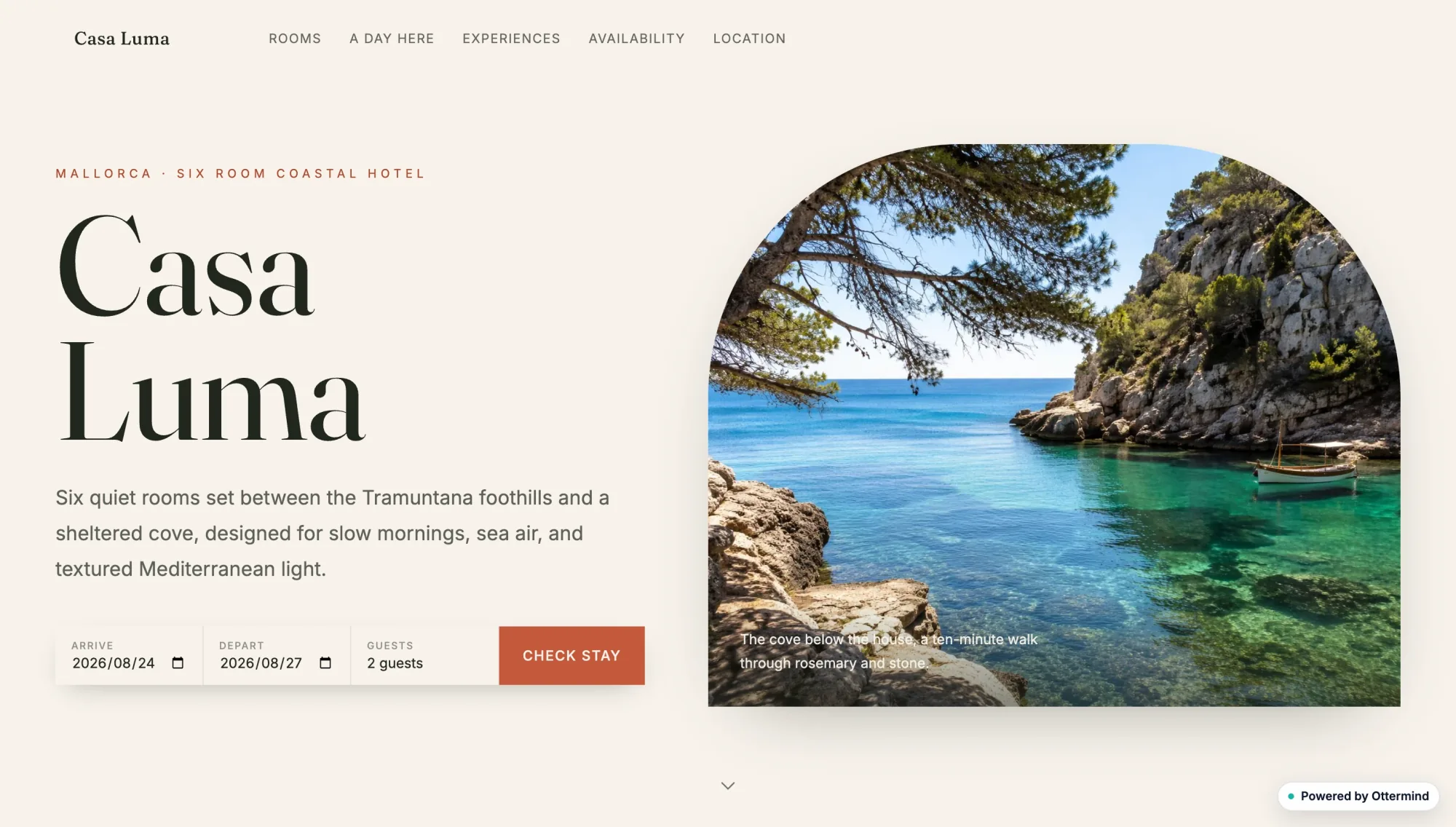
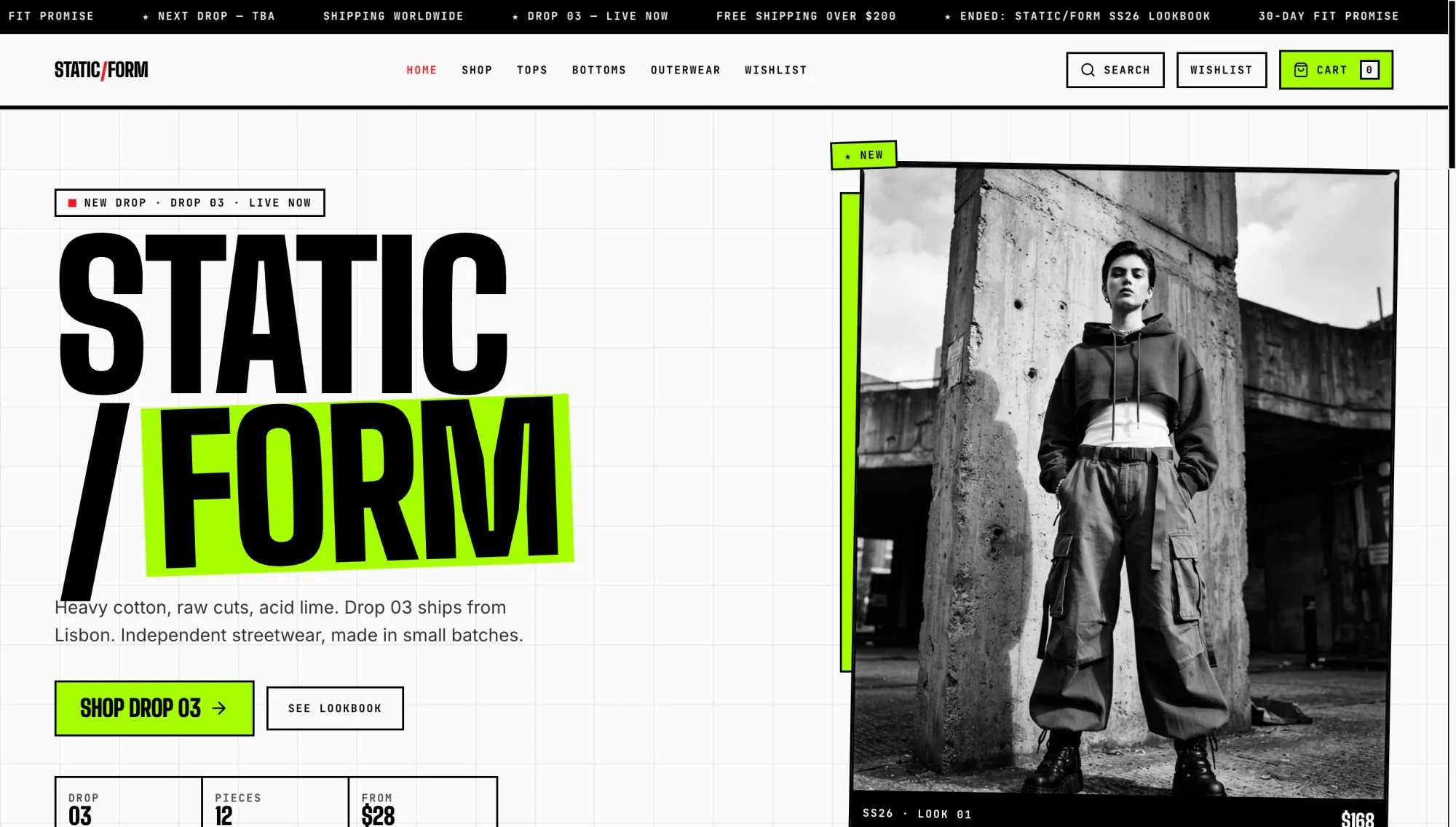
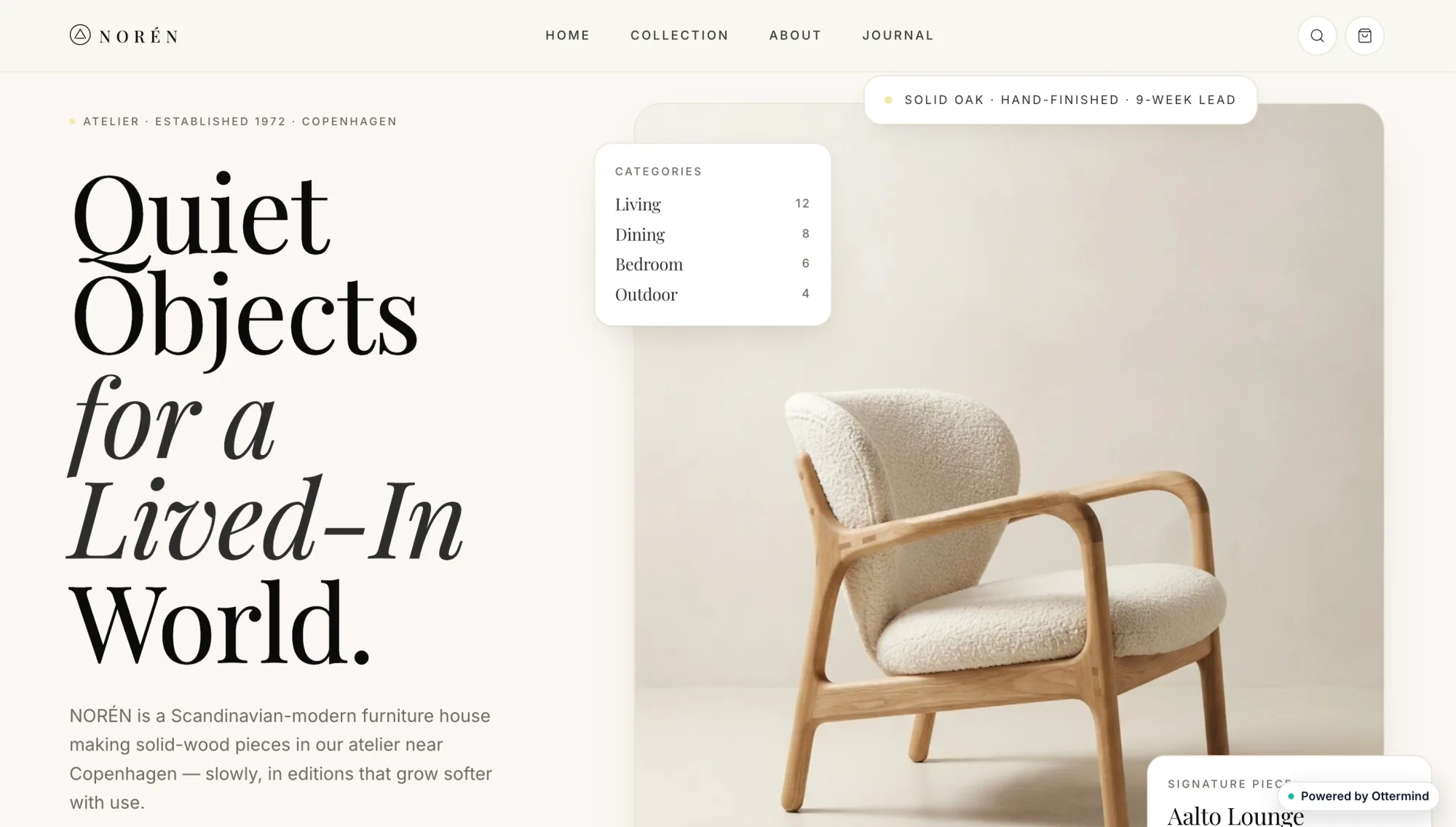
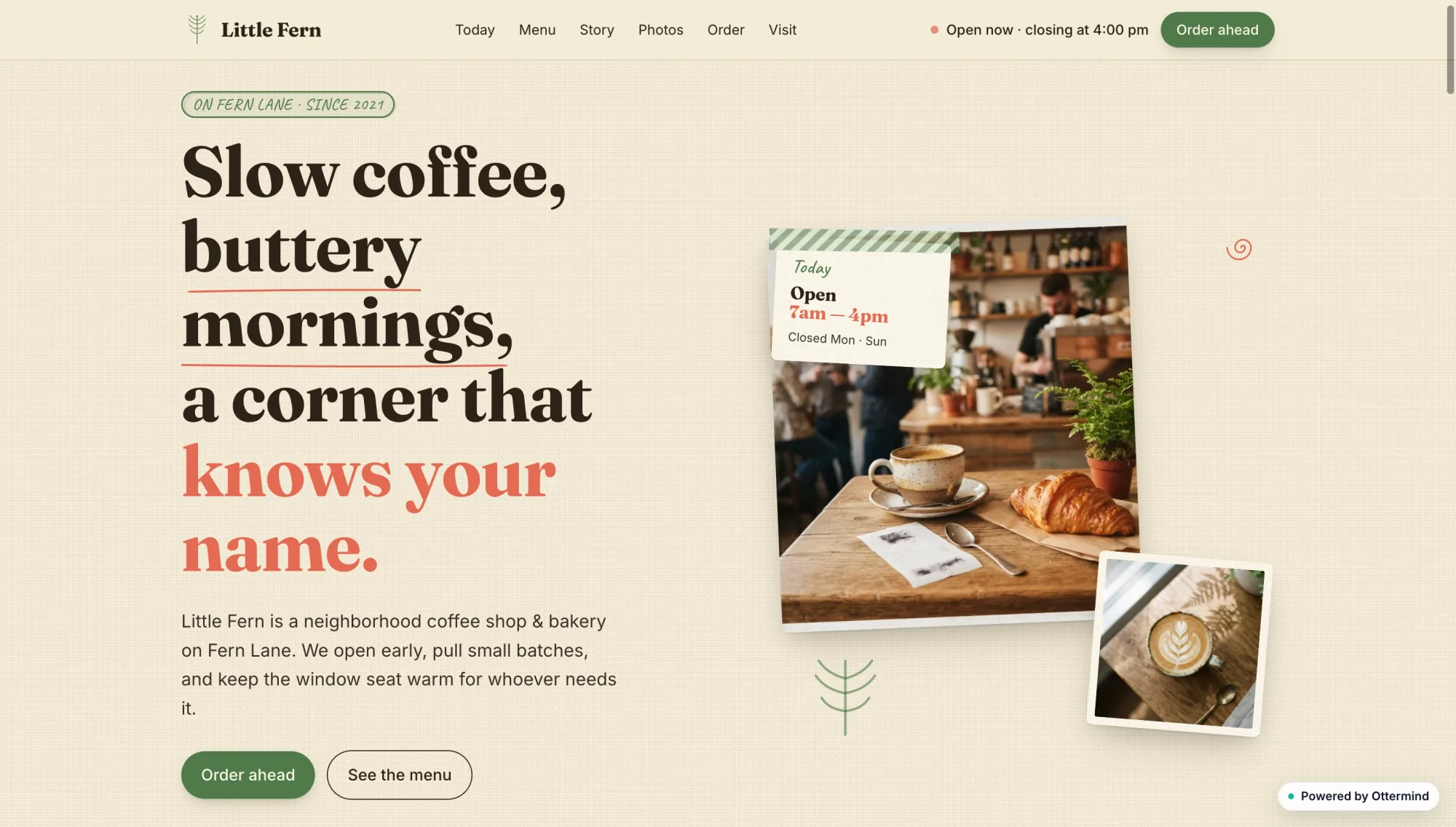
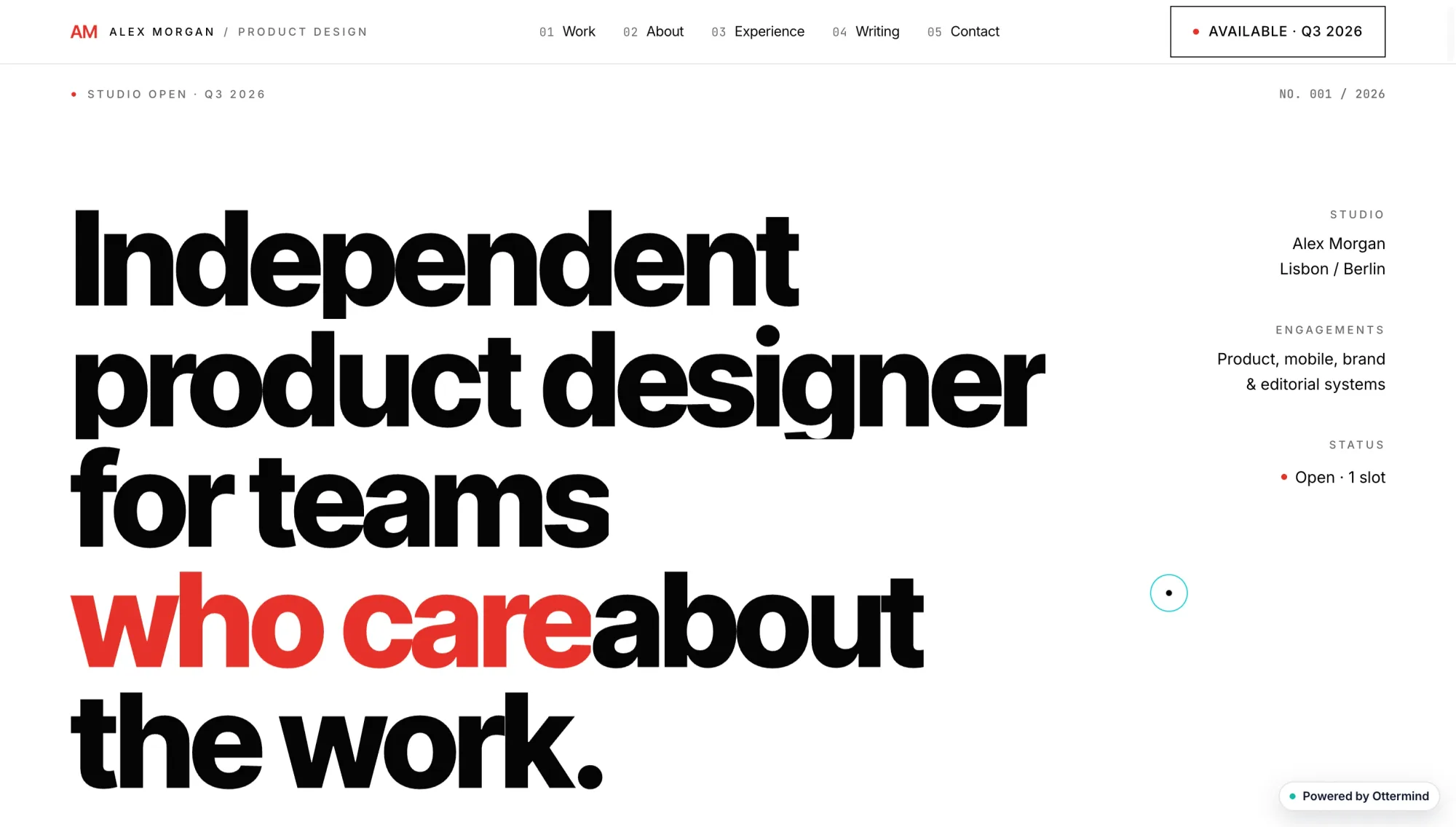
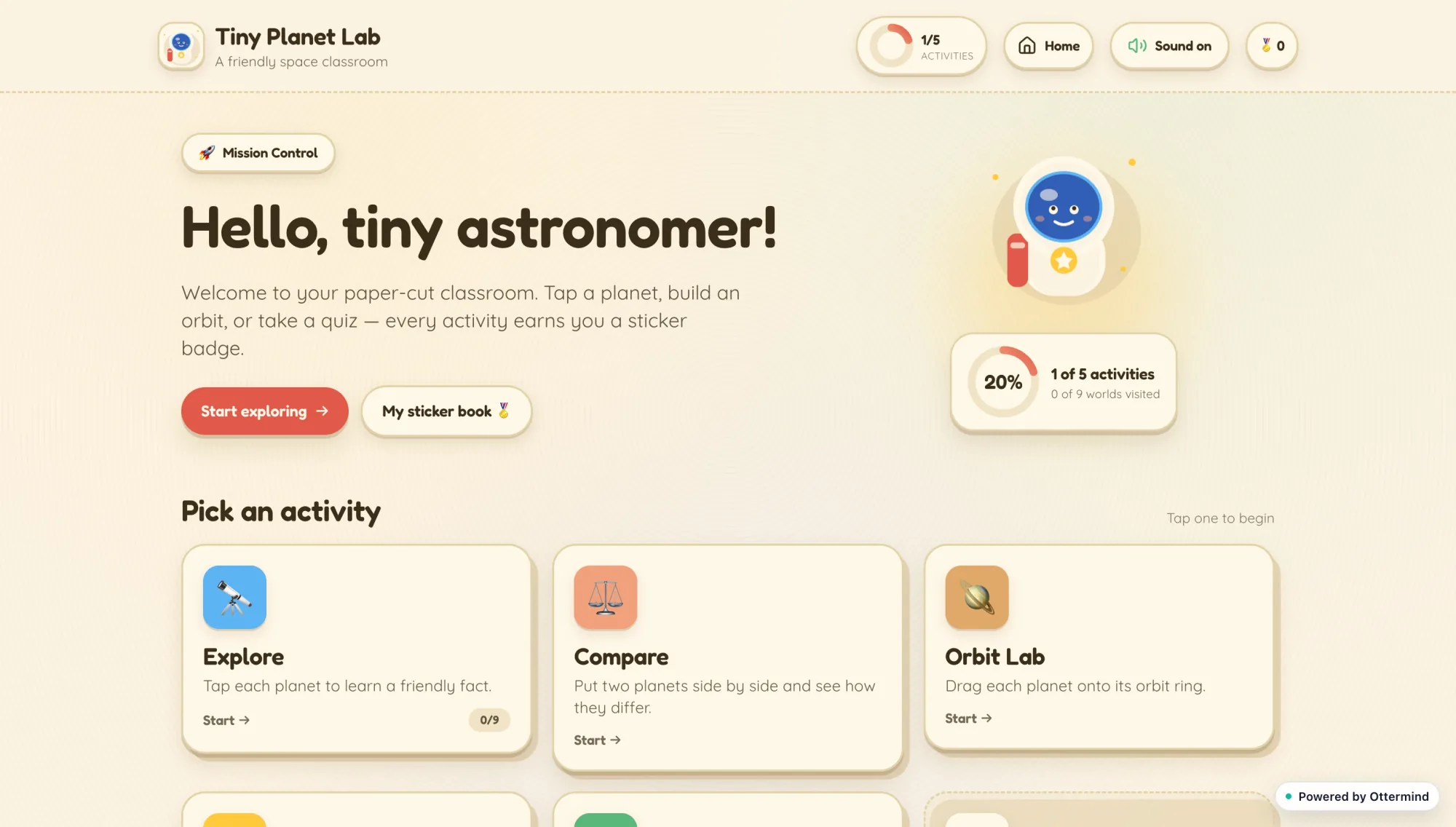
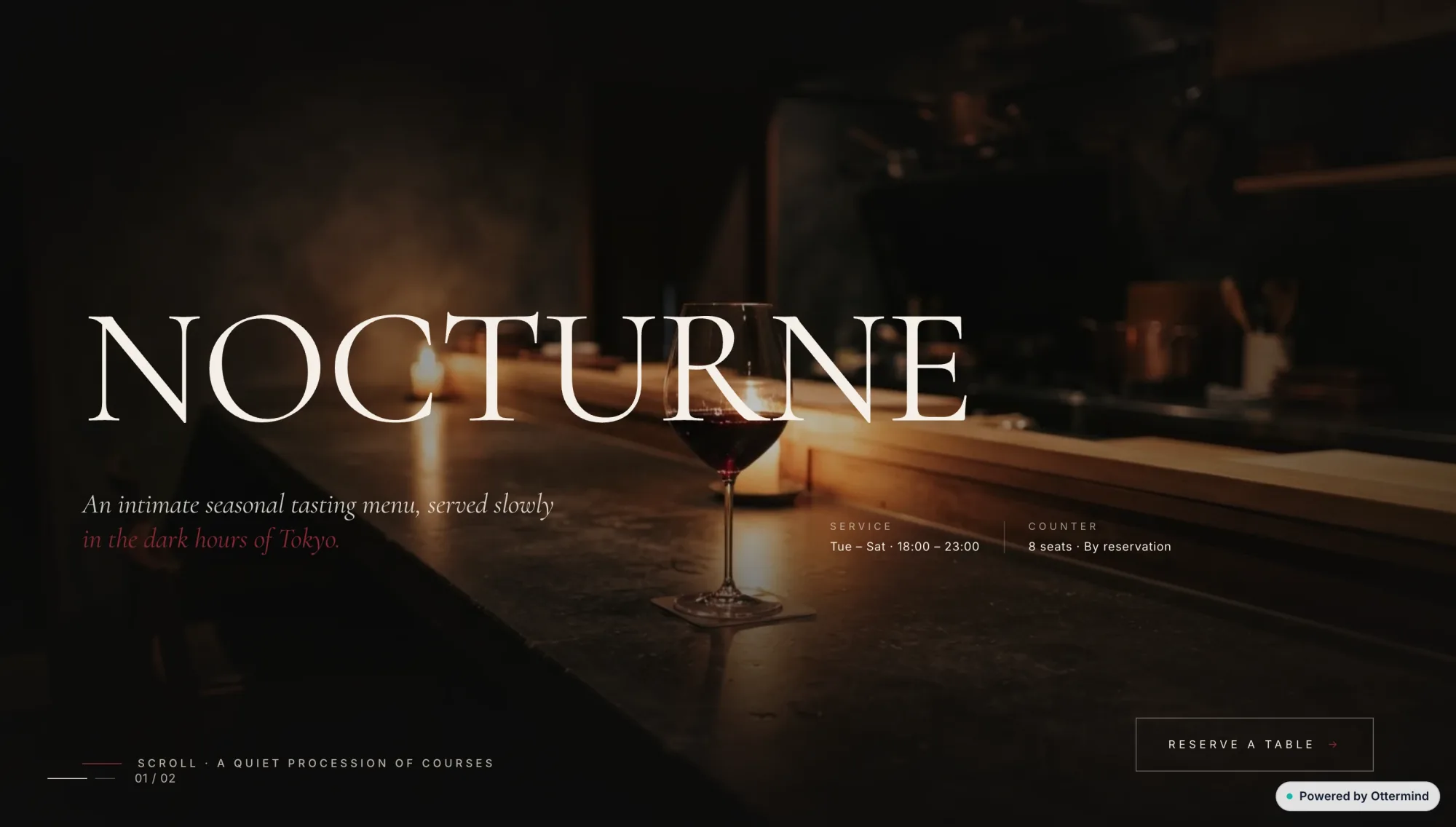
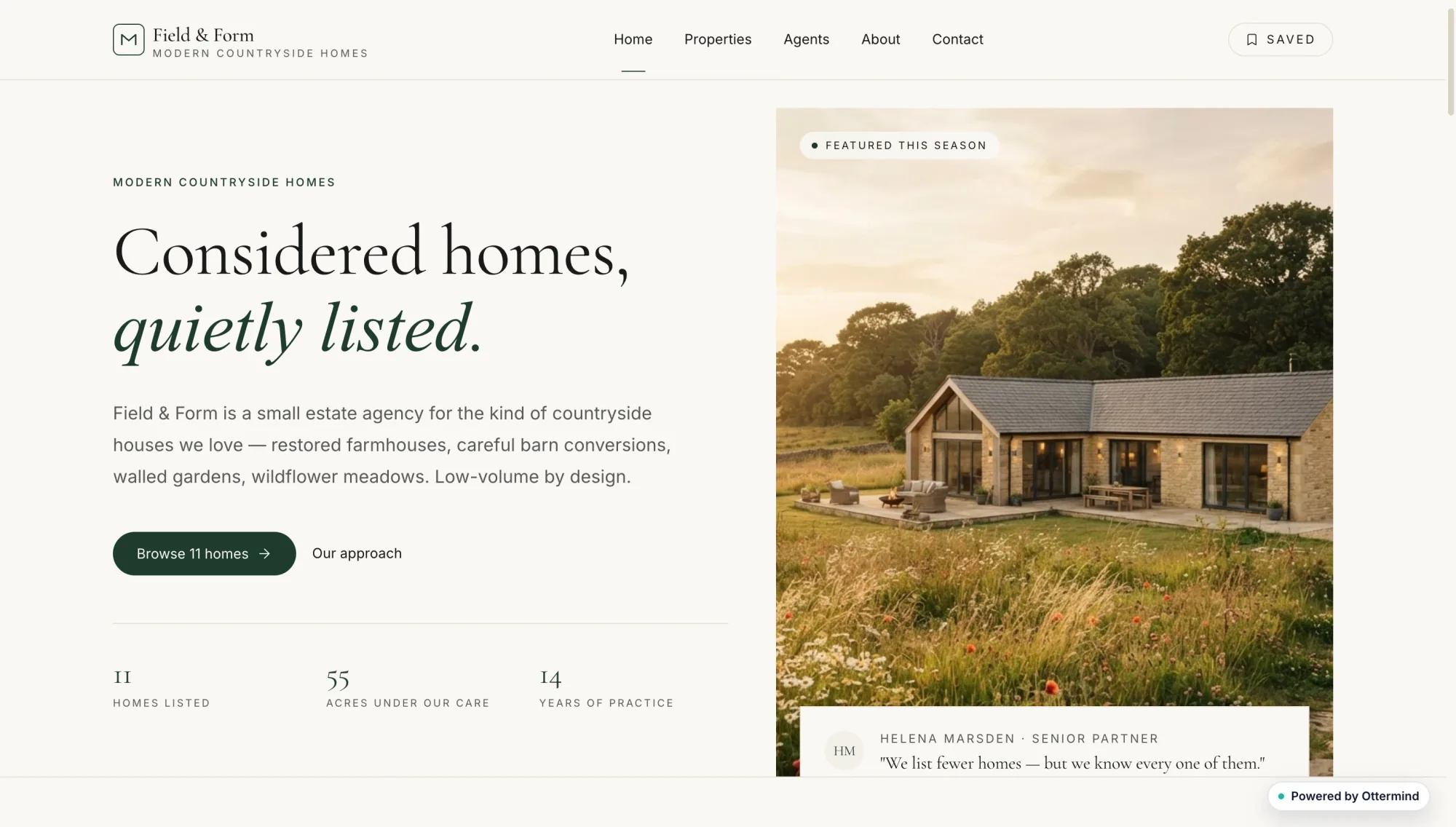
Casa Luma coastal hotel website with a seaside photograph and room booking detailsStatic Form streetwear shop website with bold black typography and a monochrome fashion photographNoren furniture website with a sculptural lounge chair and minimalist editorial typographyLittle Fern neighborhood coffee shop website with warm cafe photographs and red editorial typeAlex Morgan product designer portfolio with oversized black and red typographyTiny Planet Lab children's astronomy learning dashboard with activity cardsNocturne restaurant website with a dark candlelit dining photographField and Form countryside real estate website with a modern farmhouse photograph

Turn Wedding Logistics into One Guest Hub

A wedding website builder should give guests one place for the date, venues, dress code, travel notes, love story, photos, and how to RSVP—so you are not answering the same texts all week. Start from a clear weekend brief and optional engagement photos, then let Ottermind agents draft pages you can inspect and revise before you share a link. For broader multi-page site planning beyond the wedding weekend, continue in the AI Website Builder. If you mainly need a registry marketplace or vendor directory, use a wedding platform for that job and keep this page focused on a guest-ready site you can refine.

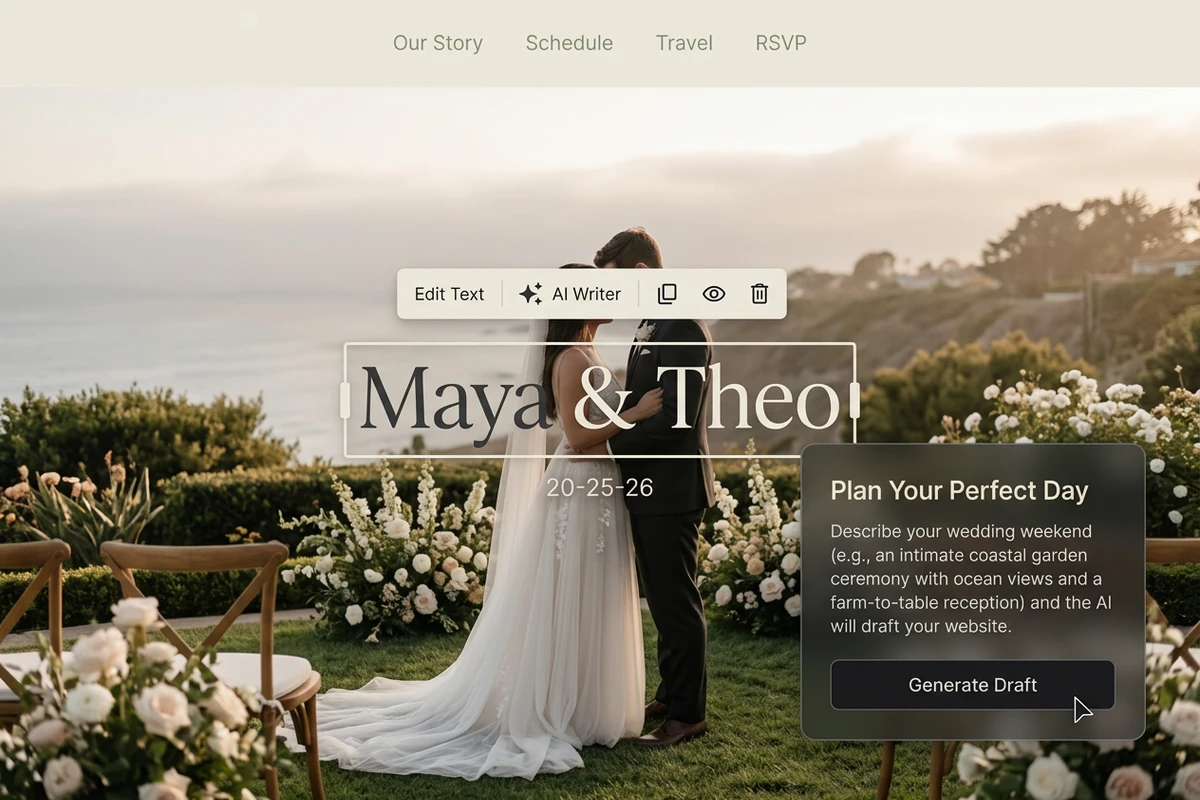
Editor preview of Maya and Theo coastal garden wedding site with Our Story, Schedule, Travel, RSVP nav and a dark glass AI Generate Draft card.

Generate a Guest-Ready Draft from One Weekend Brief

Name the couple, date, ceremony and reception details, travel notes, FAQ answers, and the guest action you want—usually RSVP plus meal preference. Attach engagement photos when you have them, then ask this wedding website builder to draft Our Story, Schedule, Travel, gallery, and RSVP sections in one pass. A structured brief beats a vague style label; use this How to Write AI Prompts That Actually Work to list logistics guests will ask about before generation. Clean portraits first with Photo Retouching if a hero shot needs a gentler finish.
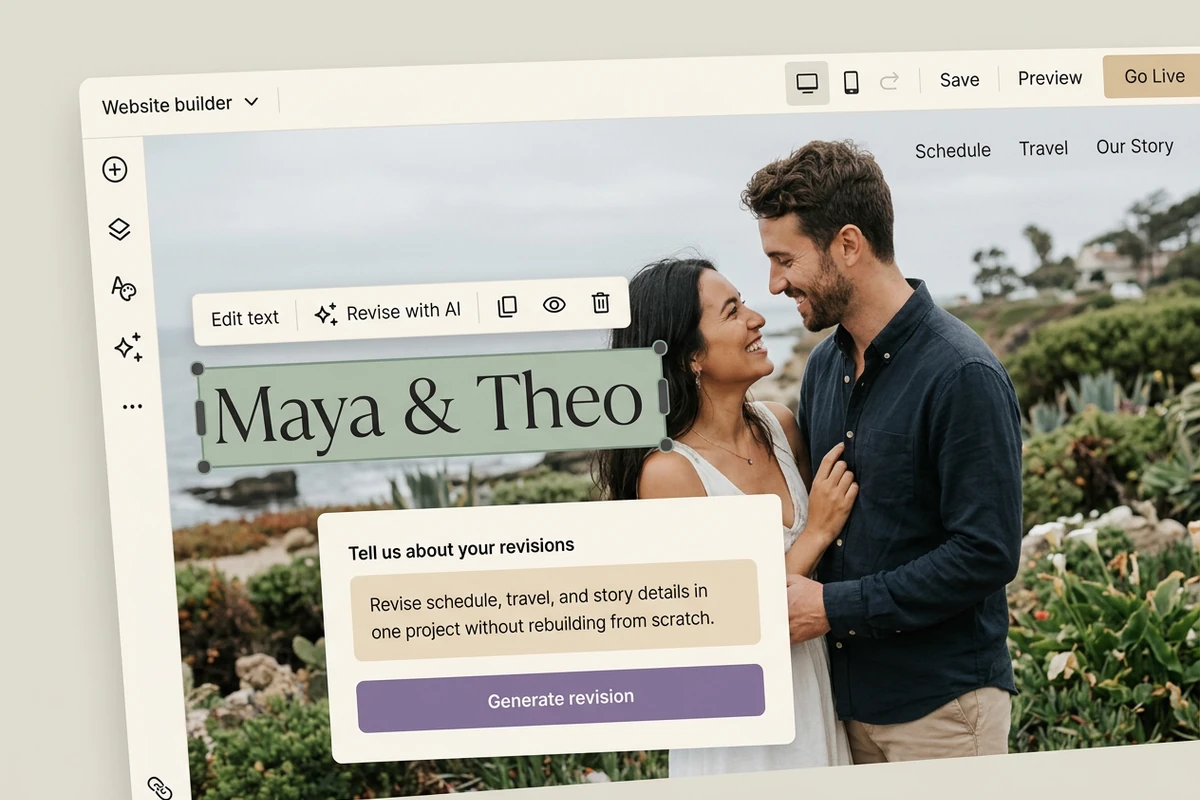
Maya and Theo wedding site editor with Schedule, Travel, Our Story cues, Revise with AI control, and a revision prompt modal.

Revise Schedule and Travel Without Starting Over

Wedding details change: shuttle times shift, hotel blocks update, and dress codes get clearer. Keep the same project open, point agents at the section that drifted, and revise copy, layout, and photo placement while the approved weekend brief stays attached. Pair page edits with AI image generation when a gallery still needs a calmer crop or a stronger hero frame, then recheck the mobile path from homepage to RSVP before another rewrite.

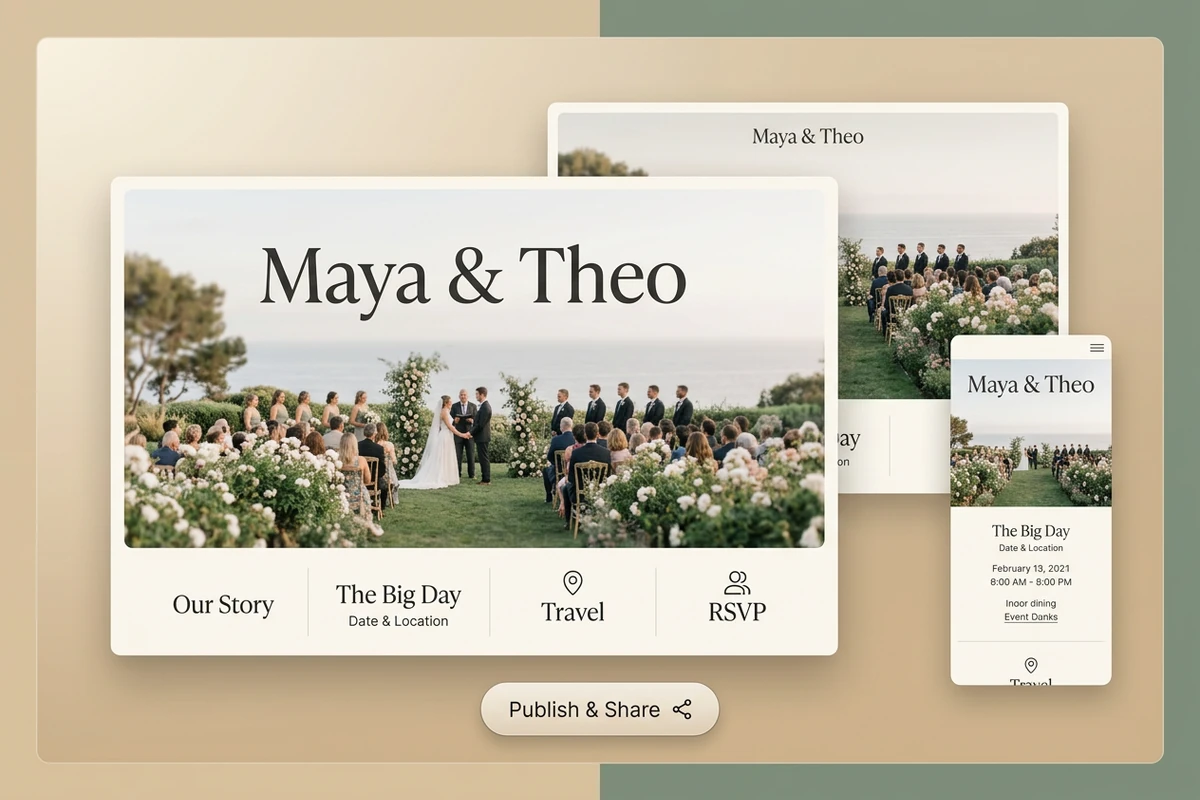
Overlapping Maya and Theo wedding site mockups on champagne and sage with date, Travel, RSVP paths and a Publish and Share button.

Publish When Guests Can Find What Matters

Share the wedding website builder result only after an older relative can find the date, place, attire, travel tip, and RSVP without guessing. Walk the guest path on phone and desktop, confirm FAQ answers match your invitations, then publish when the hub is clear enough to cut repeat questions. Shape a short couple line with the Slogan Generator if the hero still needs a tighter phrase, and create matching print pieces with the AI Poster Generator when save-the-dates need the same visual language.

How to Create a Wedding Website with Ottermind

Step 01

Collect Weekend Facts Guests Will Ask

Write the couple names, date, ceremony and reception times and places, dress code, travel and lodging notes, FAQ answers, registry links if you use them, and the RSVP fields you need. Add a few engagement photos you have rights to use.

Step 02

Generate and Inspect the First Draft

Send the brief to the wedding website builder, open the draft, and check section order, mobile readability, photo placement, and whether Schedule, Travel, and RSVP are obvious. Note exact gaps such as missing shuttle details or unclear meal options.

Step 03

Revise, Validate, and Share

Request focused edits in the wedding website builder, verify the guest path on a phone, then publish when the link is ready for save-the-dates. Replay the journey from hero to RSVP once more after the last change before you send the URL to family.

Why creators choose Ottermind

Guest-Task Output

This wedding website builder aims at a usable guest hub for logistics and RSVP clarity, not a decorative brochure with no next step.

Project Context

Weekend facts, photo choices, and revision notes stay organized around the same wedding project so later edits do not restart from a blank chat.

Agent Iteration

Agents can inspect an observed gap, adjust copy or layout, and retry while critical publishing actions remain under your review.

Photo-Led Storytelling

Continue into visuals with AI image generation when gallery frames or hero crops still need a clearer direction.

Multi-Step Build

Collaborating agents can divide drafting, visual direction, revision, and deployment prep while preserving one guest journey.

Clear Boundaries with Campaign Pages

For a single-offer promo page rather than a wedding weekend hub, use the AI Landing Page Builder instead.

FAQ

What Is a Wedding Website Builder?

It helps couples create a guest-facing site for wedding details: story, schedule, travel, photos, FAQs, and RSVP guidance. Ottermind uses collaborating agents to draft the site from your brief, retain project context, and continue through revision toward a deployable experience instead of stopping at a static outline.

How Is This Different from Zola, Joy, or The Knot?

Those platforms combine templates with registries, vendor tools, and hosted RSVP ecosystems. Ottermind focuses on agent-assisted website building with project memory and multi-step revision. Choose a wedding marketplace when registry commerce and platform RSVP tracking are the primary job; choose Ottermind when you want a custom guest site you can keep refining in one workspace.

What Should I Include in the First Prompt?

State couple names, date, ceremony and reception locations and times, dress code, travel and lodging notes, FAQ answers, visual tone, photo plan, and RSVP fields such as meal preference or plus-ones. Add constraints like mobile-first layout or bilingual sections when needed. A testable logistics brief helps the wedding website builder invent fewer critical details.

Can I Edit the Generated Wedding Website?

Yes. Treat the first wedding website builder draft as a starting point. Keep the project open, report one issue at a time, and revise sections, photos, and CTAs until the guest path matches your invitations. Critical actions still require your approval before publish.

Does Ottermind Replace a Wedding Registry?

No. Link out to the registry you already use when guests need gift options. This page owns the guest information hub and site revision workflow. For a product storefront rather than a wedding weekend site, see Create an Online Store for Free.

How Do I Share Updates After Guests Have the Link?

Update the live project when logistics change, then confirm the same URL still leads guests to the revised Schedule or Travel section. After the site is clear, announce the link with the AI Social Media Post Generator so the message matches the wedding tone.

Discover more

What they say about Ottermind

We turned a rough launch brief into a complete site direction in one working session. The page structure, key messages, and calls to action stayed connected, so every revision improved the same idea instead of creating another disconnected mockup.

Maya Chen - Product Marketing Lead

More from the blog

Draft Your Wedding Site and Keep Revising

Describe the weekend and guest path in this wedding website builder, generate the first pages, inspect schedule and travel clarity, then revise and publish the site you are ready to share.

Build My Site