





SOP Template Generator for Clear Standard Operating Procedures

Brief the process, owner, and tools. Generate a numbered SOP with purpose, scope, and step-by-step actions, then revise until a new hire could follow it without guessing.

AI writing
Claude
GitHub
Google
Linear
Microsoft
Monday
Netlify
Notion
OpenAI
Sentry
Slack
Stripe
Supabase
Claude
GitHub
Google
Linear
Microsoft
Monday
Netlify
Notion
OpenAI
Sentry
Slack
Stripe
Supabase
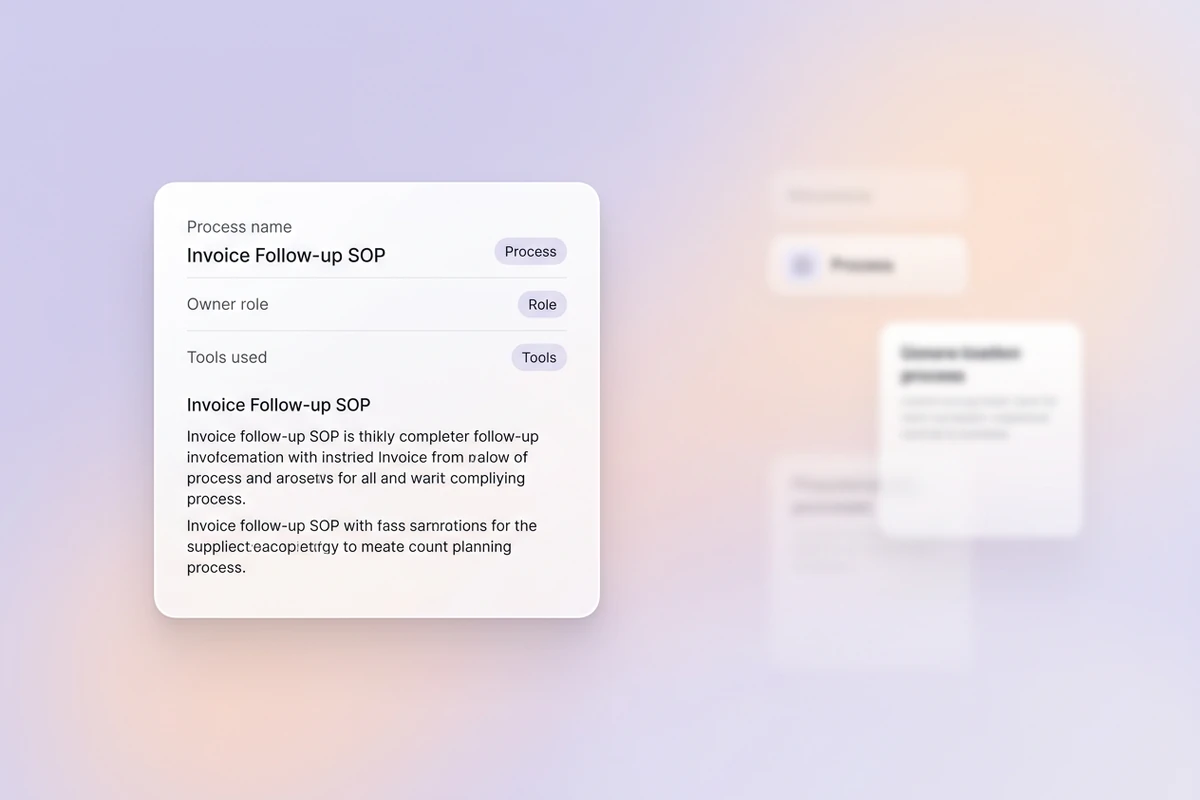
Asymmetric soft composer with process, role, and tools fields beside Process, Role, and Tools chips.

Brief the process and the owner

Start this SOP template generator with the workflow name, accountable role, systems involved, and where the process starts and stops. Empty “write an SOP” prompts return generic policy paragraphs new hires cannot execute. For role clarity before you draft, use the Job Description Generator.
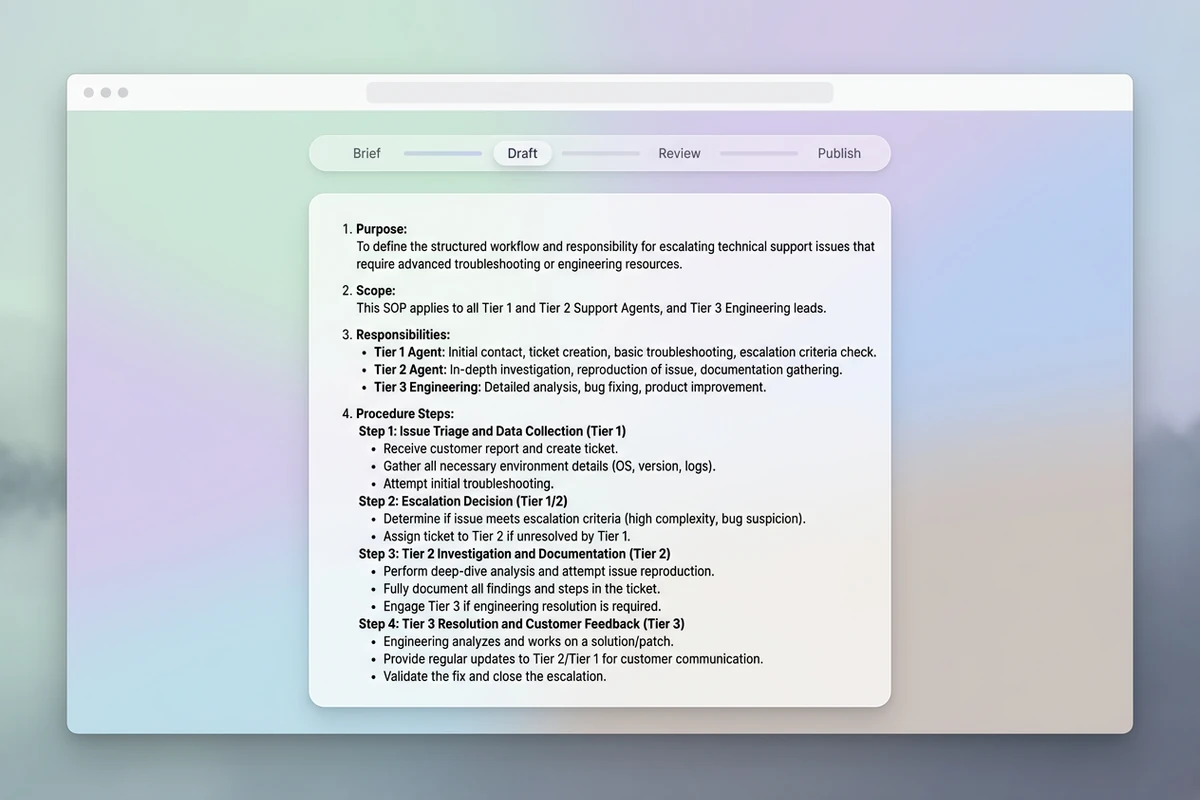
Soft workspace with Brief–Draft–Review–Publish beat strip and a numbered SOP outline with Purpose, Scope, and steps.

Generate purpose, scope, and numbered steps

Ask for Purpose, Scope, Responsibilities, and numbered steps with an owner or system per action. Prefer checkable verbs over abstract compliance language. Sharper revision prompts follow How to Write AI Prompts That Actually Work.

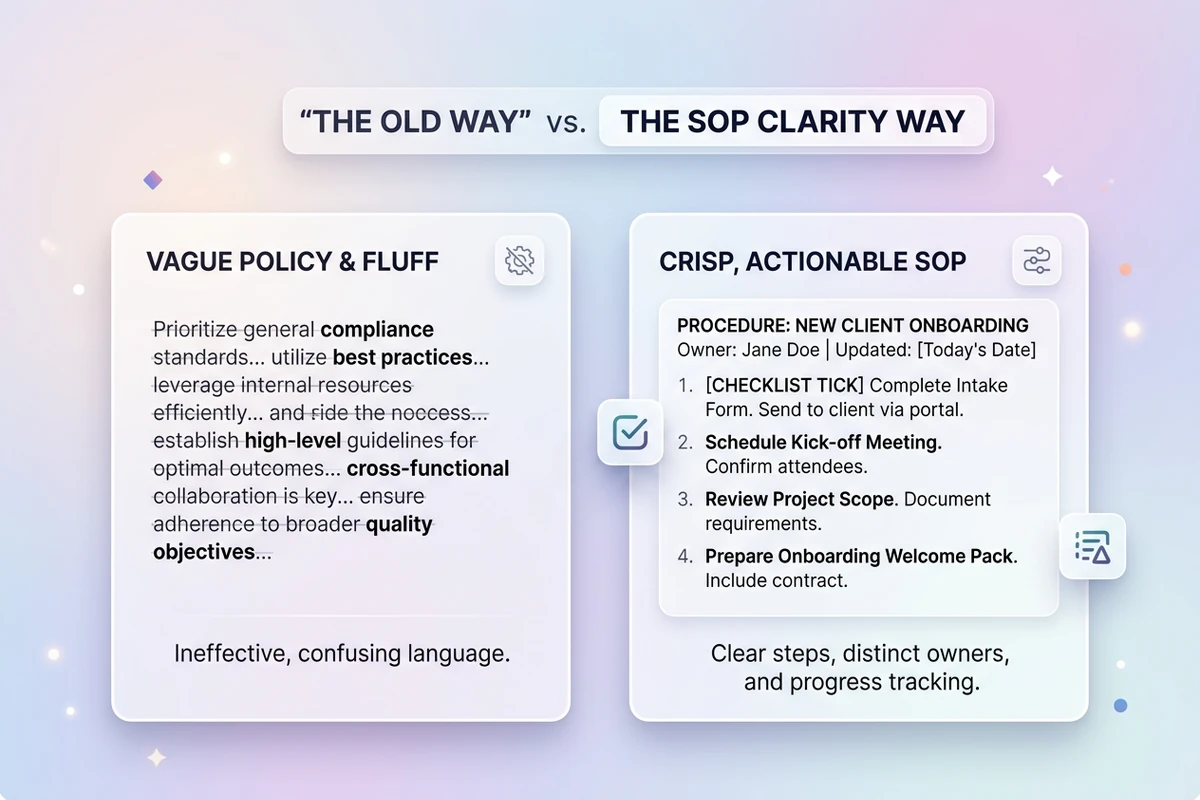
Split soft cards comparing struck-through vague policy fluff with a numbered SOP showing owners and steps.

Cut policy fluff and missing owners

Remove “ensure,” “leverage,” and steps with no actor. Add escalation triggers and handoffs. After the SOP is locked, continue with the FAQ Generator for customer-facing questions or the Meeting Minutes Generator to record change approvals.

What you can do with Ottermind

Document employee onboarding

Turn tribal knowledge into ordered steps, owners, required access, checkpoints, and a clear definition of completion.

Standardize a quality check

Create repeatable inspection criteria, exception handling, records, and escalation steps for consistent results.

Prepare an incident procedure

Define triggers, immediate actions, communication, authority, evidence capture, and recovery responsibilities before an event occurs.

Capture a recurring workflow

Write a usable procedure for publishing, reporting, procurement, or handoffs, then assign ownership with a RACI Matrix Generator.

How to use this SOP template generator

Step 01

Lock the process brief

Name the workflow, accountable role, tools, start, and stop. Refuse prompts with no owner or system.

Step 02

Generate the first draft

Produce a structure a teammate can follow on day one—not a policy essay.

Step 03

Run an execution pass

Ship an SOP you would hand to a new hire, then review when the process changes.

Why creators choose Ottermind

Steps before policy essays

Brief the workflow so this SOP template generator does not open with unreadable compliance language.

Operations context retained

Keep prior processes, tools, and approved wording organized while you refine the same playbook.

Focused revision passes

Ask separately to add escalation triggers, tighten scope, or assign missing owners without discarding the brief.

Compare process variants

Generate strict vs lightweight SOP versions against the same workflow before you choose.

Handoff to customer docs

Turn recurring process questions into public FAQs with the FAQ Generator.

Continue in Studio

Take the accepted SOP into Studio with the original process brief still attached for final polish.

Frequently asked questions

What is an SOP template generator?

An SOP template generator turns a process brief into a standard operating procedure with purpose, scope, responsibilities, and numbered steps. In Ottermind, you supply the workflow and tools, generate with collaborating agents, then revise for clarity. It does not invent legal policy, approvals, or system access you did not describe.

What should I include in the prompt?

Include process name, owner role, tools, start and stop conditions, and any escalation rules you already enforce. Vague “create an SOP” prompts usually return generic policy text.

How is an SOP different from a policy document?

A policy states what must be true; an SOP states how to do the work step by step. This generator targets executable steps with owners, not broad compliance language alone.

Should every step name an owner?

Yes when accountability matters. If a step has no owner or system, a new hire will stall. Instruct the draft to flag gaps instead of leaving passive voice.

Can this invent compliance requirements?

It should not. Use only supplied rules and ask the draft to mark missing legal or safety requirements for human review. You remain responsible for every control that ships.

What should I create after the SOP?

Lock the process, then draft role expectations with the Job Description Generator or capture change approvals with the Meeting Minutes Generator.

Discover more

More from the blog

Draft SOPs new hires can follow

Bring the process, owner, and tools. Generate a numbered SOP with this template generator, revise carefully, and keep the brief connected in Ottermind.

Write an SOP