Project Charter Template for Objectives, Scope, and Risks

Brief project, sponsor, and decision. Generate a charter with objectives, scope, stakeholders, metrics, risks, and timeline—then revise until placeholders are gone.

AI writing
Claude
GitHub
Google
Linear
Microsoft
Monday
Netlify
Notion
OpenAI
Sentry
Slack
Stripe
Supabase
Claude
GitHub
Google
Linear
Microsoft
Monday
Netlify
Notion
OpenAI
Sentry
Slack
Stripe
Supabase
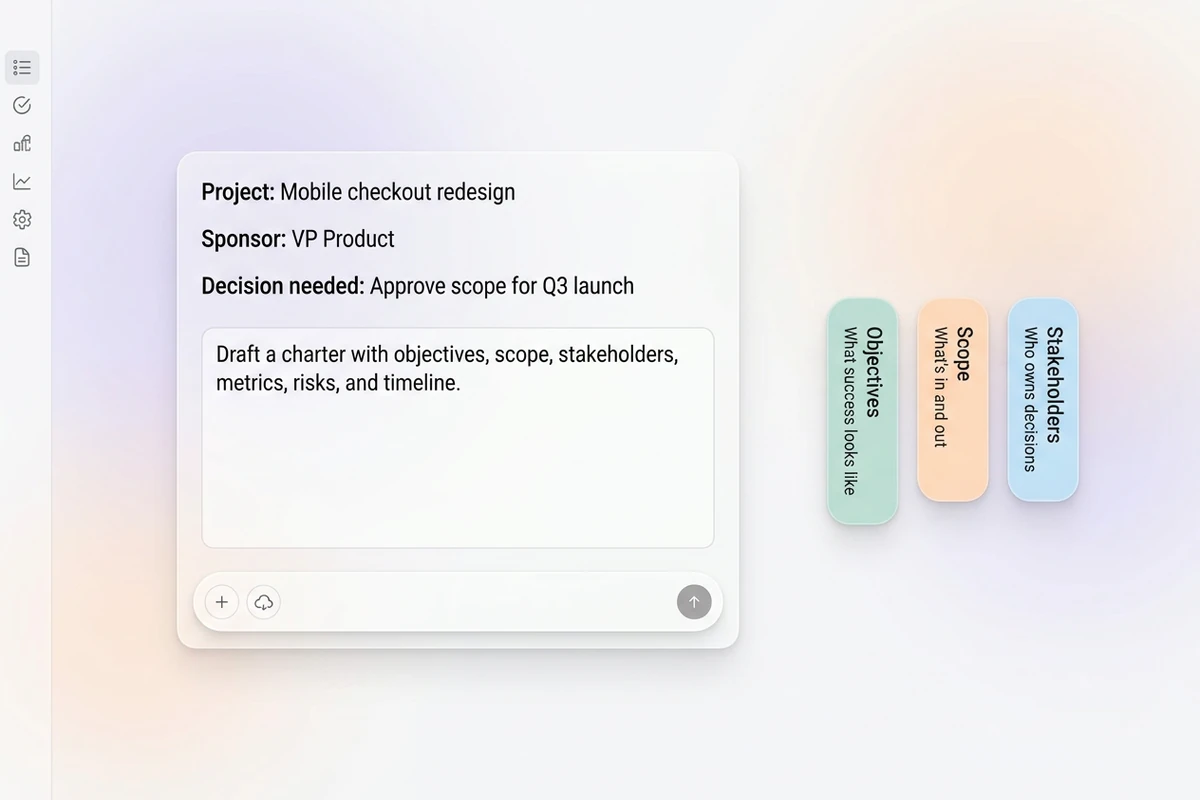
Asymmetric soft composer with project, sponsor, and decision fields beside Objectives, Scope, and Stakeholders chips.

Brief the project before you charter

Start this project charter template workflow with the project name, sponsor, decision you need, and the constraints that matter. Empty “fill this charter” prompts return underscore placeholders. For sequencing after scope is locked, use the Roadmap Generator.

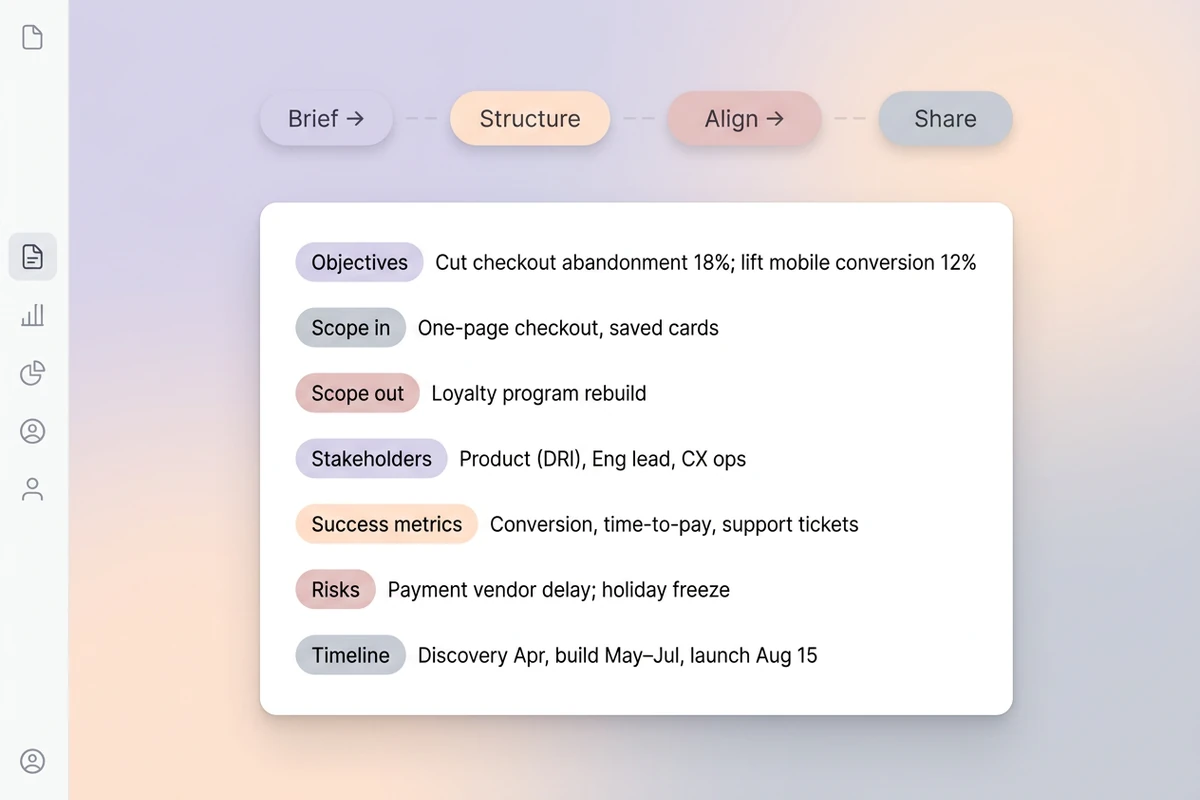
Soft workspace with Brief–Structure–Align–Share beat strip and a structured charter showing objectives, scope, metrics, risks, and timeline.

Structure objectives, scope, and accountability

Ask for measurable objectives, explicit in/out scope, named stakeholders with roles, success metrics, top risks, and a realistic timeline. A revise pass that tightens scope usually beats regenerating from scratch. Sharper revision prompts follow How to Write AI Prompts That Actually Work.

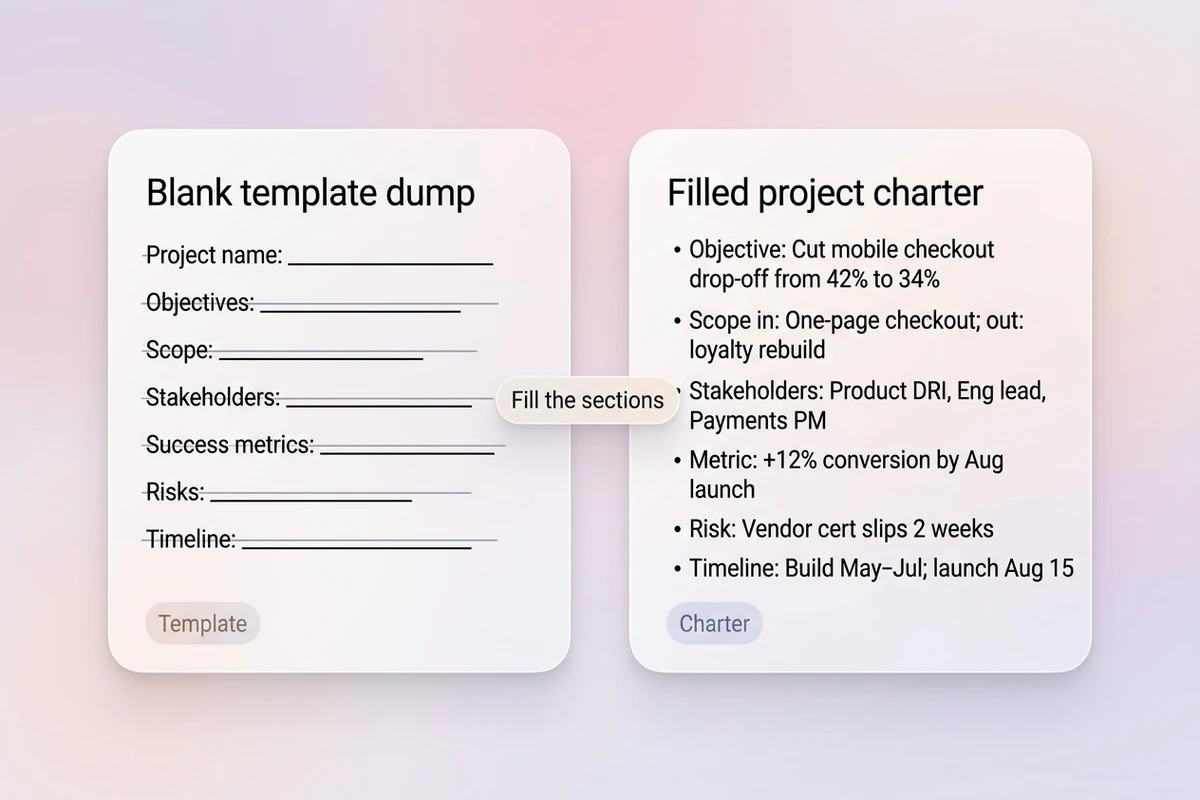
Split soft cards comparing a blank template dump with a filled charter showing objectives, scope, metrics, risks, and timeline.

Replace template dumps with usable detail

Cut blank fields, vague objectives, and risks without owners. Keep the approved brief attached for kickoff. After the charter is stable, align stakeholders with the User Persona Generator or pressure-test assumptions with the SWOT Analysis Generator.

What you can do with Ottermind

Launch a new product initiative

Define the problem, objectives, scope, stakeholders, milestones, risks, and success measures before delivery begins.

Plan a system migration

Align technical work, business continuity, dependencies, rollback conditions, and ownership in one approved charter.

Coordinate a campaign

Connect audience, channels, budget, deliverables, decision rights, and launch timing across marketing teams.

Start a cross-functional program

Make boundaries and accountability explicit, then assign detailed ownership with a RACI Matrix Generator.

How to use this project charter generator

Step 01

Lock the kickoff brief

List project, sponsor, decision needed, constraints, and any metrics or risks already known. Refuse “give me a charter template” with no context.

Step 02

Generate filled sections

Produce a charter the team can argue with: what success means, what is excluded, who owns decisions, and when work lands.

Step 03

Run a scope and accountability pass

Confirm every metric and date against the brief, then share with an [Executive Summary Generator](https://ottermind.ai/tools/executive-summary-generator) memo or [Meeting Minutes Generator](https://ottermind.ai/tools/meeting-minutes-generator) notes from kickoff.

Why creators choose Ottermind

Context before placeholders

Brief real constraints so this project charter template does not open with empty underscores and generic section labels.

Kickoff context retained

Keep sponsor, scope debates, and accepted metrics organized while you refine the same charter.

Focused revision passes

Ask separately for tighter scope, clearer risk owners, or sharper metrics without discarding the brief.

Compare charter angles

Generate a minimal vs full charter read from the same facts before you commit scope.

Planning continuity

Turn locked objectives into sequenced delivery with the Roadmap Generator.

Continue in Studio

Take the accepted charter into Studio with the original kickoff brief still attached for final polish.

Frequently asked questions

What is a project charter template?

A project charter template outlines objectives, scope, stakeholders, success metrics, risks, and timeline for a new initiative. In Ottermind, you supply project context, generate filled sections with collaborating agents, then revise for accuracy. It does not replace sponsor approval or invent facts you did not provide.

What should I include in the prompt?

Include project name, sponsor, decision needed, constraints, known metrics, and top risks. Vague “write a project charter” prompts usually return blank template fields.

How is scope in/out different from objectives?

Objectives state measurable outcomes. Scope in/out lists what the project will and will not deliver. Keep both explicit so teams do not argue about hidden work later.

Should every objective include a number?

Prefer measurable objectives when you have baselines. If a metric is unknown, ask the draft to flag the gap instead of inventing a target.

Can this invent stakeholder names or dates?

It should not. Instruct the draft to use only supplied facts and to mark gaps. You remain responsible for every name, date, and metric that ships.

What should I create after the charter?

Sequence delivery with the Roadmap Generator, summarize for executives with the Executive Summary Generator, or capture kickoff decisions with the Meeting Minutes Generator.

Discover more

More from the blog

Draft project charters teams can execute

Bring the project, sponsor, and constraints. Generate a filled project charter template with objectives, scope, stakeholders, metrics, risks, and timeline—then revise carefully in Ottermind.

Write a project charter