





Meeting Agenda Template with Timed Topics and Owners

Brief the goal, attendees, and decisions. Generate a timed agenda with owners and outcomes—then revise until every slot earns its minutes.

AI writing
Claude
GitHub
Google
Linear
Microsoft
Monday
Netlify
Notion
OpenAI
Sentry
Slack
Stripe
Supabase
Claude
GitHub
Google
Linear
Microsoft
Monday
Netlify
Notion
OpenAI
Sentry
Slack
Stripe
Supabase
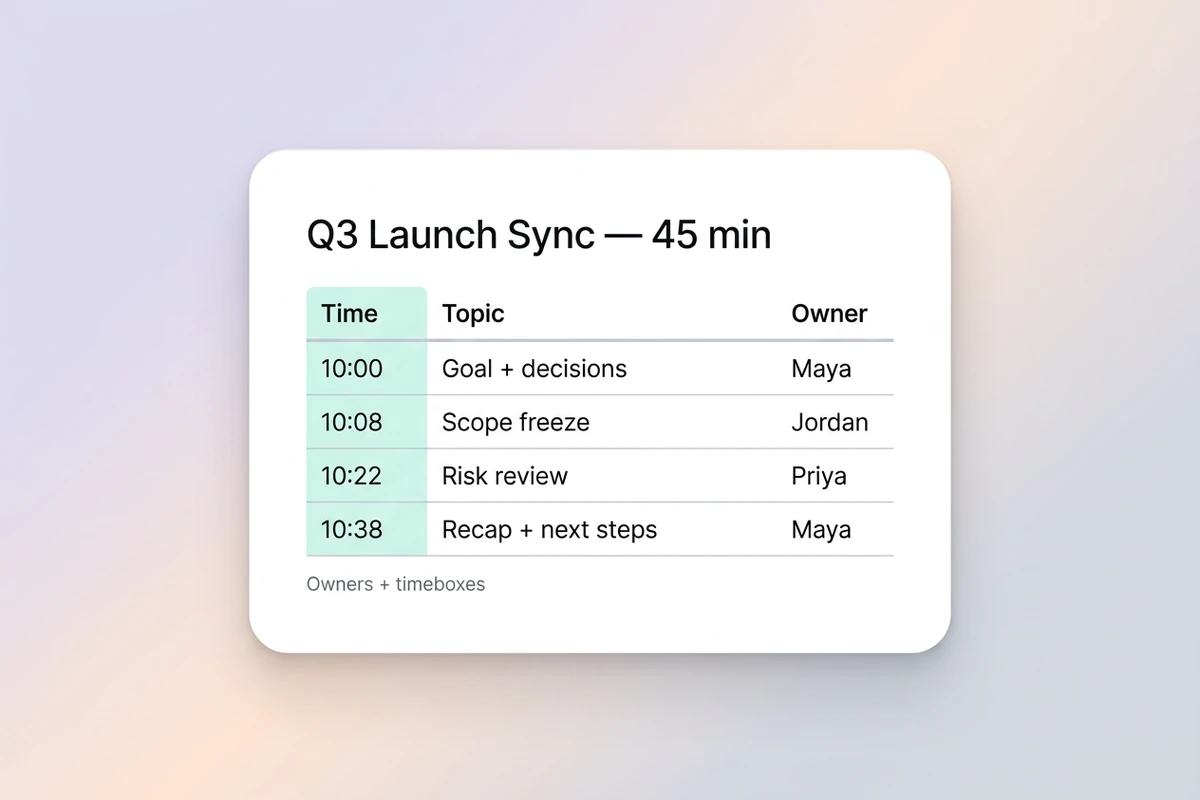
Centered floating agenda packet card with Time, Topic, and Owner rows on soft pastel mist.

Brief the goal before you schedule

Start this meeting agenda template with the meeting goal, length, attendees, and the decisions you need in the room. Empty “write an agenda” prompts return blank time slots. For sequencing work after decisions land, use the Roadmap Generator.
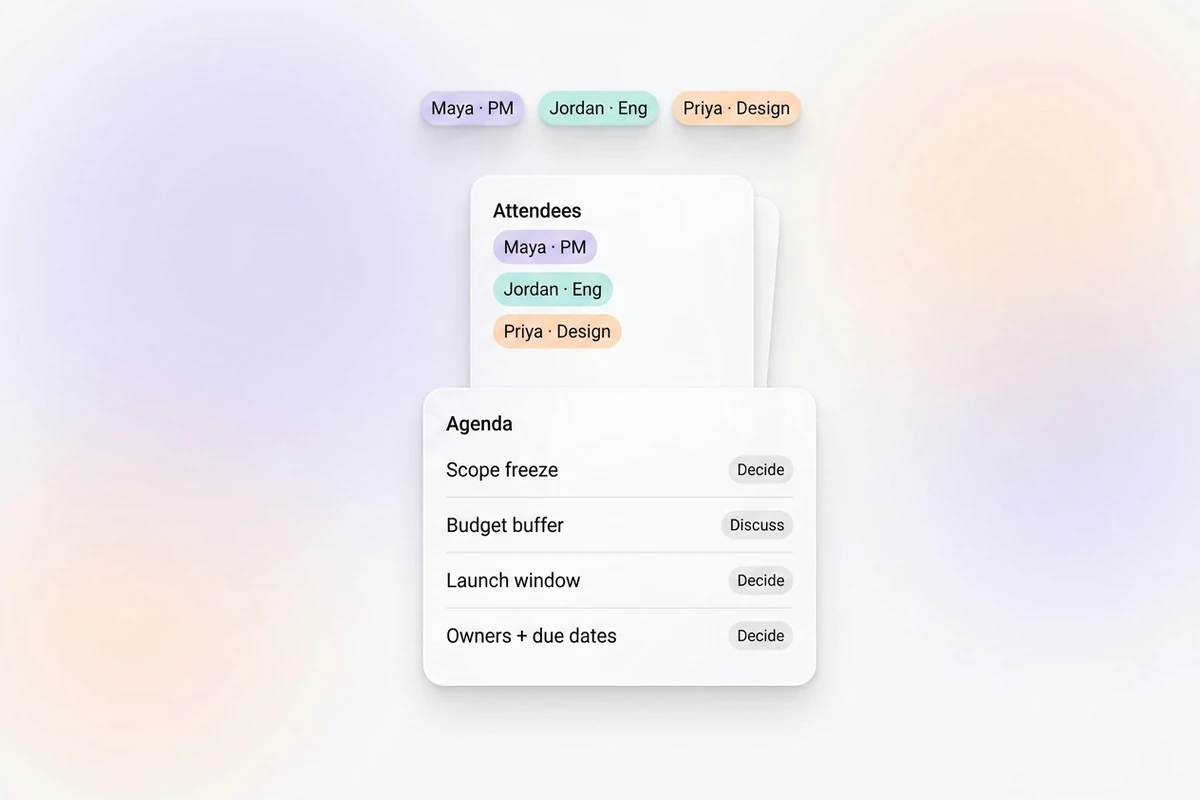
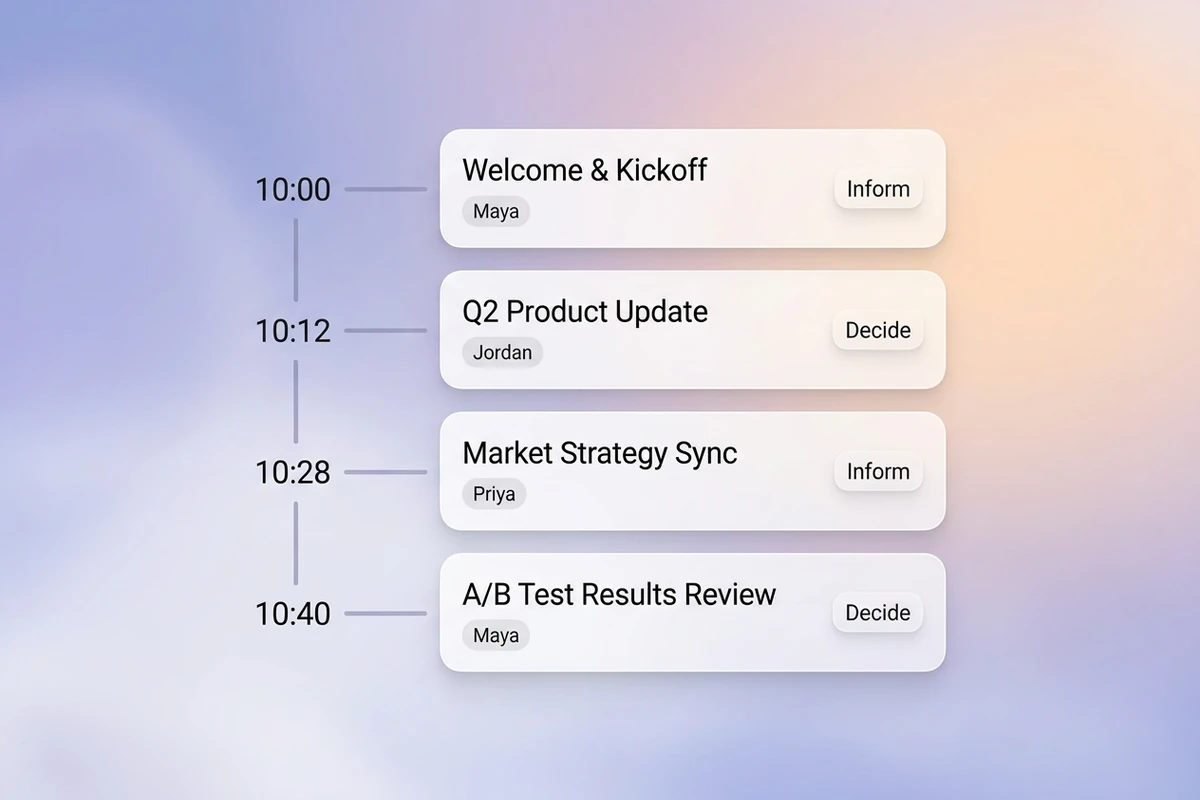
Soft timeline clock-rail with vertical time spine and agenda item cards branching right with owners.

Replace calendar dumps with usable agendas

Cut vague “updates” lines and topics with no owner. Keep a five-minute recap for decisions and next steps. After the meeting, capture outcomes with the Meeting Minutes Generator, or standardize recurring rituals with the SOP Generator.

What you can do with Ottermind

Plan a project kickoff

Set the desired decisions, introduce owners, surface constraints, and reserve time for risks and immediate next steps.

Structure a decision meeting

Give each option, tradeoff, decision owner, and pre-read a clear place instead of filling the hour with status updates.

Make one-on-ones useful

Balance employee priorities, feedback, development, blockers, and commitments in a repeatable but flexible agenda.

Run a focused retrospective

Organize evidence, themes, experiments, and owners so the team leaves with fewer, clearer improvements.

How to use this meeting agenda generator

Step 01

Lock the meeting brief

List goal, length, attendees, and decisions needed. Refuse “agenda template” with no context.

Step 02

Generate the timed agenda

Produce rows a facilitator can run aloud—not a calendar invite with empty titles.

Step 03

Run a fit and ownership pass

Confirm times add up, then share. Afterward, log decisions with the [Meeting Minutes Generator](https://ottermind.ai/tools/meeting-minutes-generator) or brief sponsors with the [Executive Summary Generator](https://ottermind.ai/tools/executive-summary-generator).

Why creators choose Ottermind

Context before blank slots

Brief real goals so this meeting agenda template does not open with empty time blocks and vague “updates.”

Meeting context retained

Keep attendees, prior decisions, and accepted constraints organized while you refine the same agenda.

Focused revision passes

Ask separately to tighten timeboxes, add owners, or relabel Decide vs Discuss without discarding the brief.

Compare agenda shapes

Generate a 30-minute vs 45-minute cut from the same facts before you book the room.

Continue in Studio

Take the accepted agenda into Studio with the original meeting brief still attached for final polish.

Frequently asked questions

What is a meeting agenda template?

A meeting agenda template outlines timed topics, owners, and expected outcomes before a meeting starts. In Ottermind, you supply the goal and attendees, generate a filled agenda with collaborating agents, then revise for fit. It does not invent attendees, decisions, or facts you did not provide.

What should I include in the prompt?

Include meeting goal, duration, attendees with roles, and the decisions you need. Vague “write a meeting agenda” prompts usually return blank calendar dumps.

How is Decide different from Discuss?

Decide means the room must leave with a commitment and an owner. Discuss explores options without requiring a final call. Labeling each row prevents status debates from blocking decisions.

Should every topic have an owner?

Yes when accountability matters. If a topic has no owner, discussion drifts. Instruct the draft to flag gaps instead of inventing names.

Can this invent attendees or decisions?

It should not. Use only supplied people and decisions, and ask the draft to mark missing inputs. You remain responsible for every name and call that ships.

What should I create after the agenda?

Run the meeting, then capture outcomes with the Meeting Minutes Generator, summarize for sponsors with the Executive Summary Generator, or sequence follow-up work with the Roadmap Generator.

Discover more

More from the blog

Draft agendas meetings can actually run

Bring the goal, attendees, and decisions needed. Generate a timed meeting agenda template with owners—then revise carefully in Ottermind.

Write a meeting agenda