





Fact Checker for Draft Claims and Evidence

Paste the claim, quote, or draft plus sources you trust. Map what is supported, what is uncertain, and what still needs evidence—then revise before you publish.

AI writing
Claude
GitHub
Google
Linear
Microsoft
Monday
Netlify
Notion
OpenAI
Sentry
Slack
Stripe
Supabase
Claude
GitHub
Google
Linear
Microsoft
Monday
Netlify
Notion
OpenAI
Sentry
Slack
Stripe
Supabase
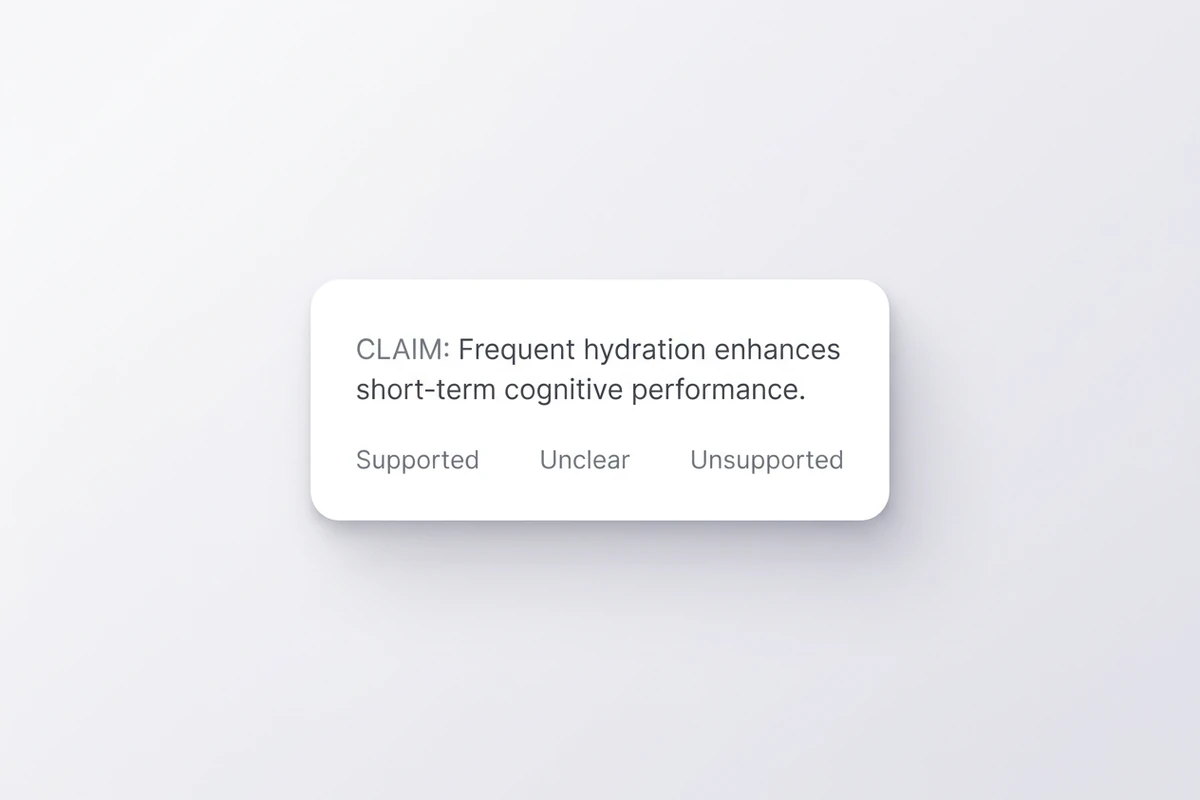
Minimal white card with a claim under review and muted Supported, Unclear, and Unsupported labels on a quiet gray-white canvas.

Bring the claim and the evidence

News fact-checkers judge public statements against published reporting. This fact checker is for your draft: paste the exact sentence under review plus quotes, data, or notes you already trust. Empty “is this true?” prompts force guesses. For long background reading first, use the PDF Summarizer or Text Summarizer.
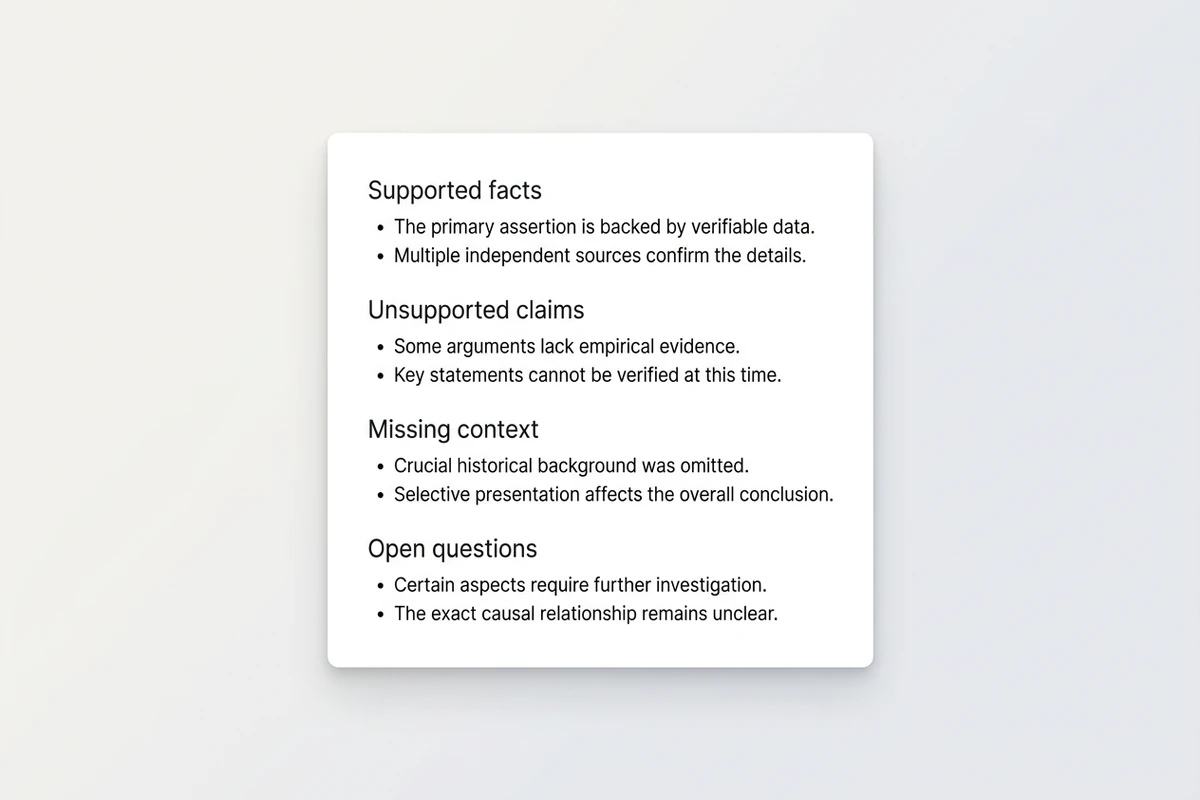
Single white result card with four plain fact-check sections and short bullets on a soft off-white background.

Sort claims by evidence strength

Ask for supported facts, weakly supported lines, missing context, and open questions in separate lists. That structure makes revision faster than a single yes-or-no answer and mirrors how editorial teams review launch copy. Sharper review prompts follow How to Write AI Prompts That Actually Work.

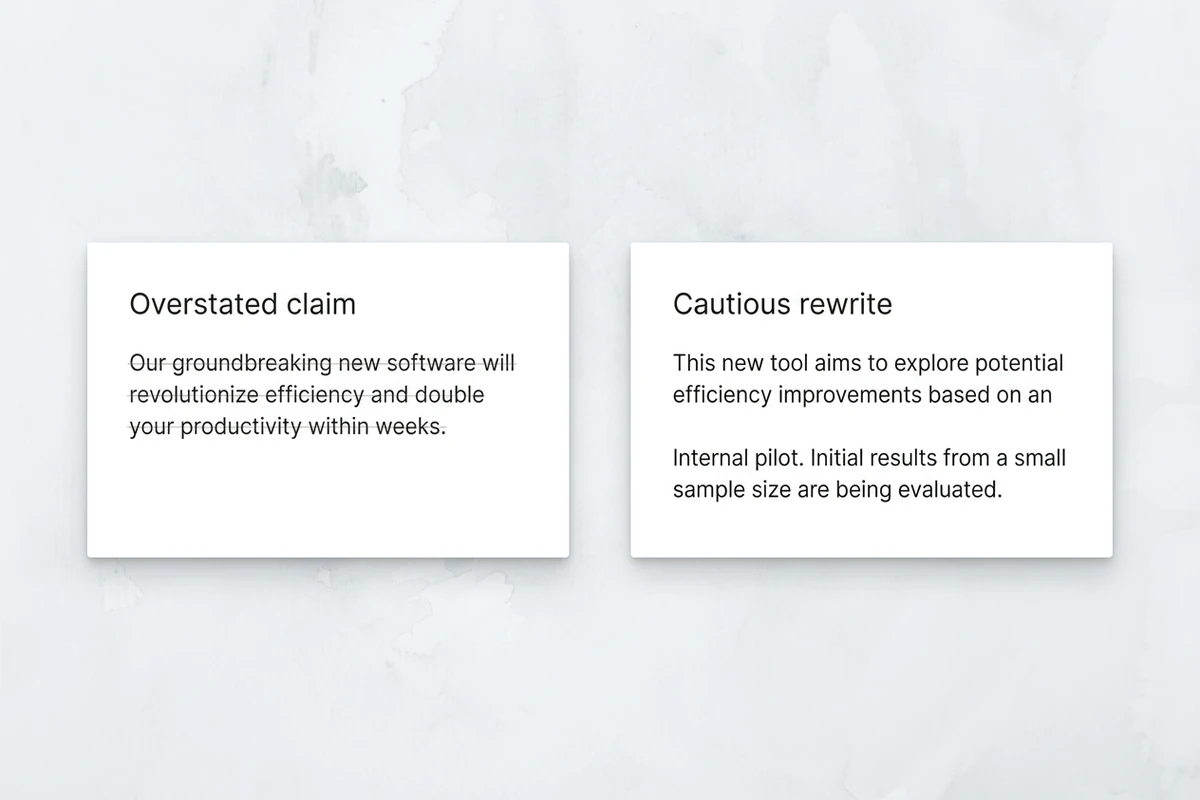
Two quiet white cards comparing an overstated claim with strikethrough and a cautious rewrite on a pale gray canvas.

Rewrite without hiding uncertainty

Request cautious alternatives that preserve the useful point while removing overstated numbers, universal language, or unnamed sources. You remain responsible for what ships. Before publishing, align final copy with the Press Release Generator or Headline Generator if needed.

What you can do with Ottermind

Review marketing claims before launch

Catch unsupported statistics, universal language, and missing qualifiers in campaign copy before it goes live.

Check a quote or stat in a blog draft

Verify whether a number, study reference, or customer outcome is actually supported by the sources you have.

Evaluate a social post or email line

Test whether a bold one-liner still holds up when you separate fact from inference and hype.

Prepare safer executive talking points

Rewrite confident statements into language leadership can use without overstating evidence you cannot defend.

How to use this fact checker in 3 steps

Step 01

Paste the claim and sources

Include the exact wording under review plus quotes, links, data tables, or notes you want treated as evidence.

Step 02

Review evidence gaps

Ask for structured output so weak lines are easy to fix instead of buried in prose.

Step 03

Revise or reject

Ship only claims you can defend, keep the review attached, and continue editing in Studio.

Why creators choose Ottermind

Evidence before verdicts

Supply sources so this fact checker reviews claims against what you actually know.

Review context retained

Keep drafts, sources, and accepted rewrites organized while you refine the same piece.

Targeted rewrite passes

Ask separately for softer numbers, clearer qualifiers, or removal of unsupported lines.

Compare wording options

Generate cautious and neutral rewrite options before you choose what to publish.

Continue in Studio

Carry the reviewed draft into Studio with evidence notes still attached.

Frequently asked questions

What does this fact checker do?

It helps you review a claim or draft against the sources you provide, then sort supported facts, weak evidence, missing context, and safer rewrite options. It is a review aid, not a guarantee of truth.

Is this the same as Snopes or factcheck.org?

No. Those sites evaluate public claims against published reporting. This page helps you review your own draft copy against the evidence you supply in the prompt.

Can it browse the web to verify everything?

Treat this page as working from the claim and evidence you supply in the prompt. If you need live source checks, add those findings to the prompt before you ask for a review.

Will it always say true or false?

Often the useful answer is more nuanced: supported, unclear, or unsupported with reasons. Ask for structured output instead of a single verdict when the claim depends on context.

Can it replace editorial or legal review?

No. It helps you spot risky claims faster, but final responsibility for published statements remains with you and your review process.

What should I do after fact-checking?

Apply the cautious rewrite, then continue with the Press Release Generator, Headline Generator, or AI Email Generator as needed.

Discover more

More from the blog

Review claims before you publish

Paste the claim and your sources. Use this fact checker to separate supported facts from weak lines, revise carefully, and keep the review connected in Ottermind.

Fact-check a claim