





Press Release Generator for Clear, News-Led Announcements

Brief who, what, when, where, why, one real metric, and an approved quote. Generate a news-led press release, then revise until the lead carries the story.

AI writing
Claude
GitHub
Google
Linear
Microsoft
Monday
Netlify
Notion
OpenAI
Sentry
Slack
Stripe
Supabase
Claude
GitHub
Google
Linear
Microsoft
Monday
Netlify
Notion
OpenAI
Sentry
Slack
Stripe
Supabase
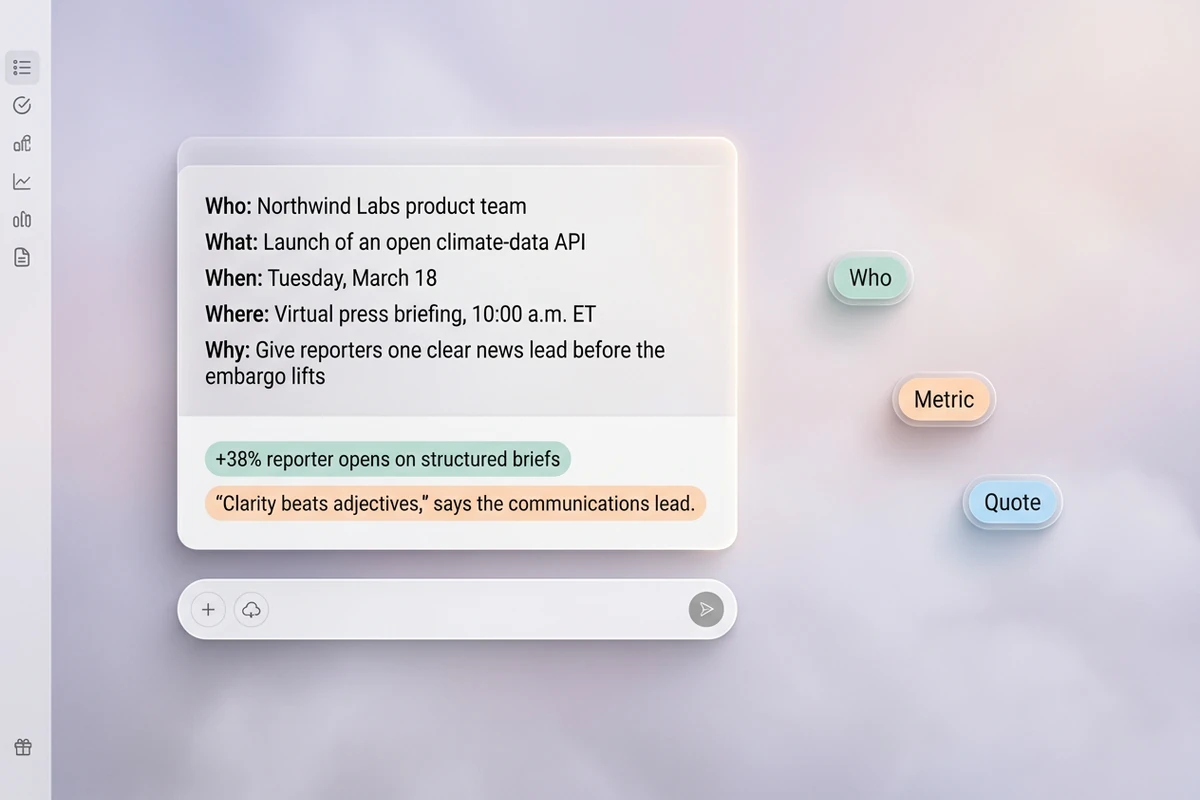
Asymmetric soft composer with a 5 Ws briefing, metric and quote chips, and Who, Metric, and Quote pills on luminous mist.

Brief the news before you draft

Start this press release generator with the 5 Ws, one number you can defend, and a quote someone actually approved. Vibe-only prompts invent titles and metrics journalists reject. If you need a short spoken hook for media interviews, use the Elevator Pitch Generator.
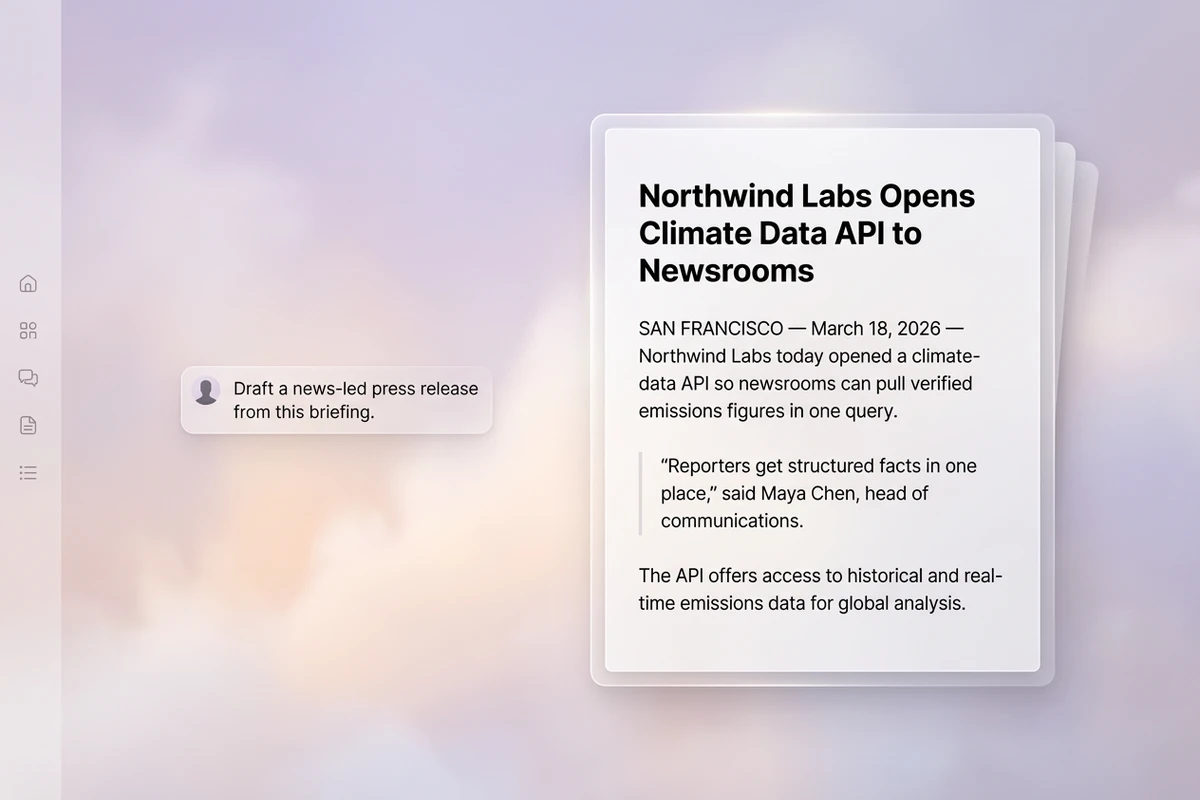
Tall soft press-release document with headline, dateline, lead, and quote beside a brief draft prompt on mist.

Lead with the news, not the adjectives

Ask for headline, dateline, inverted-pyramid lead, body, attributed quote, and fixed boilerplate. A revise pass that moves the news to sentence one usually beats regenerating from scratch. Sharper revision prompts follow How to Write AI Prompts That Actually Work.

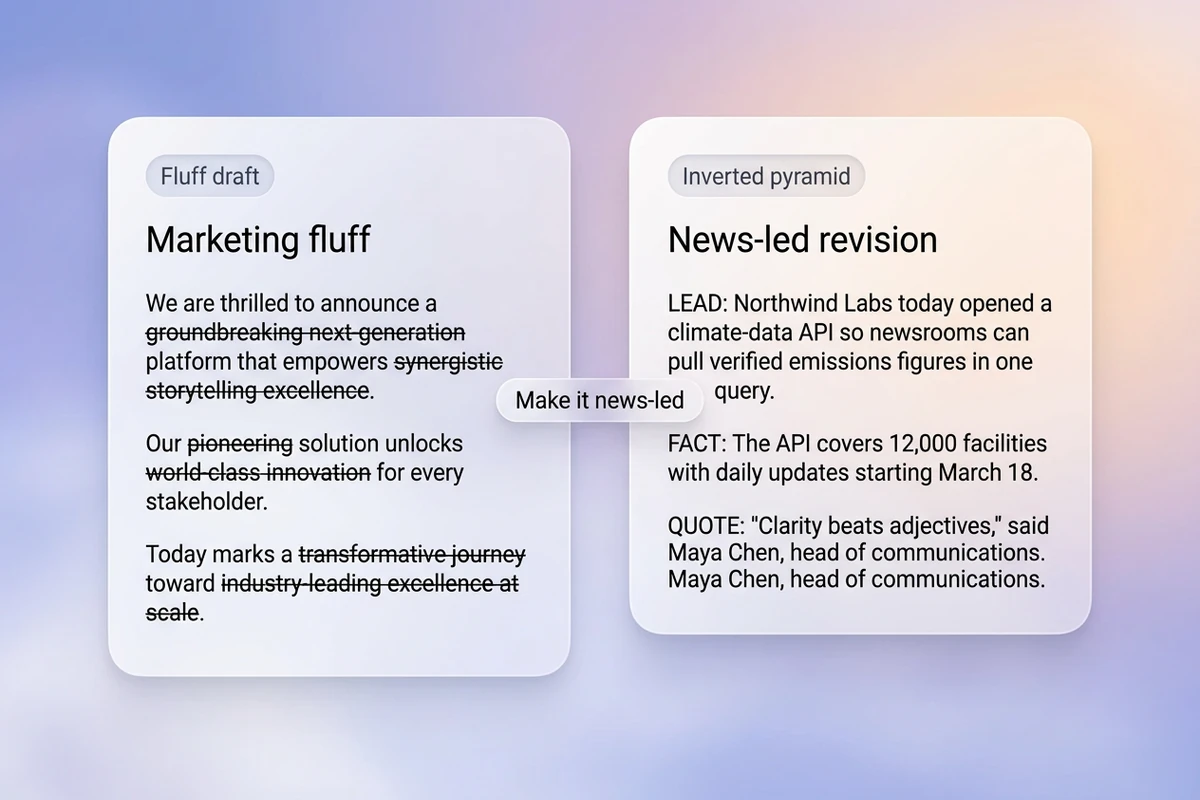
Split soft cards comparing a struck-through marketing fluff draft with a news-led inverted-pyramid revision.

Cut fluff, verify every claim

Remove “revolutionary,” invented round sizes, and quotes nobody said. Keep the approved boilerplate consistent across releases. After the draft is stable, send the pitch with the AI Email Generator or summarize stakeholder notes with the Executive Summary Generator.

What you can do with Ottermind

Announce a product launch

Lead with what is new, who it serves, availability, evidence, and an approved quote rather than marketing hype.

Share a funding milestone

Explain the round, participants, use of funds, company progress, and verified numbers in a news-led structure.

Introduce a partnership

Clarify what each organization contributes, what changes for customers, and when the collaboration takes effect.

Promote an event or initiative

Turn dates, location, purpose, participants, and access details into a release journalists can verify quickly.

How to use this press release generator

Step 01

Lock the fact brief

List 5 Ws, one metric, named quote with title, boilerplate, and audience. Refuse “write a buzz-worthy release” with no facts.

Step 02

Generate the first draft

Produce a structure reporters can scan: news up top, proof next, quote, then About and contact.

Step 03

Run a fact and voice pass

Check every claim against the brief, then distribute only after a human would stand behind the quotes and numbers.

Why creators choose Ottermind

Facts before adjectives

Brief 5 Ws, a real metric, and an approved quote so this press release generator does not invent news.

Project context retained

Keep approved boilerplate, prior releases, and media contacts organized while you draft the next announcement.

Focused revision passes

Ask separately for a sharper lead, fewer adjectives, or trade-press tone without discarding the brief.

Compare angle variants

Generate a product-led and a customer-impact version against the same facts before you choose.

Comms writing continuity

Pitch reporters with the AI Email Generator after the release is approved.

Continue in Studio

Take the accepted press release into Studio with the original fact brief still attached for final polish.

Frequently asked questions

What is a press release generator?

A press release generator turns announcement facts into a structured news draft with headline, lead, quote, and boilerplate. In Ottermind, you supply the 5 Ws, a real metric, and an approved quote, generate with collaborating agents, then fact-check before distribution. It does not replace media relations judgment or invent claims.

What should I include in the prompt?

Include who announced what, when and where, why it matters, one concrete metric, a named quote with title, your About boilerplate, and the target press audience. Vague “make it exciting” prompts usually return fluff journalists ignore.

How long should a press release be?

Most useful releases land around 350–500 words—long enough for context, short enough for editors to cut from the bottom. If the news is buried after a paragraph of adjectives, tighten the lead first.

Can this invent quotes or metrics?

It should not. Instruct the draft to use only supplied facts and to flag gaps instead of fabricating round sizes, customer names, or executive quotes. You remain responsible for every claim that ships.

How is this different from an elevator pitch?

An elevator pitch is a short spoken conversation starter. A press release is a formal news document for journalists and wire formats. For spoken intros, use the Elevator Pitch Generator.
What should I create after the press release?

Fact-check, then pitch with the AI Email Generator. For internal stakeholder briefs on the same news, use the Executive Summary Generator.

Discover more

More from the blog

Draft a press release that leads with the news

Bring the 5 Ws, a real metric, and an approved quote. Generate a clear press release with this press release generator, revise carefully, and keep the brief connected in Ottermind.

Write release