






Elevator Pitch Generator for Clear 30–60 Second Intros

Brief who you help, the problem, the outcome, and the next step you want. Generate a 30–60 second elevator pitch, then revise until it sounds like a conversation starter.

AI writing
Claude
GitHub
Google
Linear
Microsoft
Monday
Netlify
Notion
OpenAI
Sentry
Slack
Stripe
Supabase
Claude
GitHub
Google
Linear
Microsoft
Monday
Netlify
Notion
OpenAI
Sentry
Slack
Stripe
Supabase
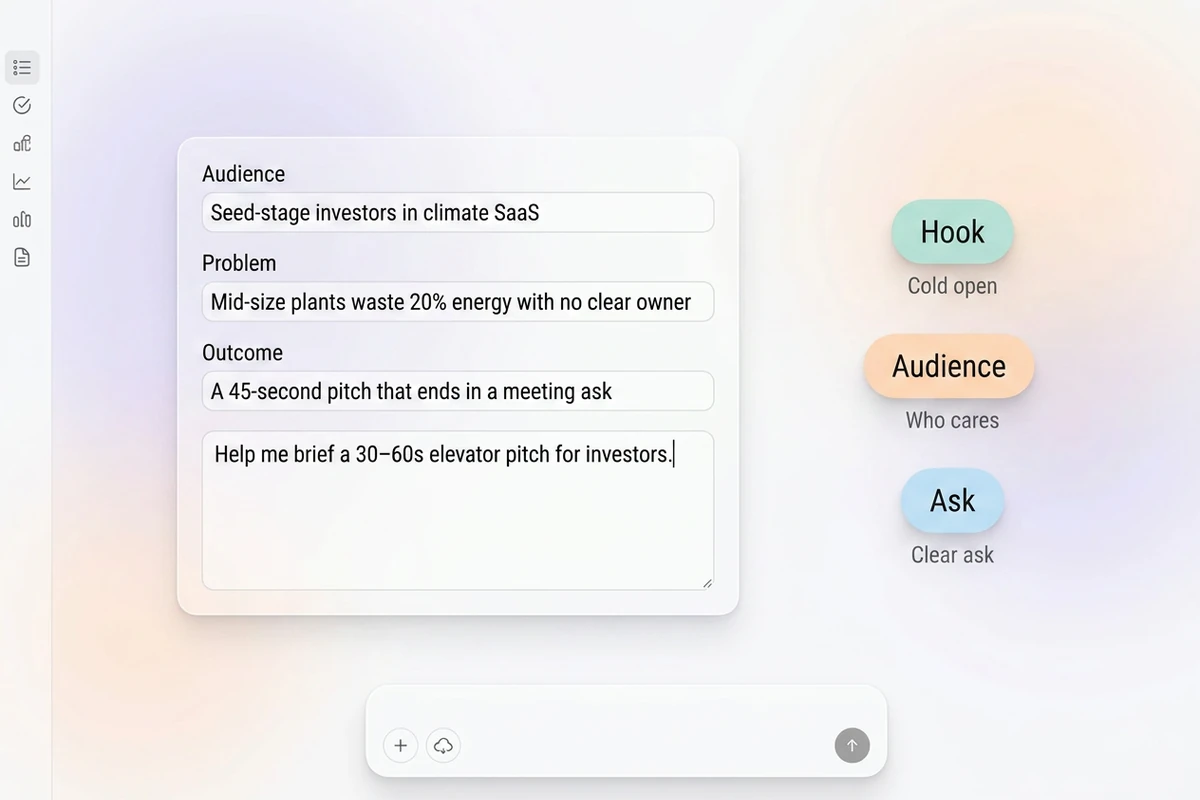
Asymmetric soft composer with audience, problem, and outcome fields beside Hook, Audience, and Ask chips.

Brief the listener and the ask first

Start this elevator pitch generator with who you are talking to, the problem they recognize, the outcome you create, and the soft next step you want. Feature dumps without an ask become monologues. If you still need a durable purpose line for About pages, use the Mission Statement Generator.
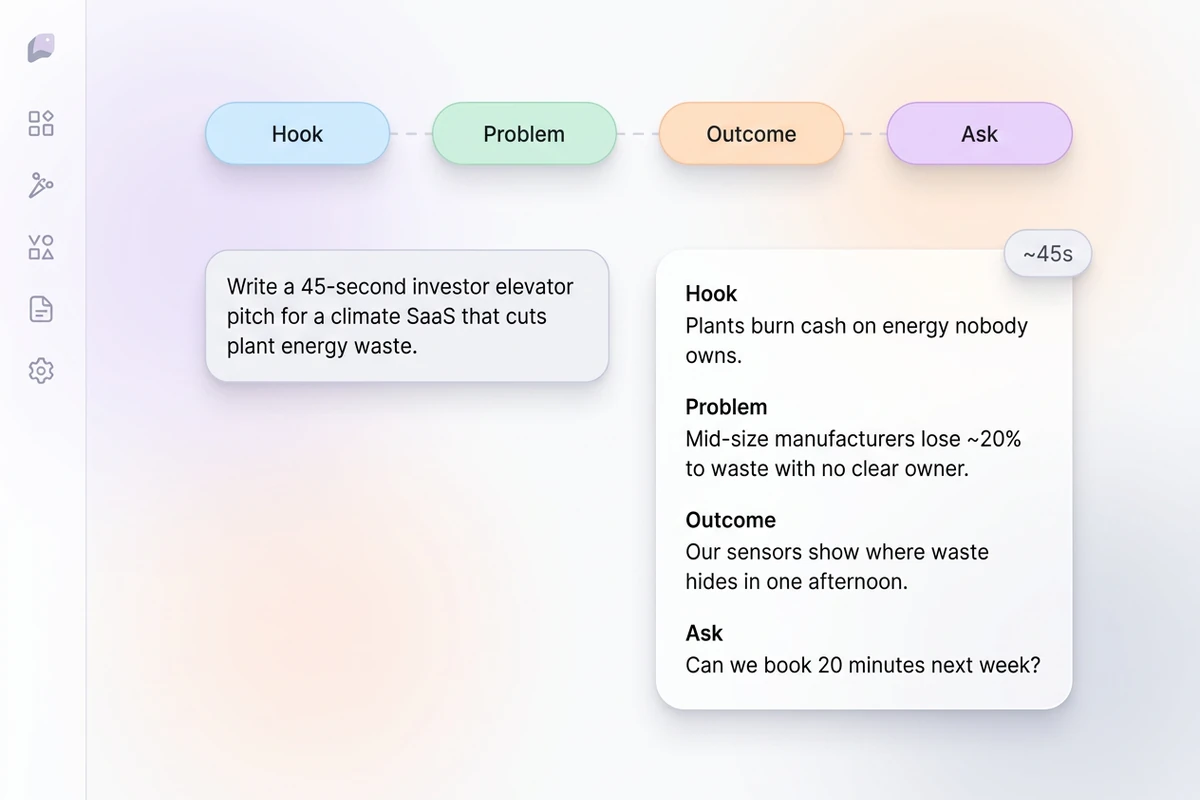
Soft workspace with Hook–Problem–Outcome–Ask beat strip and a structured ~45s elevator pitch result.

Structure a pitch people can answer

Ask for Hook → problem → outcome → proof → soft ask, sized for about 30–60 seconds spoken. A revise pass that cuts jargon usually beats regenerating from scratch. Sharper revision prompts follow How to Write AI Prompts That Actually Work.

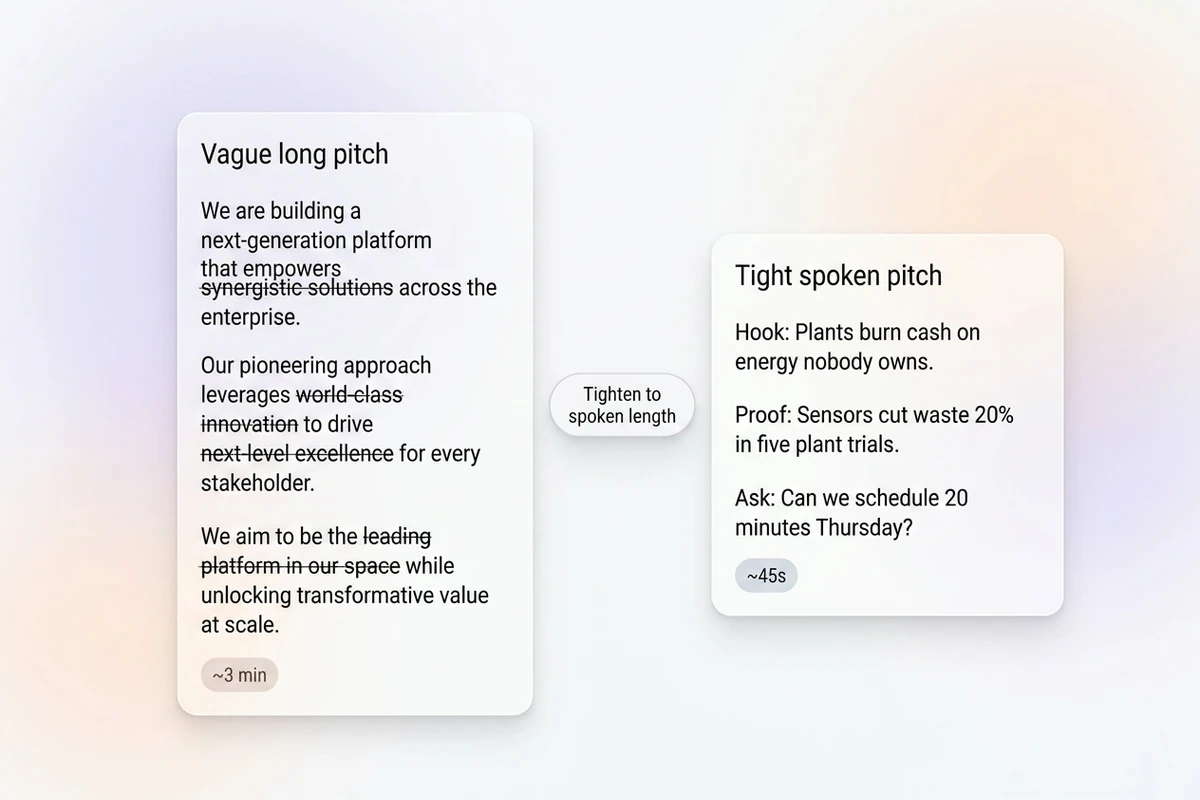
Split soft cards comparing a struck-through vague long pitch with a tight Hook–Proof–Ask spoken revision.

Cut length, keep the conversation open

Remove buzzwords, origin-story filler, and hard sells that close the door. Keep one proof point and a question the other person can answer. After the spoken line is stable, draft a shorter hook with the Slogan Generator or a written intro with the Bio Generator.

How to use this elevator pitch generator

Step 01

Lock the pitch brief

List role or company, audience, problem, outcome, one proof point, and the soft ask. Refuse “pitch my startup” with no listener.

Step 02

Generate the first draft

Produce a structure you can say aloud: attention, recognition, change, credibility, and a conversation-opening ask.

Step 03

Run a spoken clarity pass

Time yourself once, then share only after a stranger can repeat who you help and what changes.

Why creators choose Ottermind

Listener before features

Brief audience, problem, and ask so this elevator pitch generator does not invent a feature tour.

Project context retained

Keep approved proof points, tone, and prior pitch versions organized while you refine the line.

Focused revision passes

Ask separately for 30-second length, investor tone, or a stronger ask without discarding the brief.

Compare context variants

Generate networking and interview versions against the same proof before you choose.

Continue in Studio

Take the accepted elevator pitch into Studio with the original brief still attached for final polish.

FAQ

What is an elevator pitch generator?

An elevator pitch generator turns audience, problem, outcome, and a soft ask into a short spoken intro you can edit. In Ottermind, you supply a concrete brief, generate a 30–60 second draft with collaborating agents, then revise until it sounds natural. It does not replace practice or invent traction you do not have.

What should I include in the prompt?

Include who you are, who you help, the problem they feel, the outcome you deliver, one proof point when you have it, preferred length or tone, and the next step you want. Vague “pitch my company” prompts usually return jargon-heavy monologues.

How long should an elevator pitch be?

Most useful pitches are about 30–60 seconds spoken—often roughly 75–150 words. Shorter leaves room for questions. If you cannot finish without rushing, cut features and keep the outcome and ask.

How is this different from a mission statement?

A mission statement is a durable purpose line for the organization. An elevator pitch is a spoken conversation starter for a specific listener and moment. For lasting purpose wording, use the Mission Statement Generator.
Should I end with a hard sell?

Usually no. End with a soft, specific next step the other person can answer—a question, a short demo invite, or an offer to send one example. The goal is a follow-up conversation, not a close in the hallway.

What should I create after the elevator pitch?

Practice the line aloud, then draft a shorter hook with the Slogan Generator or a written bio with the Bio Generator. If you need audience clarity first, use the User Persona Generator.

Discover more

What they say about Ottermind

Ottermind helped us turn a rough campaign brief into several strong visual directions without losing the original intent. We could compare different compositions, keep the references beside the work, and refine the strongest concept in one place. That made the entire review process feel faster and much more focused.

Maya Chen - Product Marketing Lead

More from the blog

Draft an elevator pitch that earns a follow-up

Bring audience, problem, outcome, and a soft ask. Generate a clear elevator pitch with this elevator pitch generator, revise carefully, and keep the brief connected in Ottermind.

Write pitch