





Fantasy Name Generator for Characters, Places, and Creatures

Describe culture vibe, phonetic feel, and role—hero, place, or creature. Generate fantasy names you can say aloud, then refine a shortlist for stories and games.

AI writing
Claude
GitHub
Google
Linear
Microsoft
Monday
Netlify
Notion
OpenAI
Sentry
Slack
Stripe
Supabase
Claude
GitHub
Google
Linear
Microsoft
Monday
Netlify
Notion
OpenAI
Sentry
Slack
Stripe
Supabase
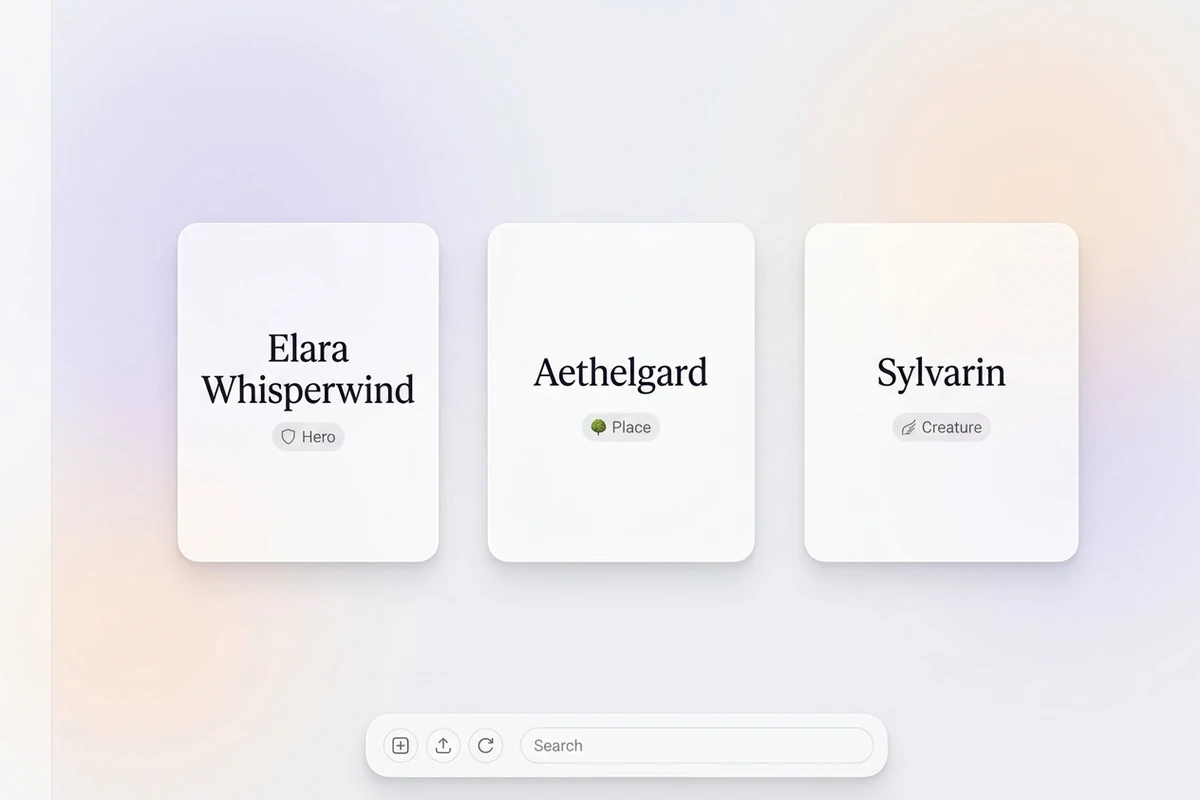
Three vertical white name cards labeled Hero, Place, and Creature on soft pastel mist, each showing a fictional fantasy name.

Start from culture vibe and role

A usable fantasy name generator begins with the world, not a random syllable dump. State the culture vibe, setting cues, and whether you need a hero, place, or creature name. Ask for a short gallery of candidates labeled by role so you can hear how each fits the story. When the character needs a longer scene draft next, continue in the AI Story Generator.
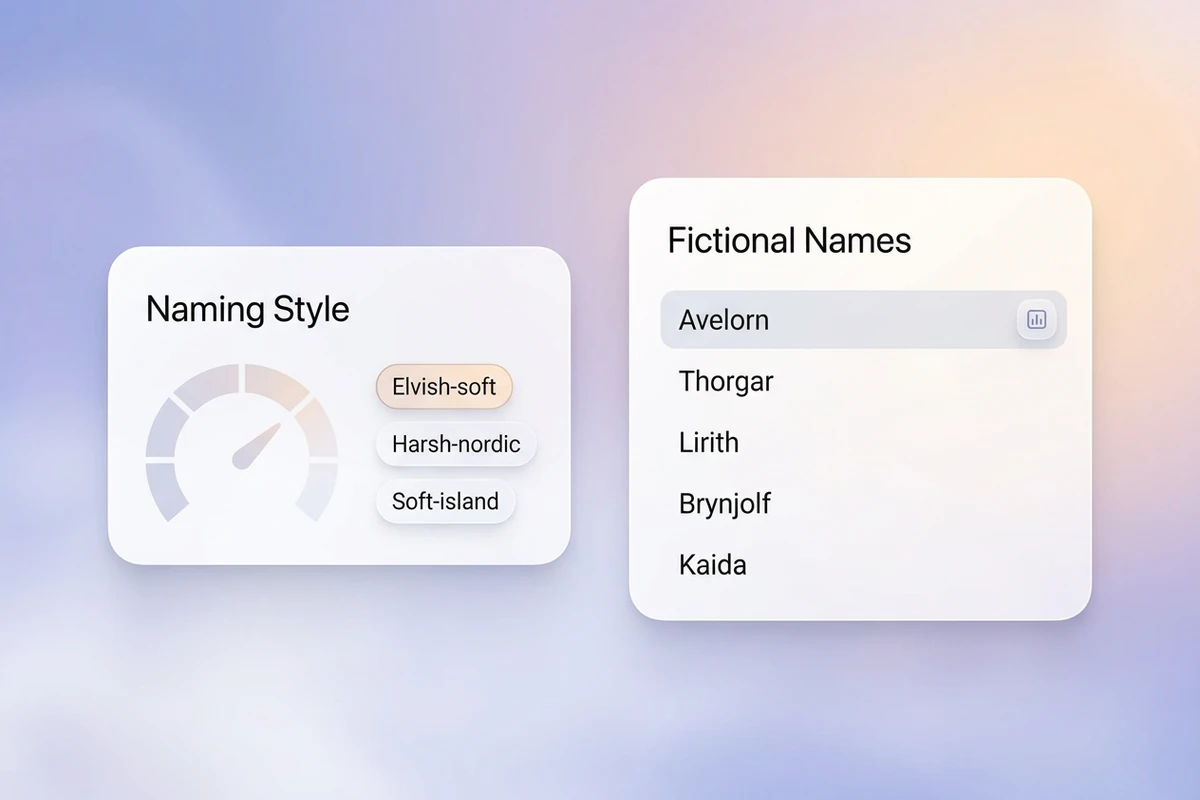
Soft naming-style dial and chips for Elvish-soft, Harsh-nordic, and Soft-island beside a list of fictional fantasy name candidates.

Steer phonetics without game-HUD clutter

Choose a phonetic direction—Elvish-soft, Harsh-nordic, Soft-island—or describe the consonants and vowels you want. Request names that stay pronounceable at the table or on the page, then reject awkward clusters. This task is story and game naming, not social handles; for account identity use the Username Generator. For spoken delivery later, shape lines with the Script Generator.

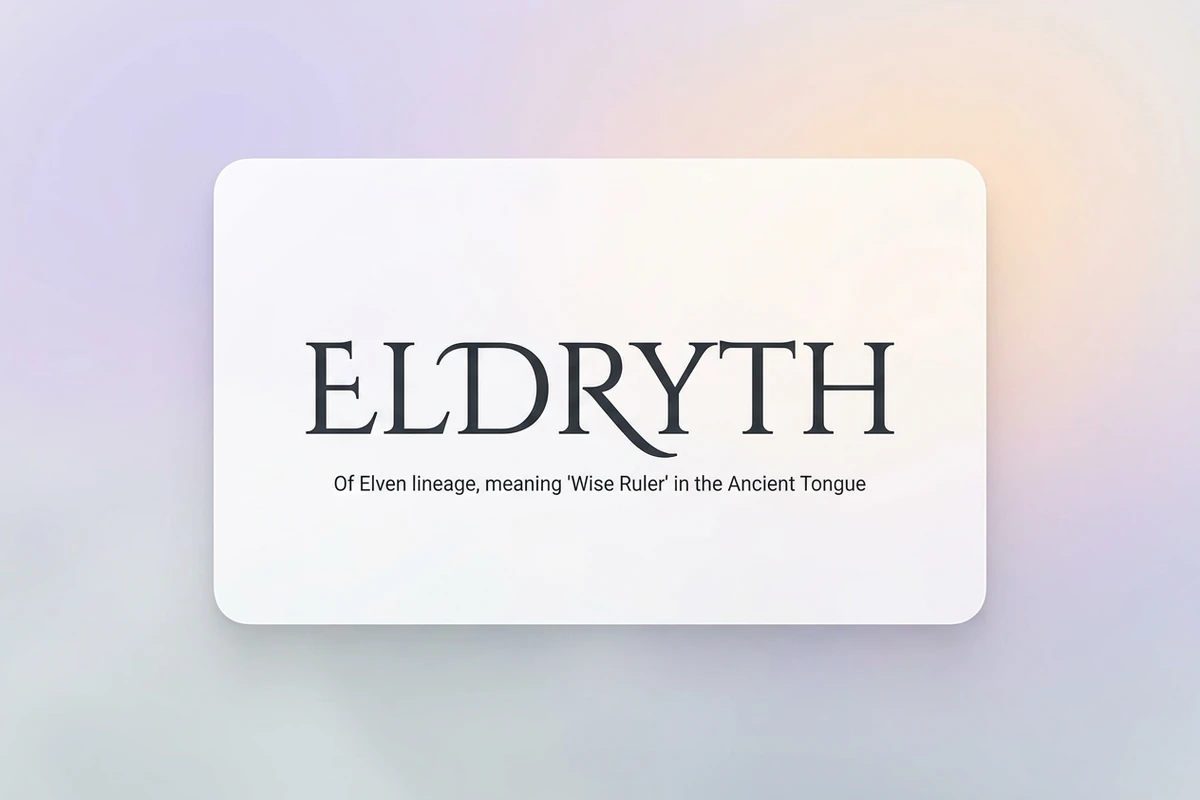
Single oversized fictional fantasy name on a floating white panel with a small origin and meaning note beneath it.

Reveal one name and test its meaning

Narrow to a finalist, ask for a quiet origin or meaning note, and say the name aloud twice. Check unwanted echoes of famous characters and accidental real-world meanings. Keep the note brief so it guides fit without inventing full lore you did not request. If the name will headline a manuscript, explore titles in the Book Title Generator.

What you can do with Ottermind

Name a fantasy character

Create names that reflect culture, era, role, and personality while remaining pronounceable for readers or players.

Build names for a fictional place

Develop a consistent naming system for cities, regions, landmarks, and languages in the same world.

Invent a species or faction

Generate related names with shared sounds and meanings that suggest history, values, or social structure.

Name a magical object

Find memorable options for weapons, artifacts, spells, or relics based on their origin, power, and narrative importance.

How to generate fantasy names in three steps

Step 01

Set vibe, phonetics, and role

Name the culture feel, setting cues, phonetic preference, and whether the result is a hero, place, or creature. Add length, exclusions, and any sounds to avoid.

Step 02

Generate a labeled shortlist

Ask for distinct role groups rather than one long undifferentiated list. Compare sound, fit, and uniqueness before keeping three to five finalists.

Step 03

Reveal, revise, and verify

Preserve the strongest pattern, request focused variants, and test pronunciation aloud. Search for confusing matches with famous characters before committing in a campaign or manuscript.

Why creators choose Ottermind

Role-aware shortlists

Separate hero, place, and creature naming so each candidate matches the job it must do in the story or game.

Phonetic control

Steer soft, harsh, or island-style sound patterns instead of accepting unreadable syllable stacks.

Context that stays attached

Keep world notes, exclusions, and preferred sounds organized around the same project while you iterate.

Focused refinement

Hold a strong finalist steady and request only softer, shorter, or clearer variants instead of starting over.

Clear task boundaries

For fiction and game lore names—not brands or usernames. Use the Username Generator for handles.

Frequently asked questions

What should I enter in a fantasy name generator?

Include culture vibe, setting cues, phonetic feel, role (hero, place, or creature), preferred length, and sounds or famous names to avoid. Two precise sentences usually beat a vague request for “cool fantasy names.” Add must-keep motifs only when they matter to the world.

How do I keep generated names pronounceable?

Ask for two or three syllables, limit stacked consonants, and request a spoken form. Read each candidate aloud twice and discard options that force a pause or spelling debate. Soft, harsh, and island phonetic directions help you stay consistent without inventing a full conlang.

Can I generate names for places and creatures as well as characters?

Yes. Label the role in the brief and ask for grouped results so place names stay geographic and creature names stay species-like. Mixing roles in one unlabeled list often produces names that feel wrong when spoken in scene. Keep each group’s phonetic register aligned with the same culture.

How is this different from a username or business name generator?

A fantasy name generator serves story and game worldbuilding: culture vibe, phonetics, and narrative role. Username tools optimize for handles and privacy; a business name generator targets brand clarity and market positioning. Use the Username Generator when the real task is account identity, not lore.

Will the names be original or trademark-safe?

No generator can guarantee originality or legal clearance. Treat every suggestion as a creative candidate, then search for famous character collisions and unintended meanings. Seek qualified advice when commercial publishing, games, or series branding create material risk.

What should I do after choosing a fantasy name?

Record why it fits, keep rejected directions for consistency, and reuse the same phonetic rules for related names. Continue worldbuilding with the AI Story Generator, or draft a short character introduction with the Bio Generator while the naming constraints stay attached.

Discover more

More from the blog

Build a fantasy name shortlist you can say aloud

Bring culture vibe, phonetic direction, and role to the fantasy name generator. Compare hero, place, and creature candidates, then refine the clearest finalist in Ottermind.

Generate fantasy names