






Book Title Generator for Distinct, Story-Fit Ideas

Describe your book, audience, and desired tone. Ottermind can help explore distinct title directions, explain their signals, and refine the strongest candidates.

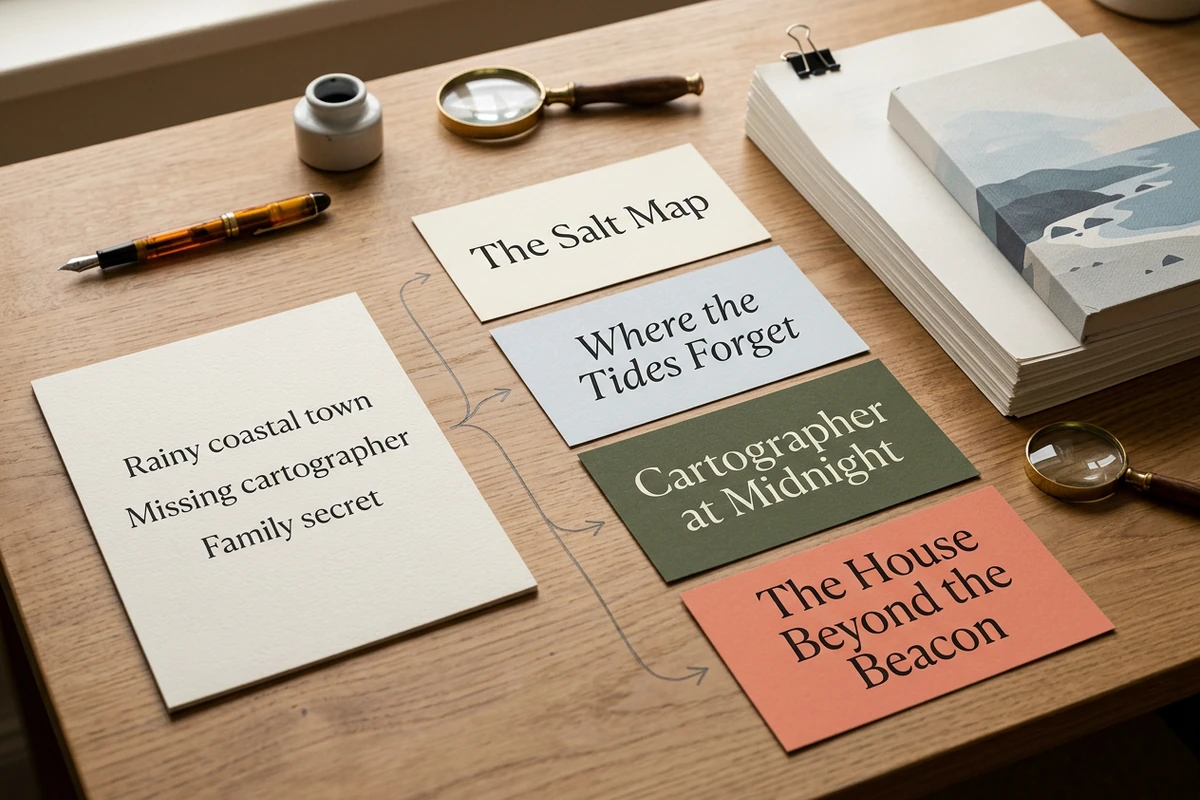
A story brief about a rainy coastal town leads to four distinct fictional book title candidates beside an unbranded manuscript.
Claude
GitHub
Google
Linear
Microsoft
Monday
Netlify
Notion
OpenAI
Sentry
Slack
Stripe
Supabase
Claude
GitHub
Google
Linear
Microsoft
Monday
Netlify
Notion
OpenAI
Sentry
Slack
Stripe
Supabase

Build a shortlist that belongs to your book

A book title generator should do more than shuffle familiar words. Give Ottermind the genre, central conflict or argument, reader, tone, meaningful images, and phrases to avoid. Collaborating agents can explore contrasting directions and refine your feedback into a focused shortlist. If the manuscript is still evolving, keep a working title while you continue with the Essay Writer.

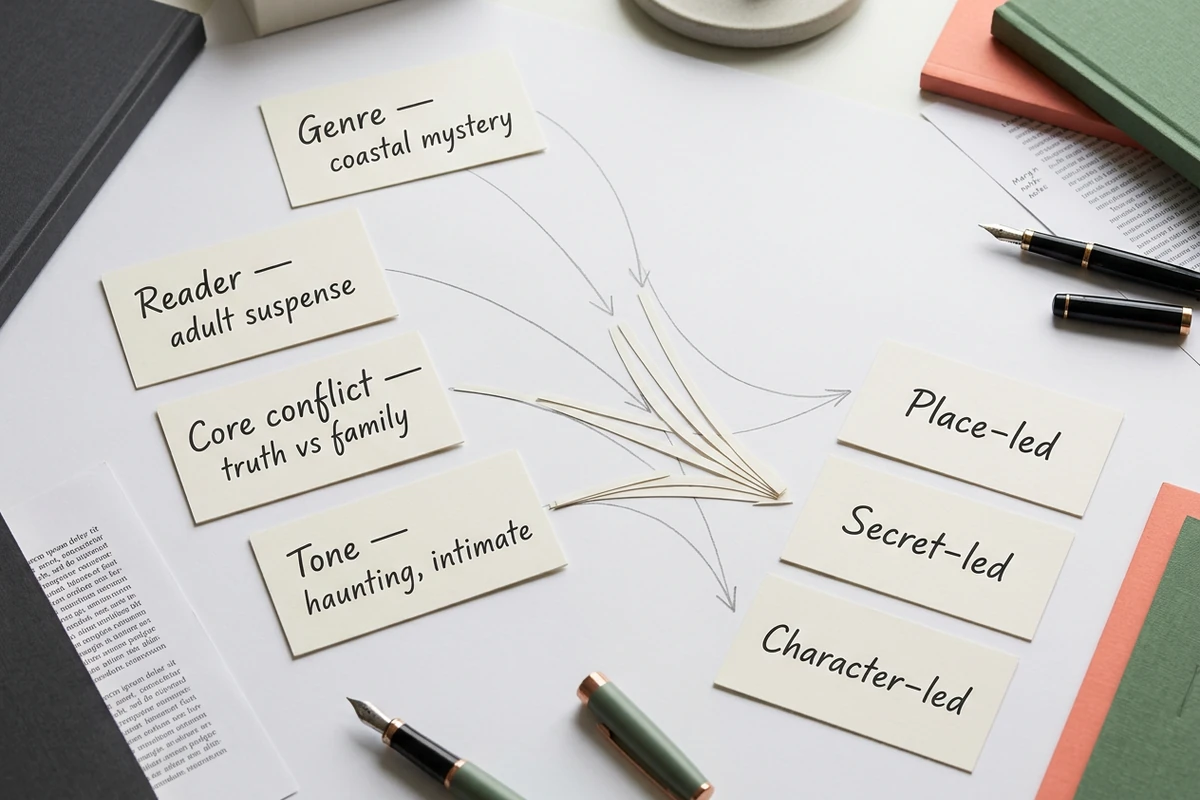
Genre, reader, core conflict, and tone cards converge into place-led, secret-led, and character-led title directions.

Define the title's job first

State whether the title must signal a cozy mystery, frame a practical nonfiction promise, or preserve literary ambiguity. Add the central conflict, audience, tone, and one concrete motif. For a subtitle, use the Sentence Rewriter to test clearer versions without changing the core claim.
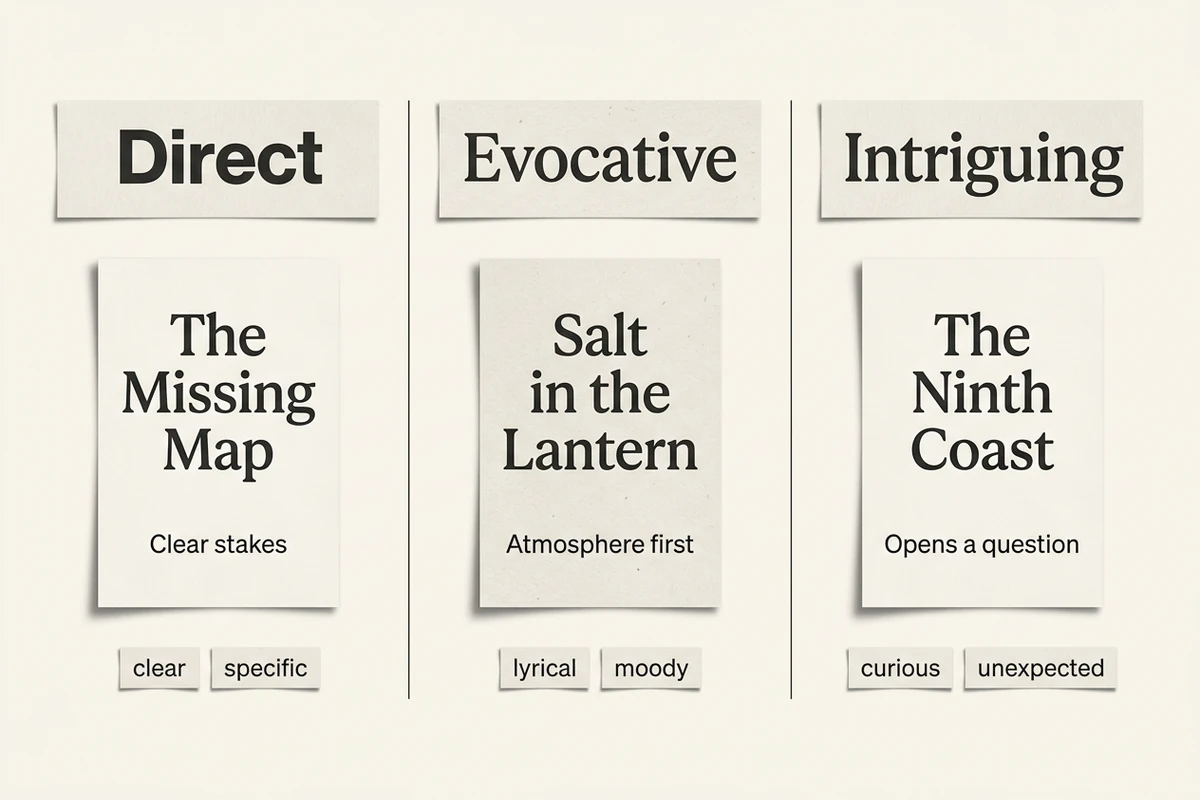
Three columns compare direct, evocative, and intriguing fictional book title directions with concise reasons and keywords.

Compare genuinely different directions

Ask for direct, evocative, and intriguing groups instead of one undifferentiated list. Require a short reason for every candidate, then eliminate titles that could fit almost any book. Place finalists on simple cover concepts with AI image generation to see whether the words and visual promise agree.

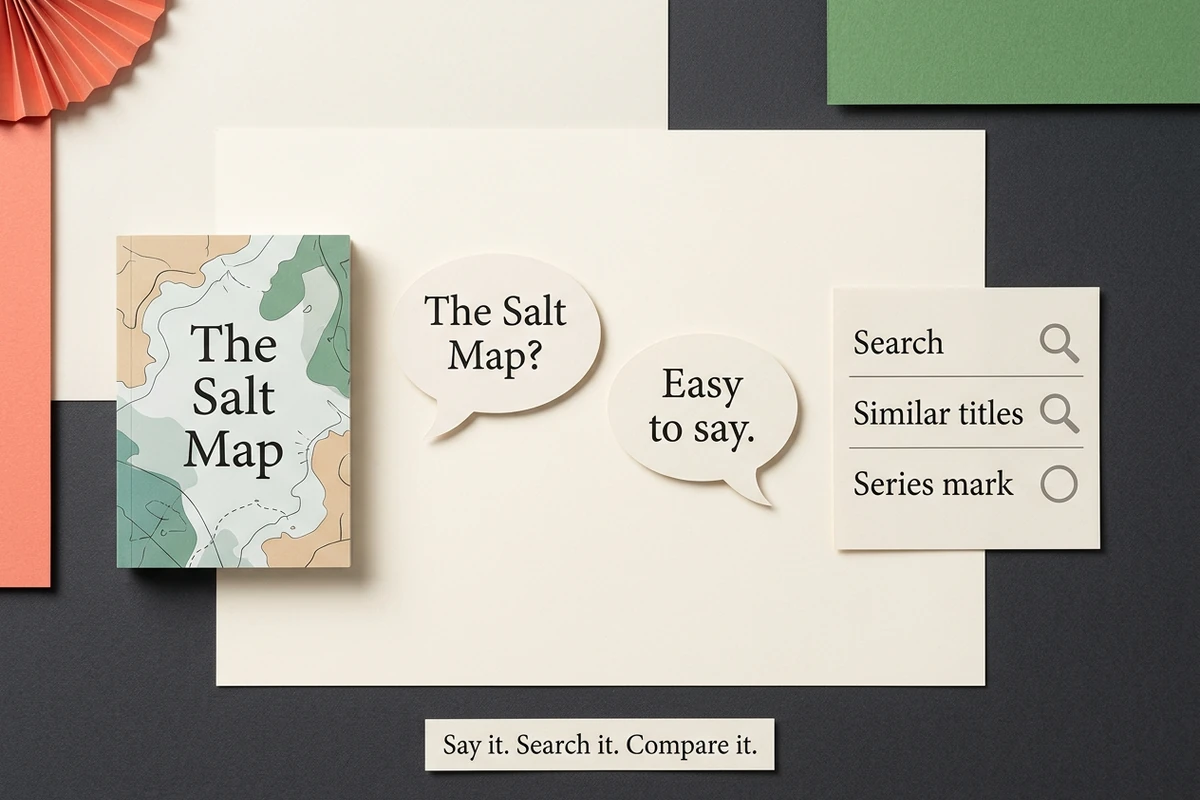
A fictional title is tested on a small cover, spoken aloud, and checked for search results, similar titles, and series use.

Say it, search it, compare it

Read each finalist aloud, ask someone to repeat it later, and note unintended meanings. Search bookstores, library catalogs, and the web for close matches, especially recent books in the same genre. For a series name or brand use, also review relevant trademark records. A generated suggestion is a candidate, not clearance.

How to generate and choose book titles

Step 01

Write a compact brief

Name the genre, intended reader, central conflict or nonfiction promise, tone, memorable motifs, and exclusions. Two precise sentences usually give agents more useful constraints than a full synopsis.

Step 02

Explore separate routes

Request several naming directions and a reason for each result. Compare how clearly every option signals the reading experience, fits your book, sounds aloud, and remains memorable.

Step 03

Refine and verify

Keep the strongest patterns, add specific feedback, and generate tighter variations. Test finalists in a cover thumbnail, then search for confusingly similar titles before committing or investing in design.

Why creators choose Ottermind

Context-led options

Agents can use your genre, reader, conflict, motifs, tone, and exclusions instead of relying on random word pairs.

Contrasting routes

Specialized agents can explore different creative angles and consolidate the useful results into one shortlist.

Visible reasoning

Ask why a candidate works so you can judge its genre signal, specificity, emotional promise, and weaknesses.

Feedback-driven refinement

Tell agents which patterns feel right or generic, then request focused variations that follow your decisions.

Retained project context

Your manuscript notes, rejected directions, and preferred tone can remain organized around the project for later creative work.

Continue beyond naming

Carry the chosen direction into an AI Poster Generator brief to explore the title's visual hierarchy.

FAQ

What information makes book title ideas more specific?

Include the genre, intended reader, central conflict or argument, emotional tone, meaningful setting or motif, and words to avoid. For nonfiction, add the reader's problem and credible outcome. These constraints help distinguish your book from a generic category label without forcing the entire plot into the title.

How do I choose among several strong titles?

Score each candidate for fit, genre signal, curiosity, pronunciation, recall, and unwanted meanings. Test it as a small cover thumbnail and ask a reader what kind of book they expect. Keep the option whose promise matches the manuscript, not merely the cleverest phrase.

Should fiction and nonfiction titles follow the same process?

They share the same need for clarity, memorability, and audience fit, but the emphasis differs. Fiction titles often signal mood, conflict, or genre; nonfiction titles usually make the subject or reader benefit clearer, sometimes through a subtitle. A Slogan Generator can help explore concise subtitle language after the main title is stable.

Can I use a title that another book already uses?

A match is not automatically prohibited, but it can confuse readers and search results. The [U.S. Copyright Office](https://copyright.gov/help/faq/faq-protect.html) states that titles are not protected by copyright. Trademark questions are different, especially for a series or source-identifying name, so search carefully and seek qualified advice when the stakes warrant it.

Can a book title generator guarantee an original title?

No. A generated phrase may already exist, resemble a recent release, or carry a meaning you did not expect. Search the exact phrase and close variants across bookstores, library catalogs, and the web. For possible series branding, consult the [USPTO guidance](https://www.uspto.gov/trademarks/laws/title-single-work-refusal-and-how-overcome-refusal) and relevant trademark records.

What should I do after choosing a working title?

Keep it editable until the manuscript and positioning are stable. Test it with readers, review the cover hierarchy, and record why it fits. Then prepare an Bio Generator and draft launch messages with the AI Social Media Post Generator while preserving the same reader promise.

Discover more

What they say about Ottermind

Ottermind helped us turn a rough campaign brief into several strong visual directions without losing the original intent. We could compare different compositions, keep the references beside the work, and refine the strongest concept in one place. That made the entire review process feel faster and much more focused.

Maya Chen - Product Marketing Lead

More from the blog

Create a title shortlist worth testing

Bring your genre, reader, central idea, tone, motifs, and exclusions. Ask Ottermind for distinct directions, refine the strongest patterns, and verify every finalist before choosing.

Generate title ideas