






Face Shape Detector

Upload a clear frontal portrait to read its face shape, the cues behind the call, and the runner-up when it is close.

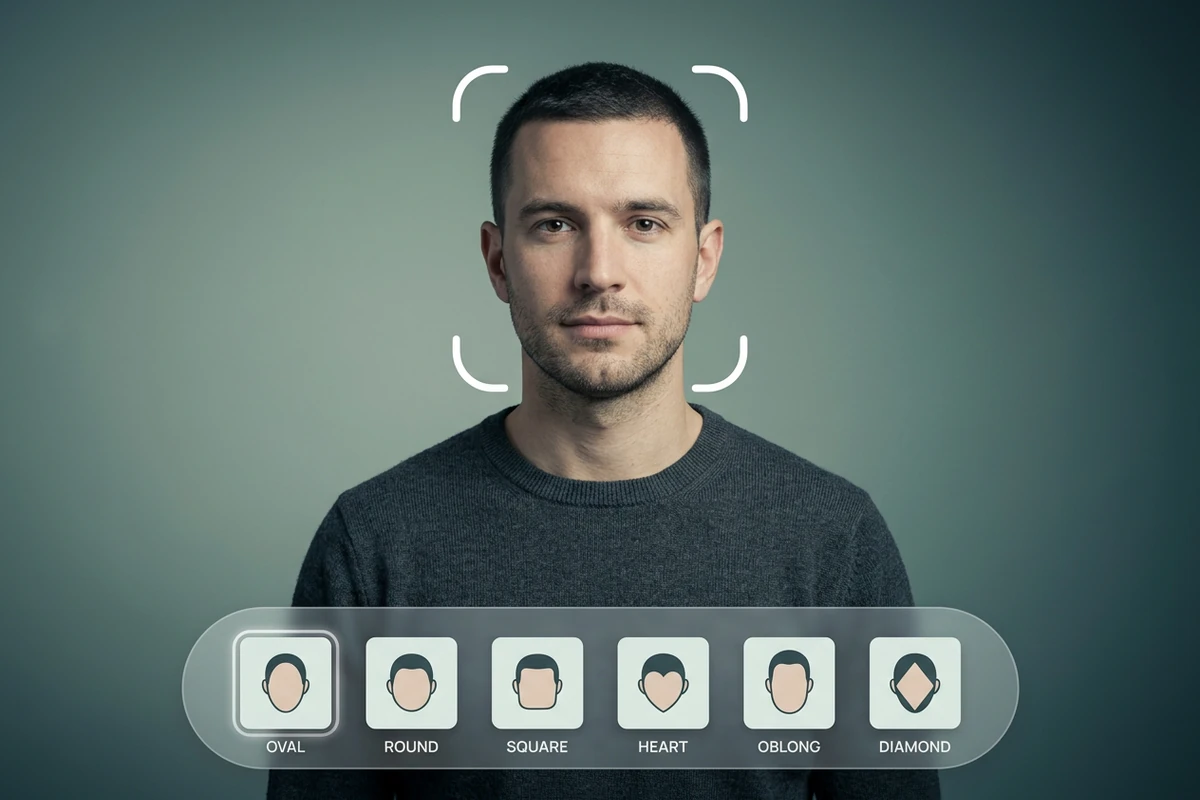
Man in his early thirties facing the camera inside white rounded detector brackets, above a translucent pill strip of six labelled face-shape tiles with the oval tile selected.
Claude
GitHub
Google
Linear
Microsoft
Monday
Netlify
Notion
OpenAI
Sentry
Slack
Stripe
Supabase
Claude
GitHub
Google
Linear
Microsoft
Monday
Netlify
Notion
OpenAI
Sentry
Slack
Stripe
Supabase

What the Reading Compares

A face shape reading is a comparison, not a scan. Oval, round, square, heart, oblong and diamond differ by which proportion runs widest and how the face runs against its width. The page asks for those cues directly, so you can check the reasoning rather than accept a label. The same portrait also drives AI Color Analysis.

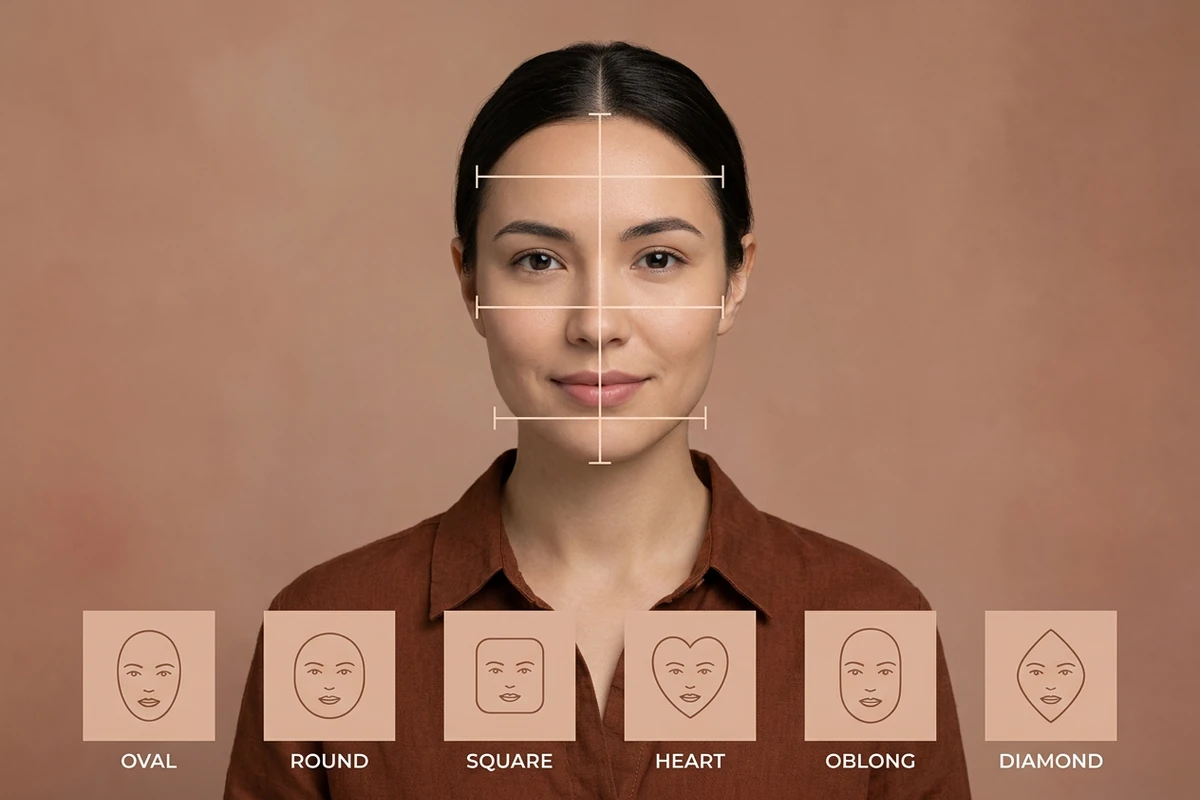
Woman with thin measurement guide lines across her forehead, cheekbones and jaw plus a vertical length line, above six small face-shape outline tiles.

Four Proportions, One Order

Length against width decides the first split. Then the widest of forehead, cheekbone and jaw, and finally the jaw angle, which separates square from round. Compare in that order and a close call resolves itself instead of landing on whichever shape looks nearest.
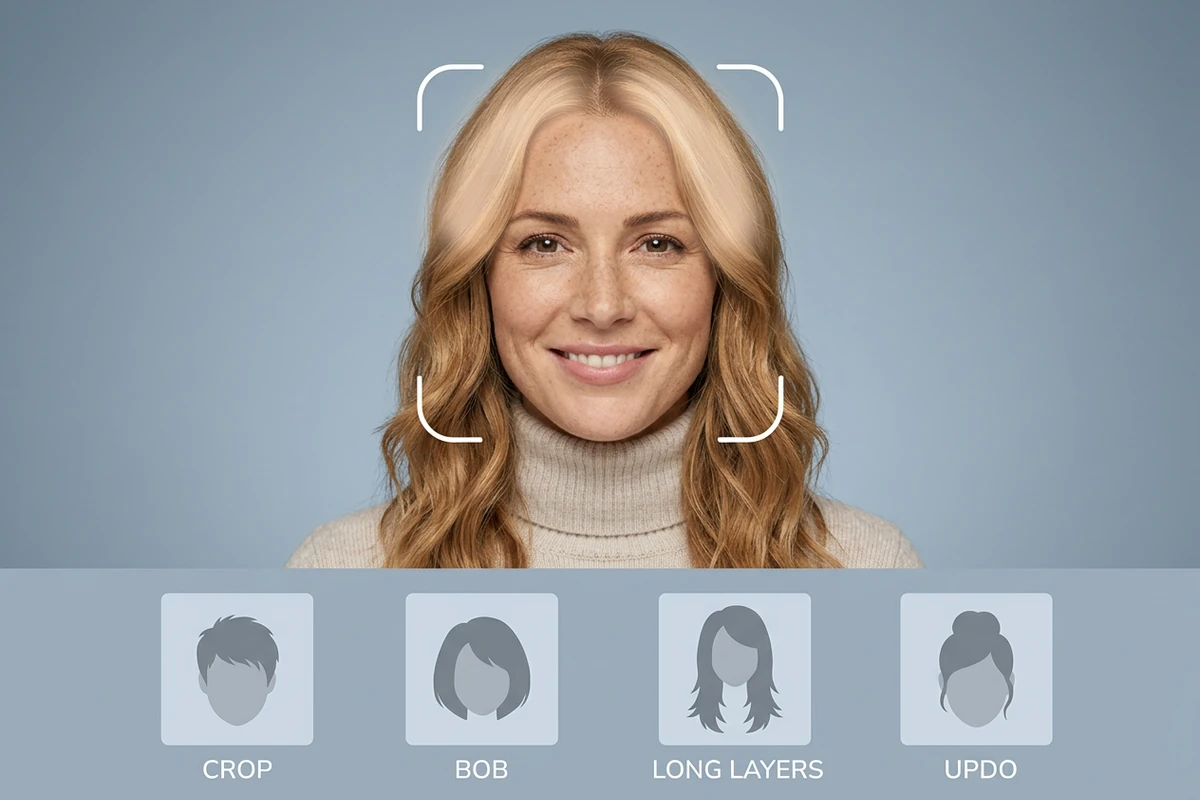
Woman with shoulder-length blonde hair and a highlighted hairline and face-framing strands, inside white bracket marks, above a strip of four haircut silhouette tiles.

What the Shape Means for Hair

Knowing the shape is the input to the decision, not the decision itself. The reading says where the widest point sits and how long the face runs, which is what makes a cut comparison meaningful. Carry it into AI Hairstyle Changer to compare directions on the same portrait.

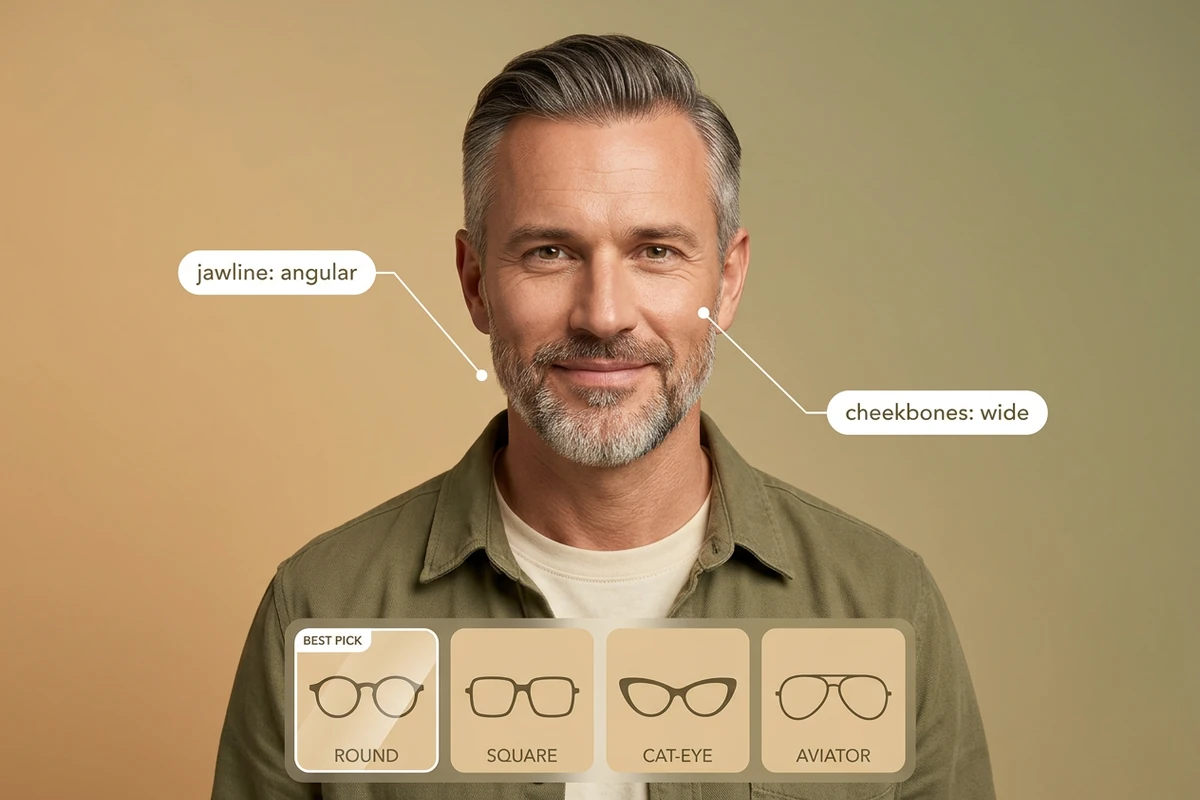
Bearded man with leader-line callouts reading jawline: angular and cheekbones: wide, above four eyeglass frame tiles with the round frame marked as the pick.

What the Shape Means for Frames

Frames sit on the widest part of the face, so the same proportions decide how a pair reads. The reading tells you whether a frame should add width or stay close to the cheekbone. If the portrait was shot at an awkward angle, AI Image Editor is where you correct it first.

What you can do with Ottermind

Choose a haircut direction

You have a salon appointment and a reference photo. Read the shape first, then compare two cut directions on the same portrait before you commit.

Pick frames that fit

You are buying glasses online and cannot try them on. Know where the widest point of your face sits before you choose a frame width.

Settle a disagreement

One app called you oval and another said oblong. Compare both answers against the proportions to see which call the photo actually supports.

Rescue a bad photo

The first reading looked wrong because the selfie was taken too close. Correct the angle, re-upload, and compare the two answers. Photo Retouching handles the tidying if the portrait needs it.

How to Get a Reading You Can Trust

Step 01

Take the Photo Straight

Face the camera squarely at eye level, arm's length away or further, with even light and your hair clear of the jaw. A close selfie stretches the proportions the reading depends on.

Step 02

Run the Reading

Upload the portrait and send the prompt. It compares length against width first, then the three widths and the jaw angle, and returns the shape with the cues it used.

Step 03

Re-run and Compare

If the answer sits between two shapes, take a second photo in the same light and run it again. Two readings that agree are worth more than one confident label.

Why creators choose Ottermind

The Cues Come Back

The reading names the proportions it compared, so you can see why one shape won.

Close Calls Are Named

When two shapes sit near each other, the runner-up and the separating measurement are part of the answer.

Photo Problems Are Specific

Tilt, distance, light and hair over the jaw each shift the answer, and each has a retake. Lighting first: AI Image Relight.

One Reading Is Not Final

Keep the portrait and run it again. A second attempt can be compared against the first instead of replacing your memory of it.

No Install, No Queue

The reading runs from the browser through the page's own upload and works on a phone or a desktop.

Limits Stay Visible

This is an estimate from one photograph, not a measurement, and the page says so rather than hiding it.

Frequently asked questions

How accurate is a face shape detector?

It is an estimate, not a measurement. One photograph carries the lens, the angle, the light and your expression, and any of those can shift the call. A reading is worth using when it shows the proportions it compared and names the runner-up.

Why do two tools give different shapes?

Tools weigh the same proportions differently, and many faces sit between two shapes rather than inside one. Compare each answer against the measurements: whichever shape the length, the three widths and the jaw angle support is the one to keep.

What photo should I upload?

A straight-on portrait at eye level, taken from arm's length or further, in even light, with your hair clear of the jaw. Avoid a close selfie, because at short range the lens stretches the centre of the face and widens the proportions you are comparing.

Is this a test or a measurement?

A test, and a repeatable one. It reads structure from a photo and explains the cues, so you can run it again on a second photo and see whether the answer holds. Agreement between two readings is the useful signal.

What about triangle, inverted triangle or pear?

The names for one idea vary. When the jaw is the widest of the three widths, some writers say triangle and others say pear; when the forehead is widest, some say inverted triangle. The jaw-to-forehead order settles which word applies.

Do I need an app or an account?

No app. The reading runs from the browser through the page's own upload and works on a phone or a desktop. You can try it without signing in, and account credits or plan limits may still apply. Once the shape is settled, AI Hairstyle Changer turns it into a decision.

Discover more

More from the blog

Read the Shape, Then Decide

Upload one clear portrait, read the shape with the cues behind it, and carry the answer into the haircut or frame decision it was meant for.

Upload a portrait