Eye Shape Detector

Upload a clear frontal portrait to read your eye shape, the cues behind each axis, and the runner-up when it is close.

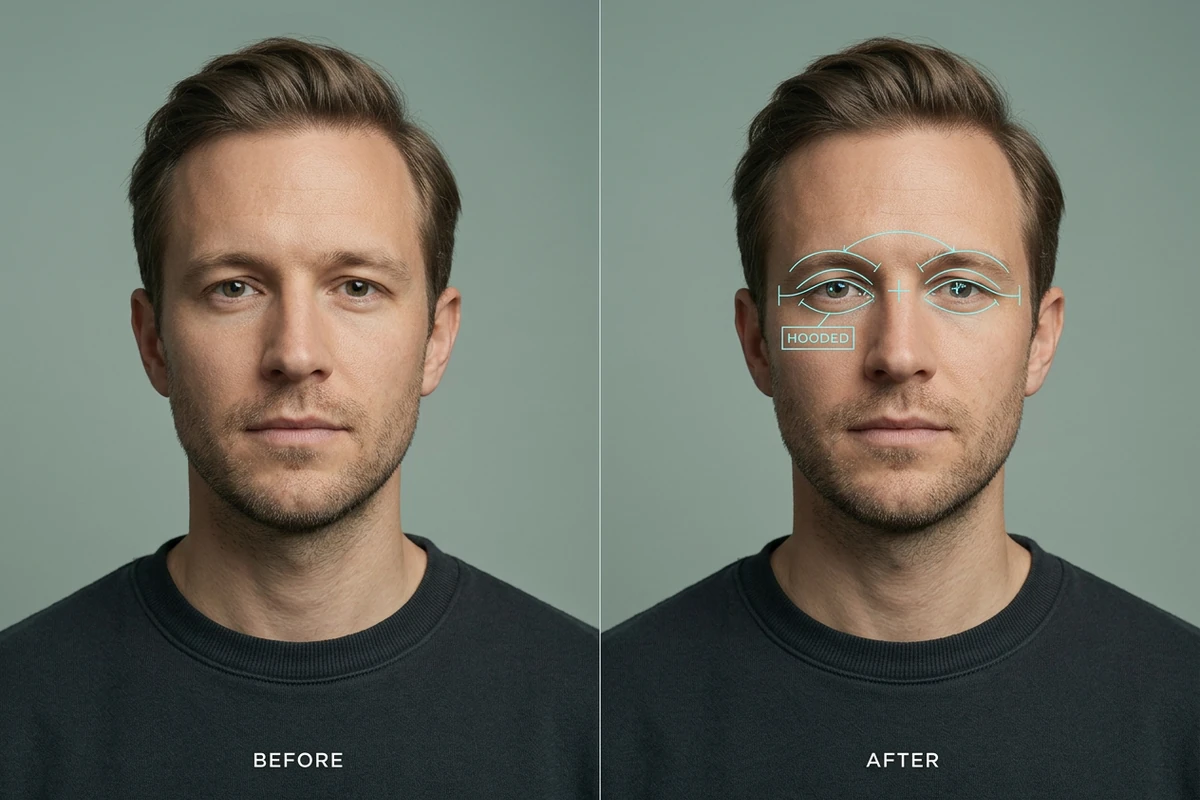
Side-by-side before and after portrait of a man on a sage backdrop, the after panel carrying thin cyan eye-analysis lines, measurement arcs and a HOODED label.
Claude
GitHub
Google
Linear
Microsoft
Monday
Netlify
Notion
OpenAI
Sentry
Slack
Stripe
Supabase
Claude
GitHub
Google
Linear
Microsoft
Monday
Netlify
Notion
OpenAI
Sentry
Slack
Stripe
Supabase

Four Axes, Not One Label

Most eye-shape results collapse four separate questions into one word. Opening form is round against long; tilt is where the outer corner sits; spacing is the gap between the eyes; lid type is whether a crease is visible, partly covered or absent. They move independently, so a hooded eye can also be almond. This reading walks each axis and names the lid type instead of dropping it. Face Shape Detector covers the whole face.

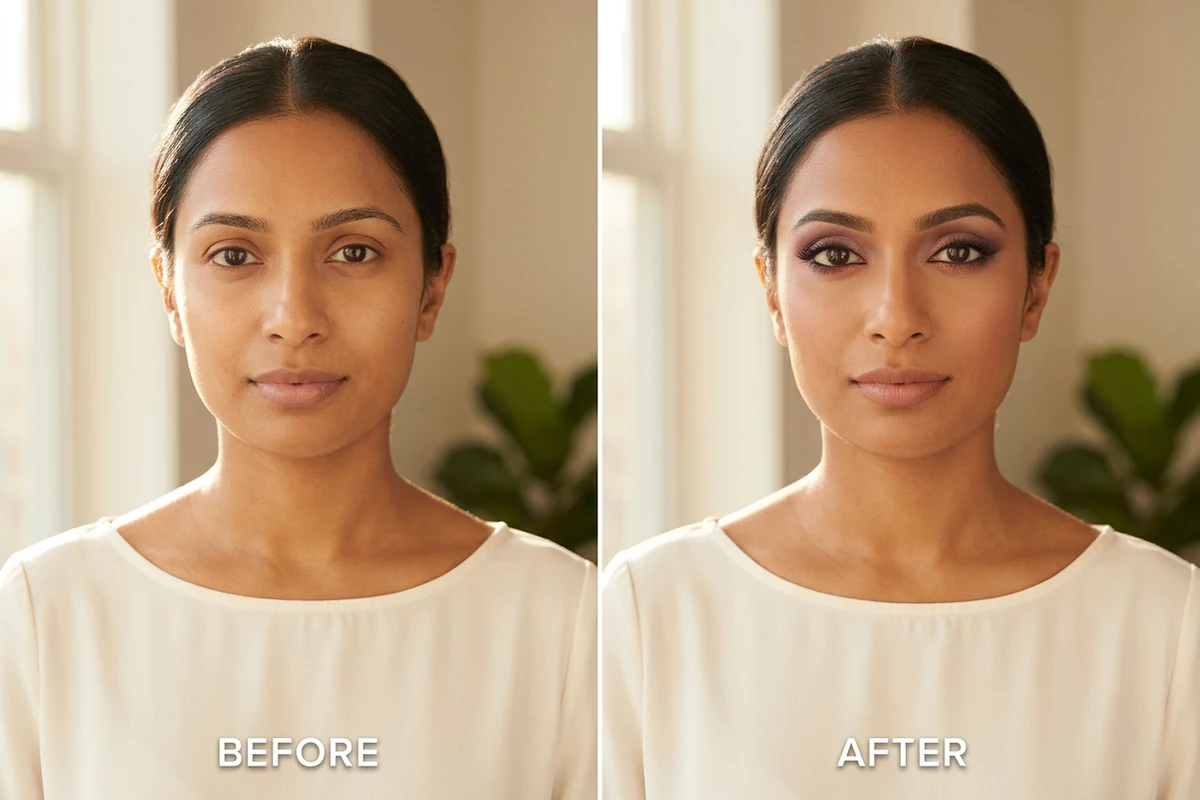
Side-by-side before and after portraits of a woman in a sunlit room, the after panel showing plum cut-crease shadow and a lifted smudged liner flick.

Liner Follows the Reading

Liner direction follows tilt and lid type, not preference. An outer corner above the inner one carries a wing outward; one below it pulls the line the other way, and a covered crease changes how much stays visible with the eye open. Colour is a separate question from structure, read by AI Color Analysis.

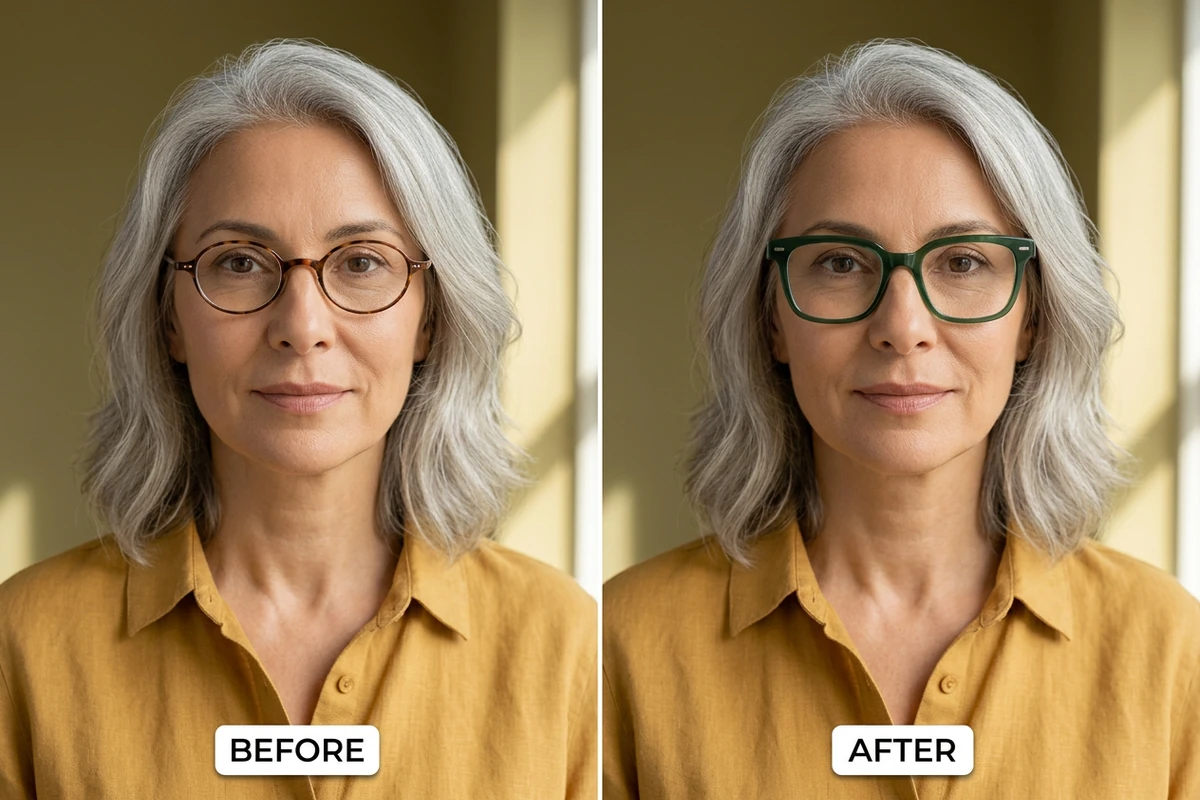
Side-by-side before and after portraits of a woman wearing narrow round tortoiseshell glasses before and wider deep-green angular acetate frames after.

Frames Sit on the Widest Point

Glasses rest across the eye area, so opening form and spacing decide how a frame reads before style does. A wide-set reading takes a wider bridge and heavier rim; a close-set one takes a lighter bridge with the emphasis pushed outward. Compare frames on the portrait, not on a shelf. Face Shape Detector adds the whole-face reading.

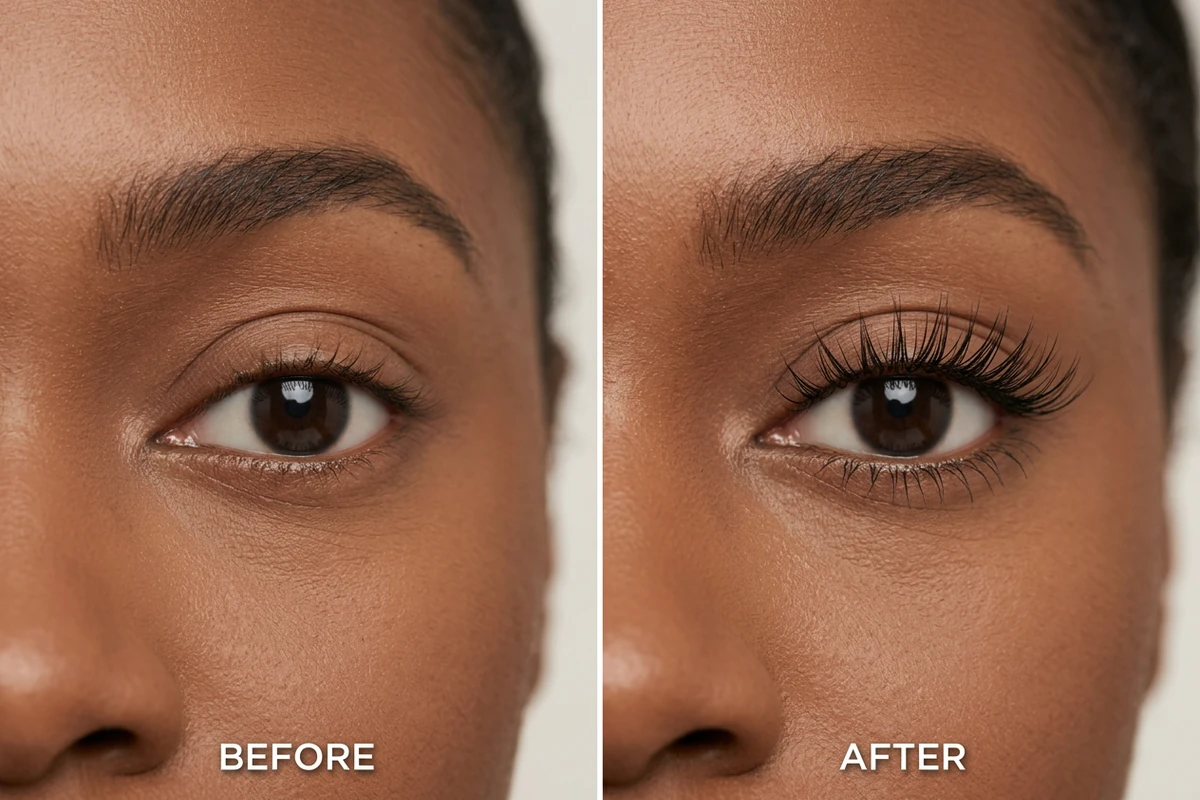
Macro before and after close-up of one eye, showing short sparse natural lashes before and a wispy fanned spiked lash mapping after.

Lash Mapping Is the Missing Answer

Lash mapping is where most eye-shape tools stop. Length and curl follow the opening: a round eye takes a longer centre for width, a hooded lid takes a curl that lifts past the fold instead of hiding behind it, and an elongated eye takes length at the outer third. AI Hairstyle Changer keeps the comparison on the same portrait.

What you can do with Ottermind

Plan a liner shape

You are practising a wing and it keeps looking wrong. Read tilt and lid type first, then test the line direction that the reading supports.

Choose frames that sit right

You are buying glasses online and cannot try them on. Know your opening form and spacing before you pick a bridge width.

Brief a lash artist

You are booking lash extensions and want a mapping, not a default set. The opening and lid type tell the artist where length should sit. Compare the result on the same portrait with AI Hairstyle Changer.

Settle hooded or monolid

You have read both words and cannot tell which one you are. The crease check is the discriminator, and the reading reports it instead of skipping the question.

How to Get a Reading You Can Trust

Step 01

Take the Photo Level

Face the camera squarely at eye level, arm's length away or further, with your eyes open normally and no squinting. Head pitch and camera height change a tilt reading more than almost anything else.

Step 02

Run the Reading

Upload the portrait and send the prompt. It reports the opening, tilt, spacing and lid type separately, with the cues behind each and any borderline pair it cannot separate. If the photo sits at an awkward angle, correct it in the image editor first.

Step 03

Re-run and Compare

If a result sits between two readings, take a second photo in the same light and run it again. A shape that survives two photos is worth acting on; one that flips between them is the honest answer.

Why creators choose Ottermind

The Lid Type Is Answered

Hooded and monolid readings are reported on their own axis instead of being dropped or folded into a shape name.

The Cues Come Back

Each axis returns the observation behind it, so you can check the call rather than trust a score.

The Baseline Is Disclosed

Tilt depends on the reference line used, and a slightly positive tilt is normal. The reading states the line it measured against.

Borderline Calls Are Named

Almond against round, and hooded against almond, are the pairs that genuinely blur. The reading says when it cannot separate them.

One Reading Is Not Final

Keep the portrait and re-run it. A second attempt compares against the first, and Photo Retouching tidies it if needed.

No Install, No Queue

No app to install. You upload from the browser and the reading works on a phone or a desktop.

Frequently asked questions

How accurate is an eye shape detector?

It is an estimate from one photograph, not a measurement. Gaze, squinting, expression, head pitch, camera height and lens perspective change the visible opening, so the same person can read differently across two photos. Use a reading that shows its cues.

Am I hooded, monolid or deep-set?

The discriminator is the crease. A monolid has no visible crease; a hooded eye has a crease the brow fold partly covers when open; a deep-set eye is defined by socket depth. These are different axes, so hooded is not the opposite of almond, and an eye can be both.

Does my eye shape change over time?

The opening does change with age; tilt is more stable. Measured eyelid opening peaks in the twenties or thirties and then gradually declines, while outer-corner obliquity stays comparatively consistent after the twenties. Treat a reading as current, not permanent.

Why do two tools give different answers?

There is no shared standard. Tools use different landmark sets, draw their own boundaries, and judge tilt against different reference lines, so the same eye can be level on one and upturned on another. Compare each axis separately and ask which line was used.

Are close-set and wide-set eye shapes?

They are spacing, not opening form. Many tools list them beside almond and round, mixing two axes and making the vocabulary harder to use. Spacing describes the gap between the eyes relative to one eye width, and it can combine with any opening form.

Do I need an app or an account?

No app. You upload from the browser on a phone or a desktop, and you can try it without signing in; account credits or plan limits may still apply. Image Effects covers broader visual changes when the goal is not a reading.

Discover more

More from the blog

Read the Axes, Then Decide

Upload one clear portrait, read the opening, tilt, spacing and lid type with the cues behind each, and carry the answer into the liner, frame or lash decision.

Upload a portrait