Alternatives
DeepSeek Harness Alternative
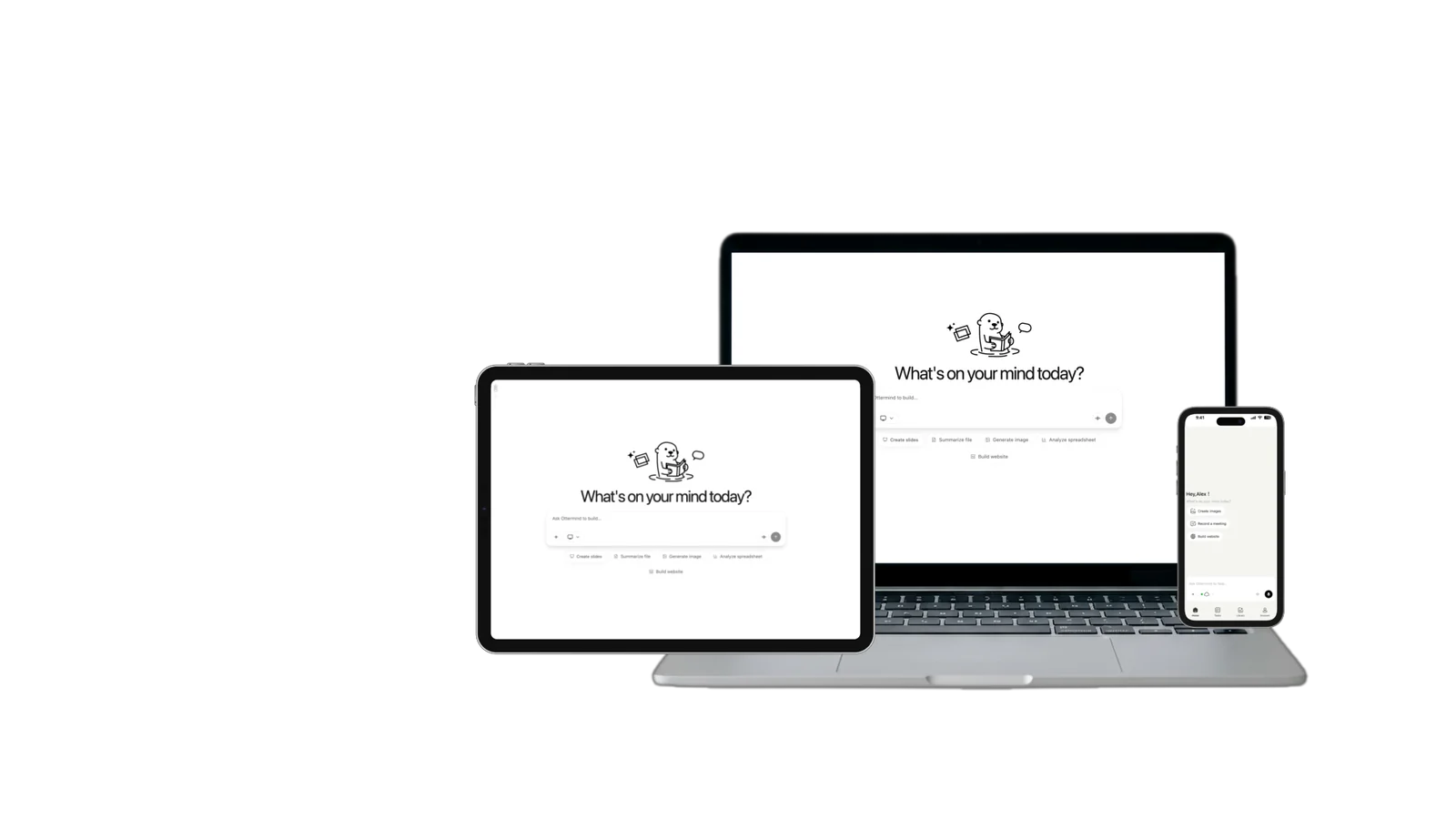
Ottermind is the better DeepSeek Harness alternative when you want a managed AI workspace that turns files, links, and project context into editable deliverables. DeepSeek Harness remains the better choice for developers who want to replace agent internals, build plugins, or control the model, sandbox, session log, and loop. They overlap in agent work, but they solve different primary jobs: Ottermind packages work; DeepSeek Harness exposes the machinery.
Research and disclosure: Ottermind publishes this comparison and is included. We reviewed official DeepSeek Harness, DeepSeek API, Ottermind product, and pricing documentation on August 17, 2026, plus recent community discussions. We did not run a controlled productivity or coding benchmark, so performance claims are excluded. Community comments are treated as anecdotal.
DeepSeek Harness alternative: quick comparison
| Decision factor | Ottermind | DeepSeek Harness |
|---|---|---|
| Primary job | Managed AI workspace for research, analysis, content, pages, decks, and connected deliverables | Open-source, plugin-based agent harness for coding and agent infrastructure |
| Best for | Founders, product, marketing, research, and mixed technical/non-technical teams | Developers, agent builders, and researchers who want low-level control |
| Setup | Create an account, choose a plan, and bring project materials into the workspace | Install with Node.js, configure a model/API key, and select a workspace and plugins |
| Main work surface | Web, desktop, and mobile workspace | Web UI or headless runtime |
| Extensibility | Productized tools and workflows | Replaceable models, tools, skills, sessions, sandbox, storage, loop, scheduler, and UI |
| Typical output | Editable reports, briefs, pages, presentations, analyses, creative work, and handoffs | Code changes, commands, custom agents, plugins, presets, and execution traces |
| Pricing model | Subscription and credits; Solo starts at $20/month | MIT-licensed software; model-provider usage is billed separately |
| Maturity | Managed product | Developer preview with expected breaking changes |
| Main limitation | Not a low-level open-source harness or IDE autocomplete replacement | More assembly, configuration, maintenance, and preview churn |
The short version: choose DeepSeek Harness when the harness itself is part of what you are building. Choose Ottermind when the harness should disappear behind the work product.
What DeepSeek Harness actually is
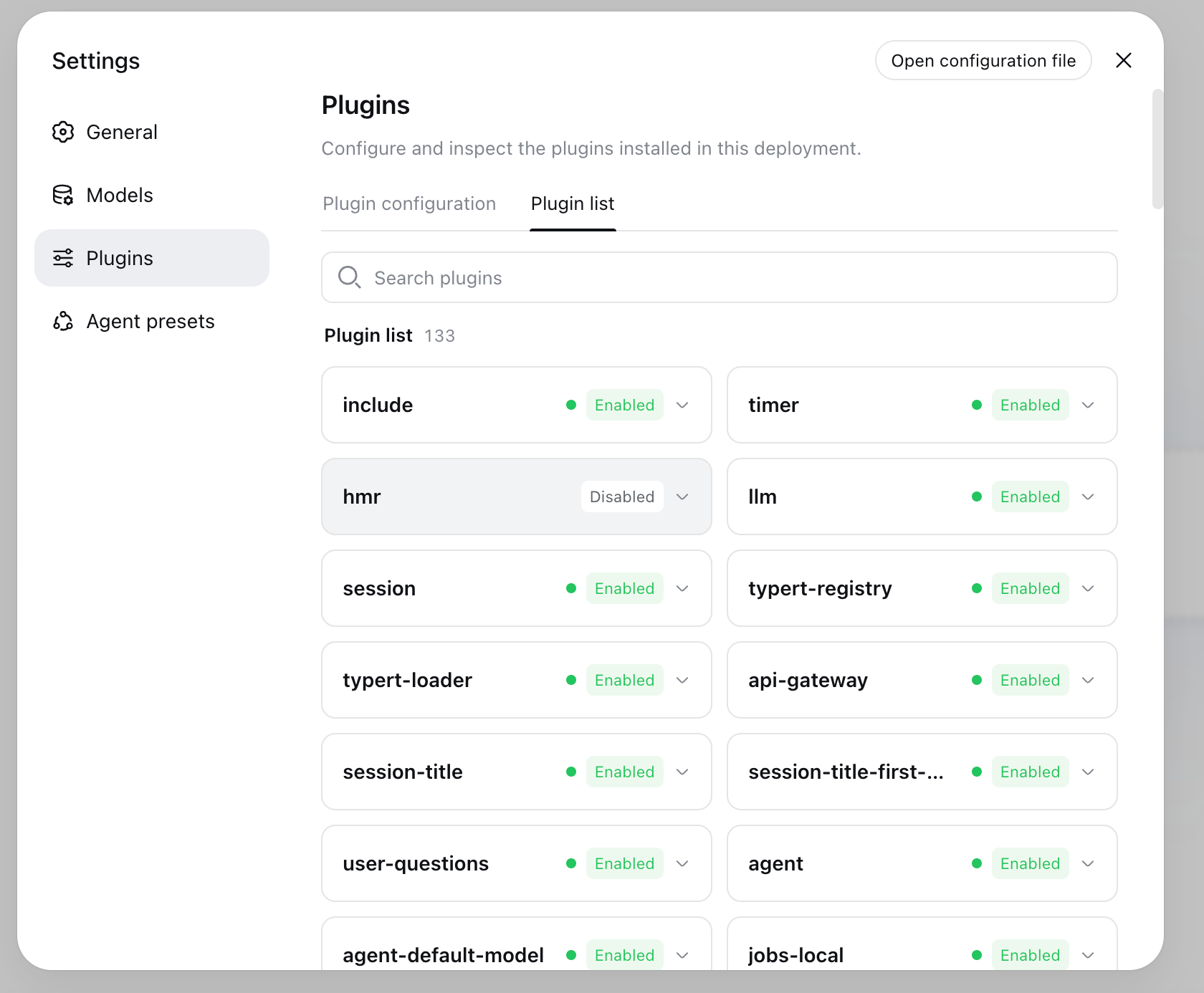
DeepSeek Harness is not simply a chat interface for a DeepSeek model. DeepSeek describes it as an open-source agent harness in developer preview. Its central idea is "Everything is a Plugin": model adapters, tools, skills, session handling, sandboxing, storage, scheduling, the agent loop, and the interface can be composed or replaced.
The official architecture documentation explains that a Cordis kernel loads plugins and manages their dependencies. An append-only session log records model-visible context, tool calls and results, sub-agent dispatch, and injected context. Recovery, replay, retrieval, and forking can then derive from the same event stream.
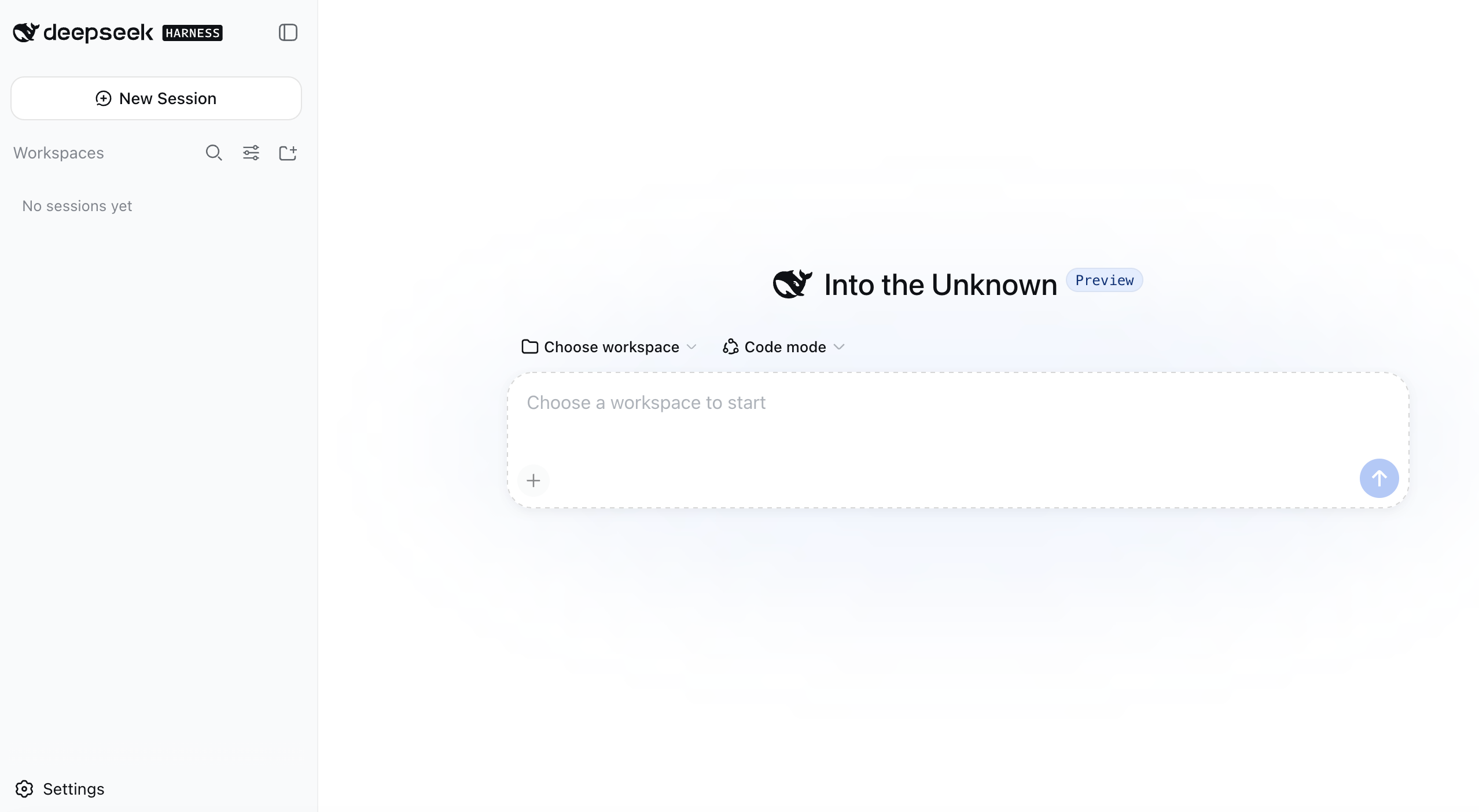
The default Standard mode behaves like an AI coding agent: it can work with files, shell commands, search, skills, plans, goals, sub-agents, and workflows. The project also documents PTC, Minimal, and Creator modes. The Web UI guide starts with Node.js and npx @deepseek-ai/dsh web, followed by model, API-key, and workspace configuration.
That architecture is the reason DeepSeek Harness is attractive. It is also the reason a buyer looking for a ready-made workspace may start searching for an alternative.
Why people look for a DeepSeek Harness alternative
1. Developer preview churn
The official repository labels the project a developer preview and warns that compatibility-breaking changes will occur. That can be acceptable for experiments or agent infrastructure research. It is a different operating model from adopting a managed product for recurring team work.
2. Setup and maintenance ownership
An open harness gives a team freedom to choose providers, plugins, workspaces, permissions, and runtime behavior. The same team must also own those choices. Installation is only the first step; model credentials, plugin compatibility, configuration, upgrades, logs, and cost monitoring remain part of the job.
3. A broader output than code
DeepSeek Harness is centered on an agent runtime and coding-oriented modes. Some buyers instead start with interview notes, PDFs, spreadsheets, links, product context, or campaign assets and need a report, presentation, launch page, or connected content package. A broader AI agent workspace is a more direct category fit for that job.
4. Predictable buying and collaboration
Metered model usage can be efficient, especially when cached input is inexpensive, but a session's final cost depends on model choice, uncached input, output, retries, tool loops, and task length. A subscription-and-credits product gives a buyer a different budgeting surface. It does not guarantee a lower total cost, but it may be easier for a mixed team to purchase and administer.
5. Non-developers need to review and continue the work
Plugin architecture and execution traces matter to a harness builder. A product manager, marketer, researcher, or founder is more likely to care whether the sources, reasoning, draft, visuals, and final deliverable remain understandable and editable. The best alternative depends on which layer the user needs to control.
Community signals, not benchmarks: Recent Reddit discussions report strong cache behavior, flexibility, a polished Web UI, and long-running execution. Other users report slow wall-clock tasks, large token use, confusing plugin discovery, sub-agent errors, and migration overhead. These posts describe individual setups, not representative performance. See first impressions, flexibility discussion, token and cache discussion, and a slowness report.
Ottermind vs DeepSeek Harness: seven practical differences
1. Primary job
DeepSeek Harness is infrastructure for composing an agent. Ottermind is a managed workspace for completing a project. Both can involve models, tools, files, and long-running work, but their center of gravity differs.
Use DeepSeek Harness to answer, "How should this agent run?" Use Ottermind to answer, "How do we turn this context into a usable result?"
2. Extensibility and control
DeepSeek Harness clearly wins when control means replacing the model adapter, tool system, session behavior, sandbox, storage layer, loop, scheduler, or UI. Its MIT-licensed source and plugin architecture are core product advantages, not incidental features.
Ottermind offers a productized environment. That reduces assembly work, but it is not an equivalent to the Cordis plugin layer. A team whose requirements include custom runtime internals should keep DeepSeek Harness on the shortlist.
3. Setup and operating burden
DeepSeek Harness requires a local runtime, a provider configuration, credentials, a selected workspace, and choices about what the agent may do. Those steps are reasonable for its audience. They can be unnecessary overhead for a user who mainly wants research synthesized or a deliverable created.
Ottermind moves more of the runtime into a managed product. Users still need to provide context, define the outcome, review the result, and manage their plan. The difference is where the operational boundary sits, not whether responsible setup and review disappear.
4. Project context and deliverables
DeepSeek Harness treats the workspace, tools, and session event stream as inputs to agent execution. Ottermind connects project materials to outputs that people can revise and hand off: research summaries, reports, briefs, pages, presentations, analyses, and creative work.
This is the strongest reason to consider Ottermind. It is also why comparing the two only on coding features would be misleading. For IDE completions, repository edits, or terminal agents, use the criteria in our AI assistant for developers guide. For cross-functional work, judge the quality and editability of the complete deliverable.
5. Pricing and cost visibility
DeepSeek Harness itself is open source under the MIT license. Model usage is separate. On August 17, 2026, DeepSeek API pricing listed V4 Flash at $0.0028 per million cached input tokens, $0.14 per million uncached input tokens, and $0.28 per million output tokens. V4 Pro was listed at $0.003625, $0.435, and $0.87 respectively.
Ottermind's public pricing starts with Solo at $20 per month and uses credits. A list-price comparison cannot determine which is cheaper for a real workload. Record total model or credit consumption, retries, setup time, intervention time, and correction time during a representative trial. Verify current prices and plan limits before buying; both can change.
For model-level context before choosing a provider, see our 2026 AI model comparison.
6. Reviewability
DeepSeek Harness's append-only session architecture is valuable when a technical user wants to inspect and derive state from agent events. Ottermind emphasizes visible context and editable outputs that a broader team can review.
These are different forms of transparency. A detailed trajectory does not automatically make a final report correct, and a polished deliverable does not replace an execution audit. Decide whether your reviewers need runtime events, source-backed content, editable artifacts, or a combination.
7. Maturity and change tolerance
DeepSeek Harness's developer-preview status is an explicit trade-off: users can participate in a fast-moving architecture, but should expect breaking changes. Ottermind is a managed product rather than an experimental framework. Buyers should still verify current support, data, security, and plan details for their requirements.
Do not turn this distinction into an unsupported reliability ranking. The relevant question is whether your team wants to own an evolving harness or use a productized workspace.
Where DeepSeek Harness is better
DeepSeek Harness is the stronger choice when:
- You are building agent infrastructure. The runtime, plugin model, event log, or orchestration design is part of the deliverable.
- Replaceability is a requirement. You need to swap models, tools, skills, storage, sandboxing, scheduling, the loop, or the interface.
- Open-source licensing matters. Your team needs MIT-licensed source that it can inspect, modify, or use as a foundation.
- Your primary work is technical. Code, shell execution, custom presets, and agent experiments are central rather than occasional.
- You accept preview risk. Your team can absorb configuration changes, plugin breakage, and documentation gaps while the project evolves.
Ottermind should not claim these advantages. If they define the purchase, DeepSeek Harness is not merely the incumbent; it is the better category fit.
Where Ottermind is better
Ottermind is the stronger DeepSeek Harness alternative when:
- The input is mixed project context. The job begins with files, links, notes, data, and a business outcome rather than a repository alone.
- The result must be usable outside an agent transcript. You need an editable report, brief, page, deck, analysis, content package, or handoff.
- The team is cross-functional. Non-developers need to direct, inspect, revise, and continue the work.
- You prefer a managed workspace. The team would rather buy a product than assemble and maintain an agent runtime.
- One project produces several related outputs. Research may need to become a decision memo, presentation, page, and follow-up package without repeatedly rebuilding context.
This is a workflow advantage, not proof that Ottermind codes faster, uses fewer tokens, or produces more accurate software. Those claims require a controlled test.
When Ottermind is not a replacement
Ottermind is not a drop-in replacement for DeepSeek Harness when you need:
- a Cordis-style open-source plugin framework;
- direct replacement of low-level agent components;
- a self-hosted harness that your team modifies as infrastructure;
- IDE autocomplete or a terminal-first coding loop as the main daily surface;
- a research environment for agent trajectories, schedulers, sandboxes, or orchestration internals.
If your current DeepSeek Harness setup already solves a stable coding or infrastructure problem, switching may create migration cost without improving the actual outcome. The better decision may be to keep it, narrow its role, or use both products for different stages.
If the broader question is how a managed workspace differs from an open agent runtime, our OpenClaw alternative guide applies the same boundary to another agent category.
Which should you choose?
| Your main scenario | Better starting point | Why |
|---|---|---|
| Build a custom coding agent or plugin ecosystem | DeepSeek Harness | The framework and replaceable runtime are the product |
| Research agent loops, event logs, tools, or sandboxes | DeepSeek Harness | Low-level architecture and source access matter |
| Make a bounded repository change | Test DeepSeek Harness against a specialist coding agent | Coding workflow, permissions, diffs, and tests should decide |
| Turn research and files into a report or decision memo | Ottermind | The desired output is a reviewable business deliverable |
| Create a brief, deck, page, and launch package from shared context | Ottermind | Connected outputs and cross-functional handoff matter |
| Support both developers and non-developers | Ottermind for shared work; DeepSeek Harness for harness-specific engineering | One product does not need to replace the other everywhere |
The right choice depends on the job you are buying. Avoid a feature-counting exercise that gives equal weight to a replaceable agent loop and an editable presentation; those capabilities serve different buyers.
Run a fair trial before switching
Use one bounded, representative task rather than a generic prompt. This creates evidence your team can inspect without pretending it is a universal benchmark.
- Freeze the input. Give each product the same files, links, instructions, constraints, and acceptance criteria.
- Define one output. Ask for a specific repository change, research memo, report, or presentation—not "help with this project."
- Set the same time box. Include setup and configuration time, not only generation time.
- Record interventions. Count clarification requests, approvals, retries, failed tools, and manual corrections.
- Measure the complete cost. Capture API tokens or credits, human review time, maintenance, and rework.
- Review with the real owner. A developer should judge code and tests; the person who will use a report or deck should judge that deliverable.
- Keep the evidence. Save inputs, outputs, diffs, errors, and the evaluation rubric so the decision can be revisited.
For a coding task, require the same project tests, lint, type checks, security review, and human diff review. For knowledge work, require source traceability, factual checks, structural completeness, editability, and a clear handoff. Do not combine the scores into a single "best AI agent" number unless the weights reflect your actual workload.
Can Ottermind and DeepSeek Harness work together?
They can coexist as separate tools even without a claimed direct integration. A developer might use DeepSeek Harness to experiment with a coding agent or implement a technical change, then use Ottermind to connect the requirements, research, decision record, documentation, presentation, and stakeholder handoff.
The boundary should remain explicit: decide which system owns source code, project truth, approvals, and final artifacts. This prevents duplicated context or an agent transcript from becoming an accidental source of record.
Final verdict
Choose DeepSeek Harness if you want to build, inspect, or replace the agent machinery. Its open-source plugin architecture, session model, and technical control are the reason to adopt it, even with developer-preview churn.
Choose Ottermind if your search for a DeepSeek Harness alternative is really a search for less runtime assembly and more complete project work. It is a better fit when mixed context must become editable, connected deliverables that technical and non-technical teammates can review.
Neither conclusion proves a universal performance winner. Use the same bounded task, measure the complete workflow, and keep the product whose trade-offs match the work you actually do.
FAQ
Is DeepSeek Harness free?
The harness software is open source under the MIT license. It still needs a model provider, and API or infrastructure usage may cost money. Check the current DeepSeek pricing page and any other provider you configure.
Does DeepSeek Harness only work with DeepSeek models?
No. Its plugin and model-adapter design supports provider choice, and its documentation covers custom OpenAI-compatible endpoints. Compatibility, features, and costs depend on the adapter and provider you select.
Is Ottermind an AI coding harness?
No. Ottermind is an AI agent workspace for connected project work and deliverables. It can support development context, planning, documentation, and handoff, but it is not a Cordis-equivalent framework or an IDE autocomplete tool.
What is the best DeepSeek Harness alternative for non-developers?
Ottermind is the more direct fit when non-developers need to bring files and links into a managed workspace and produce reports, briefs, pages, presentations, or related deliverables. Compare it with other AI agent workspaces if your requirement is broader than this two-product decision.
Should I switch from DeepSeek Harness to Ottermind?
Switch only if setup, maintenance, cross-functional review, or deliverable production is the real bottleneck. Stay with DeepSeek Harness if low-level extensibility and technical control are essential. Using each for a different job may be more sensible than forcing a full replacement.
Start with one representative task in Ottermind: bring the files, links, acceptance criteria, and desired deliverable you already have. Compare the completed result, correction time, and total cost—not the length of the agent transcript.