Technical Guide
How to Use GPT-6: Five Practical Tasks and Prompt Templates
The best way to start using GPT-6 Astra is to give it one finished outcome, the materials needed to produce it, and a clear definition of success. Pick a task you understand well enough to review: a research brief, a report revision, a spreadsheet check, a website QA pass, or a difficult bug investigation.
Astra is worth trying when the work involves several related sources or steps. Start with a modest task before moving to a large project. The GPT-6 review covers access and general strengths; this guide focuses on what to ask for once you have access.
Sources: OpenAI access guide; Claire Vo's early-access examples. Reviewed September 7, 2026. Results and experiences are attributed to their authors below.
Start with a deliverable
A broad request such as "research our competitors" leaves important decisions open. A useful brief names the decision, audience, source boundaries, output, and review criteria. It gives the model enough room to investigate while keeping the result recognizable.
Create a two-page decision brief for [audience].
The decision is [specific question].
Use [attached files and permitted public sources].
Compare [options] against [criteria].
Link factual claims to sources and flag missing information.
Finish with a recommendation, its tradeoffs, and the next action.
Choose the interface that has the tools your task needs. A model responding in chat cannot inspect a local application unless its environment provides that access. OpenAI's availability guide distinguishes Chat, Work, and Codex access; the controls you see depend on your plan and product.
Five useful first tasks
| Task | Materials to provide | What to inspect |
|---|---|---|
| Research brief | Decision, source list, date range | Claims match the linked evidence |
| Report revision | Draft, reference files, audience | Changes preserve the underlying facts |
| Spreadsheet check | Workbook and expected definitions | Formulas, units, and totals agree |
| Website QA | Local preview and critical journeys | Reported issues reproduce |
| Bug investigation | Reproduction, logs, relevant code | The proposed cause explains the symptoms |
Turn sources into a research brief
Ask Astra to compare evidence before writing the narrative. A list of facts is useful only when those facts help resolve the decision. Have it identify disagreements, missing dates, and assumptions first.
Read these sources and build a claim-to-source table.
Identify disagreements that could change our decision.
Then write a brief comparing the two options.
Keep uncertain claims out of the recommendation unless explained.
Open several citations yourself, especially those supporting the recommendation. A well-written answer can still misunderstand a source. For a repeatable checking process, see how to fact-check AI.
Revise a report without losing its meaning
Provide the existing draft and ask for an edit tied to a specific reader. Separate factual corrections from style changes so you can accept them independently. When a source does not support a sentence, ask for a comment rather than an invented replacement.
Check a spreadsheet before presenting it
Specify which tabs and outputs matter. Ask for a list of formula inconsistencies, duplicated records, missing values, and incompatible units. Then verify a small sample against the original records. Make sure a cleaned workbook preserves the raw data and explains adjustments.
Use browser access for QA
Claire Vo's early-access episode includes browser QA as a practical use. A useful adaptation is to give Astra three essential journeys and ask for reproducible findings. Each finding should include starting state, actions, expected behavior, observed behavior, and evidence. Recheck the most important failures manually.
Investigate a difficult fix
Ask the model to reproduce the problem before changing code. A helpful investigation returns the failing path, evidence for the cause, and the smallest proposed change. Our GPT-6 coding review explains why test coverage and actual feature behavior need separate attention.
Choose the right task environment
Before writing a detailed brief, check what the current session can actually reach. Can it read the workbook, open the preview, search the web, and create the requested file? Ask it to identify a missing input early. A strong model cannot compensate for an inaccessible source or a tool that only returns a screenshot when the task needs editable data.
For a browser task, provide the starting page and the account or workspace you intend to use. For a file task, name the authoritative files and explain whether newer versions supersede older ones. For research, state the period and market. These small details prevent a polished answer to the wrong question.
In its GPT-6 guidance, OpenAI notes that the model may ask more clarifying questions and respond with more formatting than a user expects. Tell it which routine choices it can make and what the final output should look like. This is especially useful when you want a completed draft rather than a discussion of possible approaches.
Make reasonable choices about organization and wording.
Ask before changing the audience, scope, or underlying assumptions.
If one detail is missing, continue the independent parts of the task.
Use short paragraphs and one comparison table in the final brief.
Worked example: prepare a supplier decision brief
Imagine you need to choose between two software suppliers. You have proposals, an internal requirements list, meeting notes, and a spreadsheet of expected usage. This is an illustrative task you can adapt, with several sources that need to agree before the recommendation is useful.
Step 1: establish the comparison rules
Define the decision criteria before asking for a winner. For example, implementation effort may matter more than a small license-price difference. Tell GPT-6 which requirements are mandatory and which are preferences. A missing mandatory feature should not disappear inside an average score.
Compare Proposal A and Proposal B against the requirements file.
Separate mandatory requirements from preferences.
Use the usage spreadsheet for the cost scenario.
Do not infer a feature from a vendor's general marketing language.
List unanswered questions before recommending a supplier.
Step 2: inspect the evidence table
Request one row per requirement, with the supporting document and the relevant section. Ask for separate labels for supported, contradicted, and not found. "Not found" is a useful result: it gives you a precise question for the supplier and prevents the model from filling an evidence gap with a guess.
Check the rows that could change the decision first. A minor wording difference rarely deserves as much attention as an unclear integration requirement, an excluded service, or a pricing assumption.
Step 3: produce the brief and follow-up questions
Once the evidence table is acceptable, ask for the recommendation, alternatives, and the conditions under which the recommendation would change. Keep the supplier questions in a separate section so a colleague can use them without extracting them from the narrative.
The final artifact should explain the choice to someone who has not read the source files. It should also make it easy for that person to trace the decisive claims back to the evidence.
Three additional prompts for everyday work
Report editing
Revise this report for an operations director.
Preserve its numbers, dates, and stated assumptions.
Reduce repetition and make the recommendation easier to find.
Return an edited draft and a short list of factual issues to resolve.
Do not silently replace an unsupported claim with a new one.
Review the issue list before sharing the draft. If the model flags a source conflict, resolve the conflict in the source material as well as the prose. Otherwise, the same inconsistency will return in the next report.
Spreadsheet analysis
Check this workbook before I prepare a management summary.
Identify inconsistent formulas, units, missing values, and duplicates.
For each issue, name the sheet, cell or row, and likely consequence.
Keep the original data intact. Propose corrections separately.
Summarize only results that can be traced to verified calculations.
Ask for the calculation behind the headline number. Distinguish blanks from zeros and actuals from forecasts. A correct formula can still support the wrong conclusion when the inputs use different periods or currencies.
Website QA
Check these journeys in the preview: [three journeys].
Use the provided test data.
Record starting state, actions, expected result, and actual result.
Prioritize blockers before cosmetic issues.
Return reproducible findings and identify anything you could not test.
Inspect empty, loading, and error states as well as the successful path. If a form appears to submit, verify the resulting record or confirmation. A changed button label alone does not prove the operation succeeded.
Improve a weak first result
When the result is too generic, add the decision it must support. When it is too long, specify the reader and length. When it misses a constraint, name the violated requirement and ask it to inspect related sections for the same problem. These corrections are more useful than asking it to "try harder."
Keep good work when requesting a revision. For example: "Keep the evidence table and revise only the recommendation because implementation time is now our primary criterion." This reduces the chance that a useful source mapping disappears during a complete rewrite.
For a project that repeatedly stops or loses direction, use the milestone and restart examples in the GPT-6 long-task guide. A larger context window does not remove the need for a clear current objective.
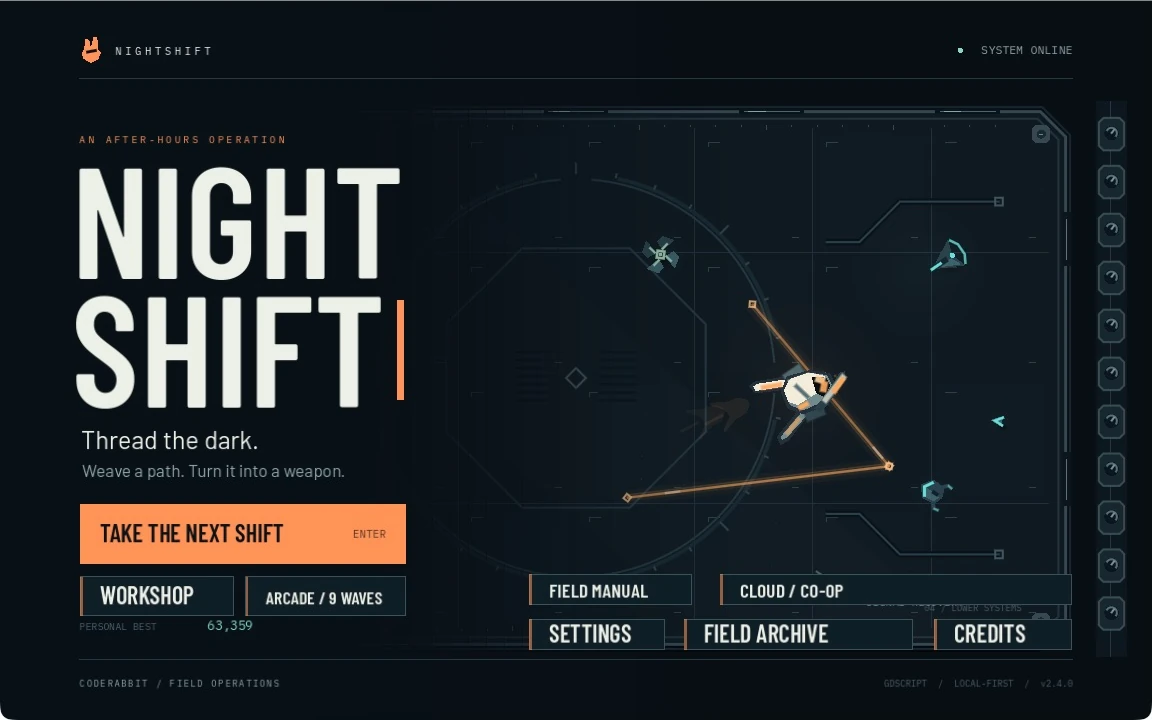
NIGHTSHIFT, built with GPT-6 through human direction and iteration, as presented by CodeRabbit.
Keep the first run manageable
Set a time or effort budget and ask for a useful partial result when the task cannot finish. A research run can return verified findings plus open questions. A coding run can return a reproduction and proposed fix. A report revision can return the sections it checked and those still pending.
Do not judge the run only by the final message. Open the output, inspect the difficult parts, and count the corrections you need. The useful comparison is how much work remains before you can use the result.
A reusable review framework
- Check whether the requested deliverable exists.
- Verify the facts or behaviors that matter most.
- Identify assumptions the model made without enough evidence.
- Compare review time with your normal process.
- Keep the successful brief for the next similar task.
Bring your source files, brief, and review notes into Ottermind to prepare a connected research or document project. Start with the outcome and choose an available model suited to the task.
FAQ
What should I try first with GPT-6?
Choose one task with several inputs and a result you can check, such as a source-based brief or a bounded QA pass.
Do I need a long prompt?
You need a clear brief. Include the goal, materials, constraints, output, and acceptance criteria; length alone does not help.
Should I use maximum reasoning?
Start with the normal or moderate setting available in your interface. Increase effort when difficult cases show a benefit.
Can I reuse the same brief?
Yes. Keep the task structure and update sources, dates, and acceptance criteria. Remove assumptions from the previous project.
How do I know the task is finished?
Check the actual artifact against the criteria in your brief. A confident completion message is not sufficient evidence.