About this template
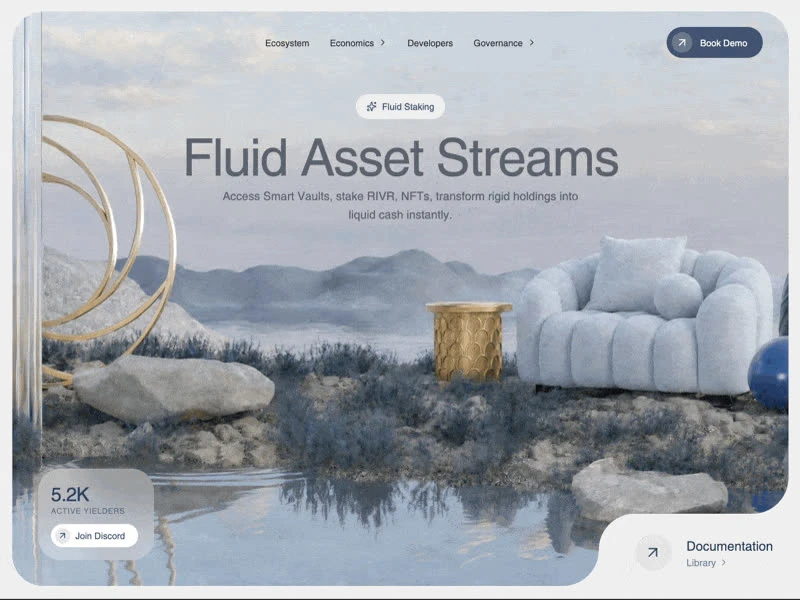
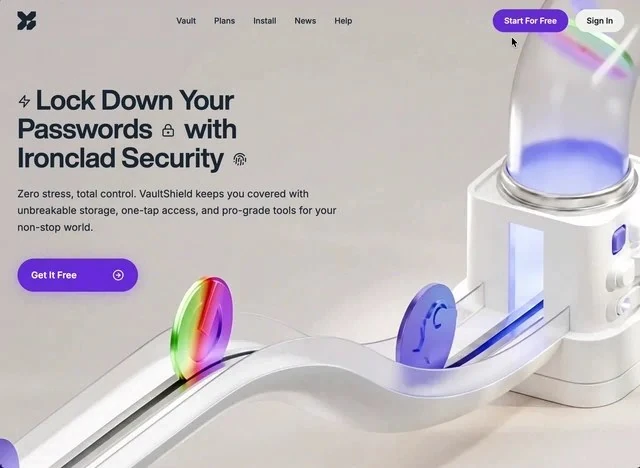
VaultShield is the hero section reference for a fintech product, and the brief behind it is a full build spec rather than a mood board. Colour is limited to gray #CFC8C5 underneath, shade #192837 for the type and shade #7342E2 carrying the accents, set in Helvetica Now Display. The build is React and Tailwind CSS; every measurement in it is written down, which is what makes it reusable. Motion is confined to 0.45s transitions. If you are briefing a fintech hero section, start from this composition and replace the subject.
Designed for
- Teams building a fintech product hero section who need a 560px breakpoint on the record before an estimate goes out.
- If the reference is only a starting point, designers can keep a 640x468 frame and rebuild the rest of the hero section.
- People who brief a model on a hero section will use the 4,734-character prompt as the starting point.
What's included
- Links before the action. Navigation is a thin strip rather than a band: wordmark left, links centre-right, one #7342E2 action, all of it sitting above the hero section without a background of its own. Below 560px the links collapse instead of wrapping onto a second line.
- The scale is clamped, not stepped. Type is sized with a clamp between 72px and 24px rather than fixed steps, so the display line stays proportionate between breakpoints instead of jumping. The mobile menu is part of the same brief, so the collapsed state is designed too. Keep the hierarchy; change the scale.
- The type carries the tone. Typography is Helvetica Now Display, and the brief assigns the face a job rather than mixing for variety. Weight, tracking and size steps are all specified, so the hierarchy survives a substitution. Substituting the face is possible, but the proportions have to survive the swap. One family with clear roles beats two that compete.
- One row, no drawers. Keep the row to one line. The reference was captured at 640x468.
Motion & interaction
Short, named durations
State changes are specified at 0.45s, so the feedback on the controls is a designed value rather than a browser default. Easing is specified alongside the duration (0.45s), so a rebuild cannot quietly substitute a different feel.
Interaction is on the controls
Feedback is limited to hover states on the buttons and links rather than on every card, which is what keeps a dense first screen from feeling busy. The states are drawn from the page's own palette rather than from a component default. Fewer states, fully specified.
What to change first in VaultShield
If your brand runs a heavier palette, test it against the frame before you commit. gray #CFC8C5 carries the page, so a darker accent needs more contrast than the reference uses. Substitution is cheaper than composition, and that is the point.
The numbers behind the hero section
This is what makes the reference reusable: 100vh sections, 24px spacing steps, 0.45s transitions and a 560px breakpoint. Nothing is left to a default, so a substitution that keeps those numbers keeps the composition. Nothing in this hero section depends on a default.
How VaultShield sequences the first read
Where a marketing page stacks proof below the fold and hopes, this hero section puts navigation, the stats row, the feature list and the background clip in front of the reader and holds the rest back. A fintech reader gets the offer before the options.
Frequently asked questions
What do I get when I copy the VaultShield brief?
The captured brief runs 4,734 characters and covers the frame, the type scale, the palette and the transitions. Copying it gives you that text, and sending it to Studio stages the same request with the page already described.
How much of VaultShield depends on React and Tailwind CSS?
VaultShield was built in React and Tailwind CSS, and the entry says so for provenance. The brief describes positions, sizes and timings, so it rebuilds in any framework that can set type and place elements.
How much of VaultShield is animated?
The motion is specified at the same level of detail as the layout: state changes settle in the 0.45s range. Port the composition first and the timings second, because they are easier to match once the layout holds.